
Natural Menthol/Levo-menthol 99% Supplier
What is Menthol?
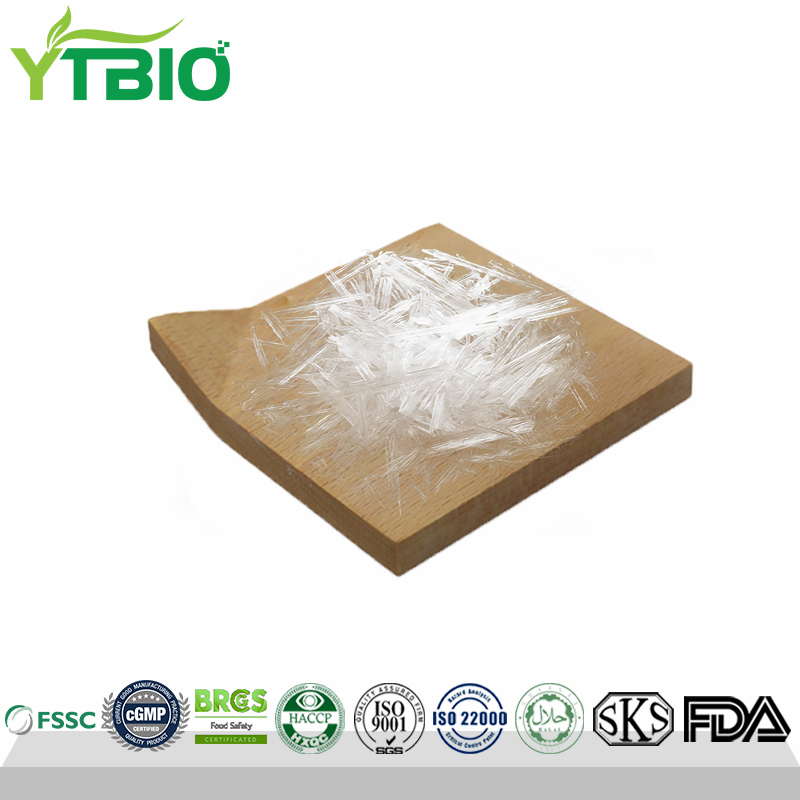
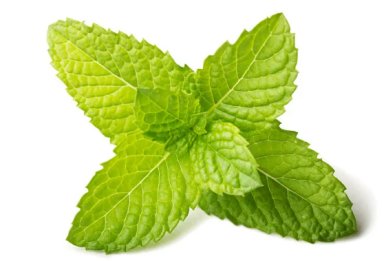
Menthol is a saturated cyclic terpene alcohol extracted from the stems and leaves of natural mint through processes such as distillation and crystallization. As the core active ingredient of peppermint oil, it appears as transparent, colorless needle-like or prismatic crystals with a rich, refreshing aroma and a unique volatile cooling sensation.
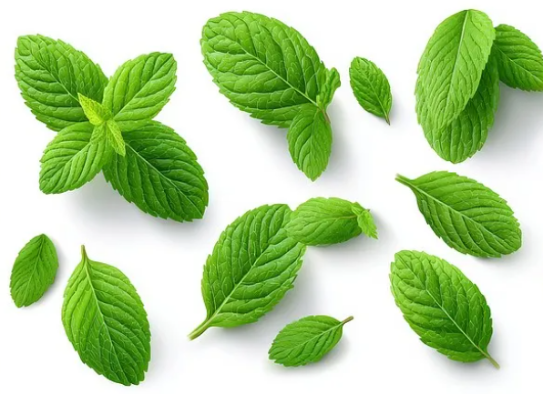
In nature, menthol mainly exists in the levorotatory isomer (L-menthol), which has the most significant biological activity. It is not only the primary source of the cooling properties of peppermint but also possesses various biological activities and high safety. Menthol is now an indispensable natural functional ingredient in many industries, including pharmaceuticals, daily chemicals, and food.
COA OF MENTHOL :
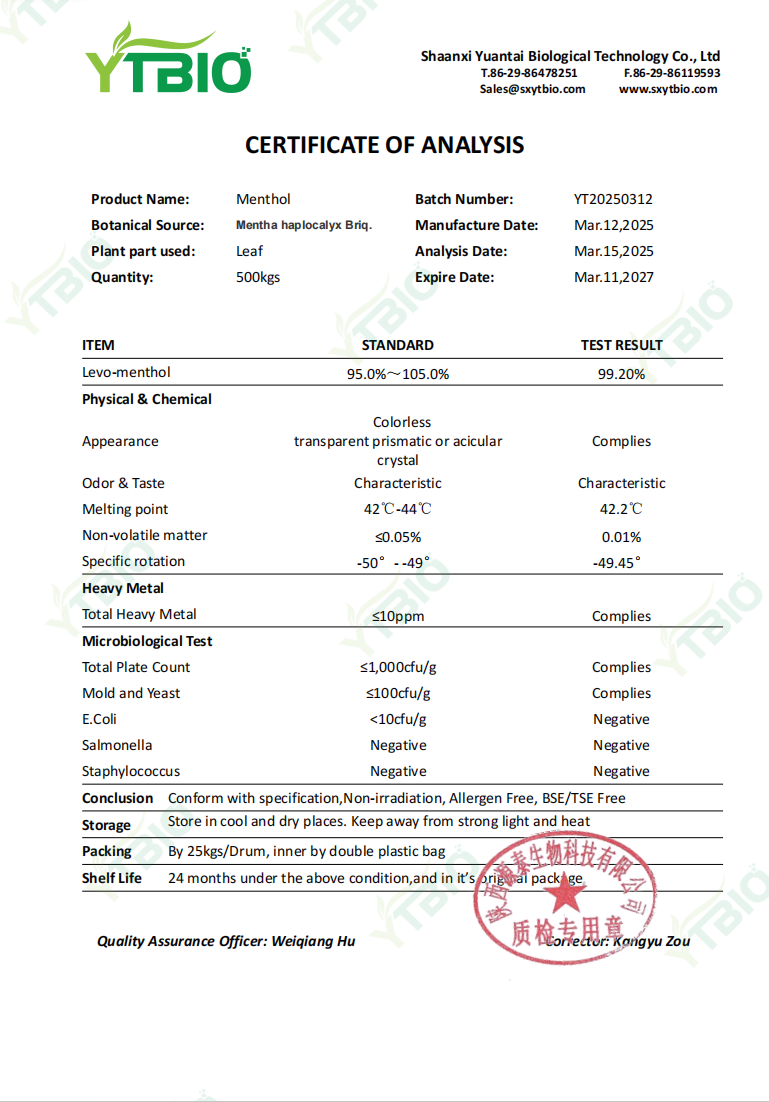
YTBIO's natural menthol is 99% derived from high-quality mint raw materials, using advanced processes to highly retain the active ingredients, ensuring its purity, cooling efficacy, and safety, bringing a pure, natural cooling experience.
What are the effects of menthol?
Menthol is a unique cooling agent derived from nature.
Cooling sensation and analgesia: Menthol produces a strong cooling sensation by activating cold receptors in the skin and mucous membranes. This stimulation can effectively and quickly relieve headaches, muscle aches, and nerve pain.
Anti-inflammatory and antipruritic: The cooling sensation and local stimulation of menthol can constrict capillaries, reducing redness, swelling, heat, and pain caused by inflammation. It also effectively relieves skin itching caused by various reasons.
Penetration enhancement: Menthol can alter the lipid structure of the stratum corneum to a certain extent, significantly improving the transdermal absorption rate of topical medications or certain ingredients, enhancing their efficacy.
Relief of respiratory discomfort: The volatile properties of menthol can stimulate the respiratory mucosa, promoting mucus secretion and expulsion, effectively relieving nasal congestion, sore throat, and cough symptoms, ensuring unobstructed breathing.
Antibacterial and antiseptic: Menthol has a certain inhibitory effect on many common bacteria (such as Staphylococcus aureus) and can be used as a natural adjuvant preservative in topical medications and other products.
What are some common applications of menthol?
Personal Care and Pharmaceuticals:
Menthol is a core ingredient in cooling balms, essential oils, pain relief patches, antipruritic lotions, and compound creams, used to relieve muscle and joint pain, headaches, skin inflammation, and itching.
Menthol is widely used in lozenges, nasal inhalers, cough sprays, and throat lozenges to quickly relieve respiratory discomfort caused by colds and allergies.
Menthol is a key ingredient in toothpaste and mouthwash, providing a long-lasting cooling sensation while also aiding in antibacterial action and freshening breath.
Food Additives:
Menthol imparts a cooling flavor and texture to candies (especially mints and chewing gum), chocolate, ice cream, beverages, and some tobacco products.
Skincare and Personal Care Products:
Menthol is added to lotions, creams, and aftershave products, providing a soothing, astringent, and refreshing experience.
Menthol provides a fresh and invigorating top note in high-end perfumes, aromatherapy products, and air fresheners.
Menthol is used in detergents and soaps to add a fresh scent.
Other Uses:
Studies show that menthol vapor or extracts have inhibitory effects on some postharvest diseases of fruits and vegetables.
Menthol can also be used in topical analgesics or anthelmintics for animals.

What are the main extraction methods for menthol?
Steam Distillation:
Mint raw materials are chopped and steam is passed through them, causing the volatile components (menthol oil) to evaporate. After condensation, the crude mint oil is separated using the density difference between oil and water. Further purification, including cooling crystallization, centrifugation, and recrystallization, yields menthol crystals.
Freeze-Crystallization:
Mint oil is directly deep-frozen. Because menthol's freezing point is significantly higher than other components in the oil, it crystallizes first. High-purity natural L-menthol is obtained by separating these crystals and recrystallizing them.
Solvent Extraction:
Mint raw materials are extracted using organic solvents such as ethanol and petroleum ether, dissolving fat-soluble substances, including menthol. The solvent is then recovered by distillation to obtain an extract, from which menthol is further separated using distillation or crystallization processes.
