
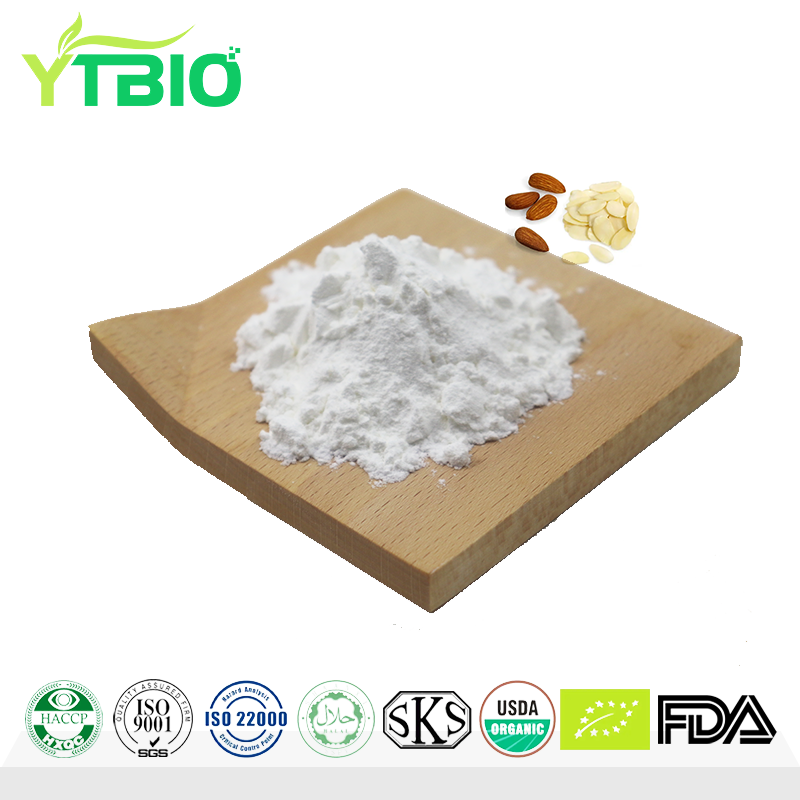
Amygdalin Powder CAS 29883-15-6
What is Amygdalin?
Amygdalin is a β-cyanogenic glycoside found in bitter almonds and a product of phenylalanine metabolism. Its molecular structure contains a cyano group (CN). While not inherently toxic, it is gradually hydrolyzed by the enzymes β-glucosidase and amygdalonitrile hydrolase found in bitter almonds. First, it breaks down into glucose and amygdalonitrile, which is then hydrolyzed to release the highly toxic hydrocyanic acid (HCN) and benzaldehyde, which has a distinctive odor. This process is the root cause of the potential for poisoning from consuming bitter almonds.
What are the benefits?
1. Cough and Asthma Relief
Bitter almonds, with their properties and flavors belonging to the lung meridian, are commonly used to treat cough and asthma. Their cough-relieving mechanism lies in the trace amounts of hydrocyanic acid produced by the breakdown of amygdalin in the body, which inhibits the respiratory center, stabilizing respiratory movements and thus relieving cough and asthma. Clinically, they are flexible in their use. For example, for cold coughs, they are treated with ephedra and licorice; for wind-heat coughs, they are treated with chrysanthemum and mulberry leaves; for dry-heat coughs, they are treated with adenophora and Fritillaria; for those with severe lung heat, they can be combined with gypsum to clear lung heat.
2. Intestinal Moisturization and Laxative
Bitter almonds lubricate the intestines and promote intestinal peristalsis. They are suitable for constipation caused by dry intestines due to fluid deficiency and blood deficiency. For those with fluid deficiency, they are often used in combination with dried plums and phellodendron chinense. For constipation caused by blood deficiency, they are often combined with blood-nourishing herbs such as rehmannia and angelica to increase fluid flow.
3. Anti-tumor and Immune Modulation
Modern research indicates that amygdalin exhibits promising anti-tumor potential. Its mechanisms of action are diverse, including inducing tumor cell apoptosis, inhibiting tumor cell proliferation, and regulating the body's immune function, making it valuable in supporting anti-tumor efforts.
4. Beauty and Skincare
Bitter almonds are rich in vitamins B1 and B2, as well as essential oils, which help moisturize the skin and improve blood circulation, thereby reducing wrinkles and delaying skin aging. Its whitening mechanism is related to inhibiting tyrosinase activity and reducing melanin production, and is often used in beauty and skincare.
5. Other Effects
In addition, amygdalin exhibits antioxidant, lipid-lowering, and analgesic effects, demonstrating a wide range of biological activities.
Application direction
Bitter almond extract has applications in both cosmetics and health supplements:
In cosmetics, this extract is rich in natural antioxidants such as vitamin E, offering excellent moisturizing and anti-aging properties. It helps improve skin texture and reduce wrinkles, making it a common addition to various skincare and haircare products. Its core ingredient, amygdalin, is also believed to play a positive role in antioxidants and maintaining skin hydration.
In health supplements, amygdalin's physiological regulatory properties, such as lowering blood pressure and blood lipids, make it a promising candidate for development into related health products.