
Why Is AA2G (Ascorbyl Glucoside) Gradually Becoming a Mainstream Skin Brightening Ingredient?
Vitamin C has long been regarded as a gold-standard ingredient for skin brightening. However, pure Vitamin C (L-ascorbic acid) also presents significant challenges in cosmetic formulations, including poor stability, strict formulation requirements, and inconsistent efficacy.
Interestingly, many effective brightening products do not contain pure Vitamin C at all—yet still deliver visible tone-evening and spot-fading results.The key reason lies in the growing adoption of Ascorbyl Glucoside (AA2G), which is increasingly becoming a mainstream choice in modern brightening formulations.
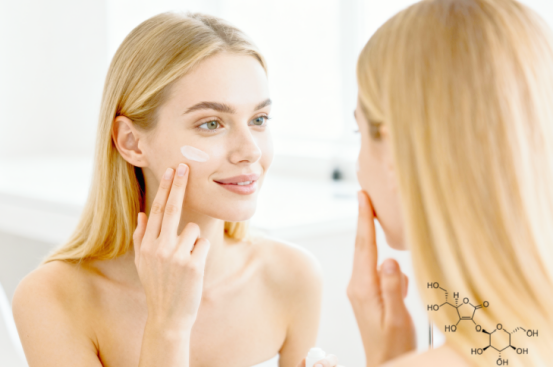
1. Why Is AA2G Considered a “Stable Form of Vitamin C”?
Ascorbyl Glucoside (AA2G) is a Vitamin C derivative formed by attaching a glucose molecule to the Vitamin C structure. This modification delivers two critical advantages:
- Significantly enhanced stability
- Controlled release of active Vitamin C within the skin
As a result, AA2G is often described as a stable Vitamin C, slow-release Vitamin C, or pro-Vitamin C ingredient.
2. What Are the Limitations of Pure Vitamin C?
Although L-ascorbic acid has a well-established skin brightening mechanism, it presents several practical drawbacks in real-world formulations:
Poor stability: Easily degraded by light, heat, oxygen, and metal ions
Formulation constraints: Requires a low pH environment to remain stable and effective, which may increase skin irritation
These factors limit its compatibility and long-term performance in many cosmetic products.
3. How Does AA2G Address Stability Challenges?
High Stability and Extended Shelf Life
By introducing a glucose moiety, AA2G blocks the most oxidation-prone site of the Vitamin C molecule, greatly reducing its reducing activity. This allows AA2G to remain stable in aqueous systems without discoloration or degradation.
As a result, AA2G is well suited for a wide range of formulations, including serums, emulsions, lotions, and creams.
Activation Within the Skin
AA2G itself does not directly exert a whitening effect. Once absorbed into the skin, it is gradually hydrolyzed by α-glucosidase enzymes, cleaving off the glucose group and releasing active L-ascorbic acid.
This slow and sustained release mechanism aligns better with skin physiology, minimizes irritation, and supports long-term brightening benefits.
4. Skin Brightening Mechanisms of AA2G
The L-ascorbic acid released from AA2G acts through multiple pathways:
Inhibition of melanin synthesis: Suppresses tyrosinase activity, reducing melanin production
Reduction of existing melanin: Converts oxidized dark melanin into lighter, reduced forms
These combined effects contribute to visible tone brightening and spot fading.
5. Why Is AA2G Becoming a Mainstream Choice?
AA2G offers several formulation and consumer advantages:
- Suitable for long-term daily use
- Easily compatible with niacinamide, tranexamic acid, and other active ingredients
- Gentle and skin-friendly, including for sensitive skin
- Provides more predictable and stable brightening results
Conclusion
AA2G addresses a fundamental challenge: how to enable Vitamin C to perform consistently throughout the product lifecycle, within the skin, and over long-term use.
By achieving a superior balance between efficacy, stability, safety, and formulation flexibility, Ascorbyl Glucoside has emerged as a key ingredient in modern skin brightening solutions.
YTBIO is committed to providing stable, reliable, and performance-driven skin brightening ingredients for brands and formulators worldwide.
For technical specifications, formulation guidance, or sample support, please contact us:
Email: sales@sxytbio.com