

How does Garcinia Cambogia extract achieve scientific weight management through metabolic regulation?
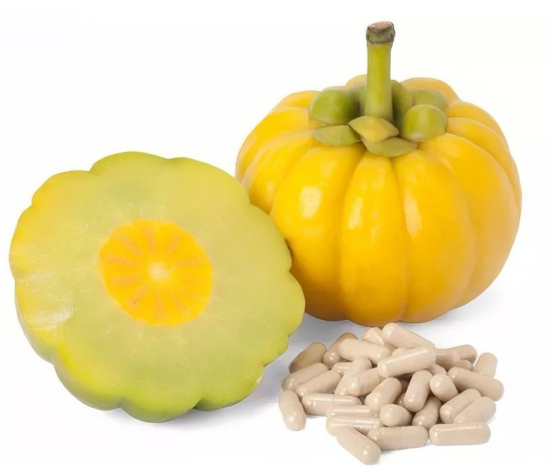
As research into weight management continues to deepen, Garcinia Cambogia extract, with its unique metabolic regulatory effects, has gradually become a focus of industry attention. As a natural ingredient originating from Southeast Asia, how does it exert its weight management effects by acting on multiple metabolic pathways? The following will explore the underlying mechanisms.
Dual Mechanisms of Metabolic Regulation
The key active substance in Garcinia Cambogia extract—hydroxycitric acid (HCA)—can regulate energy metabolism in two main ways:
1. Inhibition of Lipid Production Metabolic Pathways
HCA can competitively inhibit ATP-citrate lyase, thus blocking the conversion of carbohydrates into fat storage. This process occurs in the cytoplasm, essentially setting up a "metabolic valve" at a key stage of lipid synthesis. When this enzyme lacks activity, excess carbohydrates are forced to divert to other energy metabolic pathways instead of being deposited as fat.
2. Enhancement of Cellular Energy Sensing Regulatory Pathways
Recent research has found that HCA can also affect the activation of the AMPK signaling axis. AMPK is considered a cellular "energy monitoring system." When active, it promotes fatty acid oxidation, increases glucose uptake, and inhibits energy-consuming anabolic activities. This gives Garcinia Cambogia extract a more comprehensive metabolic regulatory capacity in supporting weight management.
Further Analysis of Research Evidence
Data from multiple trials show that standardized Garcinia Cambogia extract can achieve clear management effects within an appropriate dosage range. It is worth emphasizing that its effects are dose-dependent and related to the duration of use. Typically, within an 8–12 week usage cycle, indicators such as weight and body fat percentage gradually improve.
However, studies also show that individual constitution, diet, and lifestyle can affect the final results. This suggests that Garcinia Cambogia extract is more suitable as a component of weight management, working synergistically with healthy eating and lifestyle habits to achieve optimized results.
Application Scenarios Expanding
Beyond common dietary supplements, Garcinia Cambogia extract is expanding into more areas:
Development of functional foods and beverages
Design of personalized weight management programs
Synergistic integration with other health management methods

With increasing scientific understanding, Garcinia Cambogia extract is no longer simply viewed as a "fat synthesis inhibitor," but rather as a natural ingredient capable of maintaining metabolic balance through multi-target regulation. This upgraded understanding is driving the industry to move from simple promotion to more scientific and systematic product strategies.
Garcinia Cambogia extract, with its multi-pathway and multi-target biological effects, offers a unique solution for scientific weight management. With further research and technological advancements, its application potential in precision nutrition will further expand.
YTBIO focuses on providing high-standard Garcinia Cambogia extract raw materials, strictly controlling everything from raw material selection to the production process to ensure product stability and consistency. For more technical parameters or to obtain samples, please contact us: sales@sxytbio.com
References
Preuss, H. G., et al. (2004). "Citrus aurantium as a thermogenic, weight-reduction replacement for ephedra: an overview." Journal of Medicine, 35(1-6), 247-264.
López, A. M., et al. (2022). "Molecular mechanisms of Garcinia cambogia in obesity management: A systematic review." Phytomedicine, 104, 154288.
Semwal, R. B., et al. (2021). "Garcinia cambogia (Malabar tamarind): A comprehensive review of its phytochemistry and pharmacology." Food and Chemical Toxicology, 147, 111888.
Fong, A. K., et al. (2020). "The effects of Garcinia cambogia extract on serum leptin concentrations and metabolic parameters in overweight subjects." Journal of Nutritional Biochemistry, 85, 108459.