

Application value of betulinic acid mass ratio
The mass ratio of betulinic acid refers to its content ratio in a mixture, which is affected by factors such as extraction process and raw material quality. Betulinic acid with high mass ratio has wide application value in the fields of medicine, cosmetics, etc.
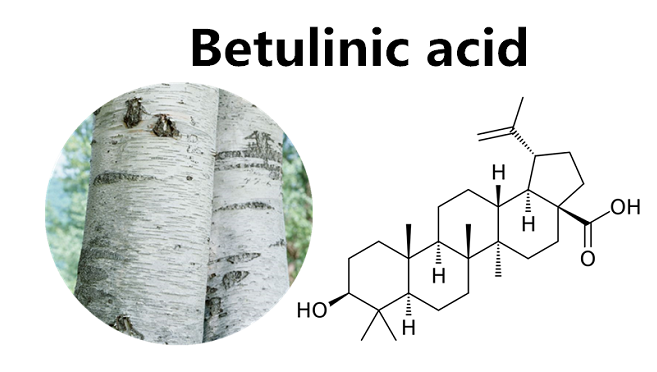
As a naturally occurring pentacyclic triterpenoid compound, it is widely distributed in plants such as birch bark and has attracted much attention due to its unique biological activity and broad application prospects. Among them, the mass ratio of betulinic acid, that is, its content ratio in a mixture, is an important indicator to measure its quality and application value.
From the chemical structure, betulinic acid is an isoprene polymer, and the most critical precursor in the biogenic pathway of the compound is mevalonate, not isoprene. Therefore, betulinic acid, as a mevalonate derivative, maintains the structure of lupane like betulinol.
Influencing factors
- Extraction process: Different extraction methods (such as solvent extraction, supercritical CO2 extraction, etc.) have a direct impact on the extraction efficiency and purity of betulinic acid, and thus determine its mass ratio. Optimizing the extraction process is the key to improving the mass ratio of betulinic acid.
- Raw material quality: The origin, growth environment, harvesting season and other factors of the raw materials will affect the content and quality of betulinic acid. The selection of high-quality raw materials is the basis for ensuring the mass ratio of betulinic acid.
- Post-processing process: Post-processing steps such as purification and drying will also affect the mass ratio of betulinic acid. A scientific and reasonable post-processing process will help improve the purity and mass ratio of betulinic acid.
Application value
Medical field:
Anti-inflammatory effect: It has a significant anti-inflammatory effect and can effectively reduce the pain and swelling caused by inflammatory response. Studies have shown that it can play an anti-inflammatory role by inhibiting the production of inflammation-related cytokines. In addition, it can also reduce leukocyte infiltration and neutrophil activation, further reducing the degree of inflammatory response;
It has antibacterial effects on a variety of bacteria, especially some common pathogens. Studies have shown that it can destroy the integrity of bacterial cell membranes, interfere with bacterial growth and replication, and thus achieve antibacterial effects. This principle provides a theoretical basis for its application in the treatment of skin infections, oral diseases and urinary tract infections.
High-quality betulinic acid has multiple biological activities such as anti-inflammatory and antibacterial, and is an important raw material for the development of new drugs. The quality ratio directly affects the efficacy and safety of the drug.
- Cosmetics industry: It has good moisturizing and antioxidant properties and is widely used in skin care products. It has excellent moisturizing ability, can help the skin absorb and lock in moisture, form a protective film, and prevent moisture loss. At the same time, it can also repair damaged stratum corneum and improve dry and rough skin conditions. It is a powerful antioxidant that can neutralize free radicals and inhibit oxidation reactions. Excessive production of free radicals can lead to lipid peroxidation of cell membranes, which in turn causes inflammation and cell damage. Its antioxidant effect is essential for protecting cells from oxidative stress. In addition, it can also enhance the activity of other antioxidants (such as vitamin C and vitamin E) and play a synergistic role.
It has a significant whitening effect, can inhibit the production of melanin, and reduce the accumulation of melanin in the skin, thereby improving uneven skin tone and pigmentation problems. In addition, it can promote the metabolism of skin cells, help expel aging cells, and further enhance the brightness of the skin.
High-quality betulinic acid can improve the quality and efficacy of skin care products and meet consumers' demand for high-quality cosmetics.
- Food industry: As a natural product, it has a variety of biological activities, including antibacterial, anti-inflammatory and antioxidant properties. These properties make it have potential application value in the food industry. For example, it can be used as a food additive to extend the shelf life of food and prevent food spoilage. In addition, due to its antioxidant properties, it can also be used to improve the nutritional value of food and protect the nutrients in food from being destroyed by oxidation. It also has health benefits such as regulating blood sugar and lowering cholesterol, and has potential application value in the field of functional foods. The level of its mass ratio will directly affect the market competitiveness of the product.
In summary, the mass ratio of betulinic acid is an important yardstick for measuring its quality and application value. By optimizing the extraction process, selecting high-quality raw materials, and improving the post-processing process, the mass ratio of betulinic acid can be effectively improved, thereby promoting its wide application and development in the fields of medicine, cosmetics and food industry.