





Ceramide CAS 100403-19-8
What are ceramides?
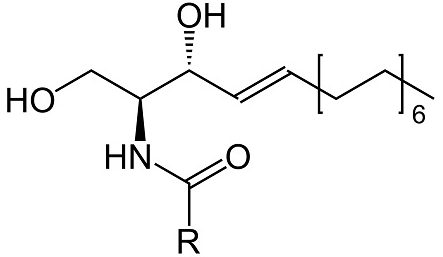
Ceramides are important bioactive lipids composed of sphingosine and fatty acids linked by amide bonds. Based on compositional differences, they can be classified into 16 types (such as ceramide NP, AS, etc.). As a core component of the skin barrier, they account for 40%–50% of the lipids in the stratum corneum. Together with cholesterol and fatty acids, they form the structure of intercellular lipids, effectively preventing moisture loss and blocking external stimuli. Ceramides possess both hydrophilic and hydrophobic properties, forming a network structure in the stratum corneum to strongly associate water molecules, thereby maintaining skin hydration and softness. Furthermore, they participate in cell signaling, regulating cell proliferation, differentiation, and apoptosis, and have anti-inflammatory, soothing, and skin-inflammation-reducing effects. Simultaneously, by promoting collagen synthesis and inhibiting collagen degradation, ceramides help delay skin aging and enhance skin elasticity.
Biosynthetic Pathways
In the human body, ceramides are mainly synthesized through three pathways: de novo synthesis (progressively generated from serine and fatty acids in the endoplasmic reticulum of keratinocytes), the sphingomyelinase pathway (producing ceramides through the hydrolysis of sphingomyelin), and the salvage pathway (synthesized using existing sphingosine and fatty acids). The functions of ceramides produced through different pathways vary slightly.
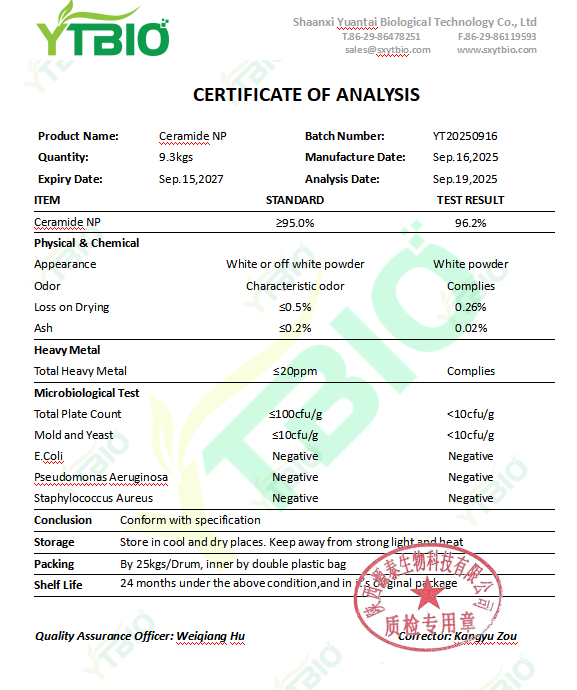
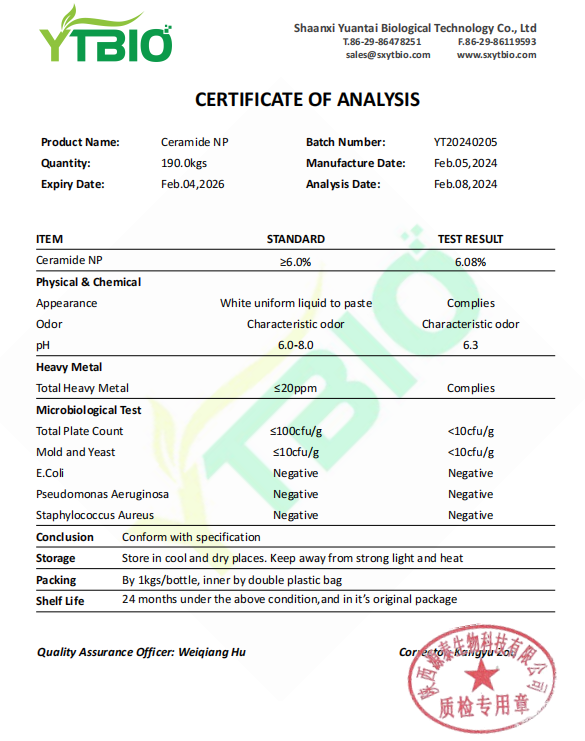
COA of Ceramide NP
What are the core functions of ceramides?
Strengthening the skin barrier: As a major component of the stratum corneum lipid matrix (accounting for approximately 50%), ceramides, along with cholesterol and free fatty acids, construct and stabilize the skin's physical barrier structure, effectively blocking the invasion of external irritants and allergens, and preventing excessive evaporation of internal moisture.
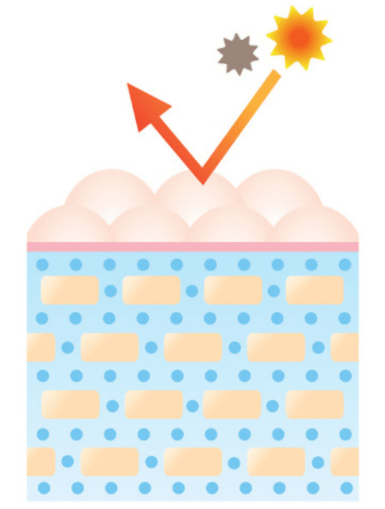
Water retention and moisturizing: Due to its unique amphiphilic molecular structure, ceramides can form a regularly arranged layered liquid crystal structure in the stratum corneum, acting like a "water-locking net," firmly adsorbing and storing water molecules, thereby maintaining the normal moisture content of the stratum corneum for a long time and alleviating dryness and roughness of the skin.
Regulating Cellular Activity: At the cell biology level, ceramides are important second messengers, participating in the regulation of epidermal cell growth, differentiation, renewal, and even programmed cell death (apoptosis), which is crucial for maintaining epidermal homeostasis and normal metabolic cycles.
Soothing and Anti-inflammatory: Through specific signaling pathways, ceramides can inhibit the excessive release of pro-inflammatory mediators, helping to reduce skin inflammation and playing a repairing and soothing role in inflammatory conditions such as sensitive skin and atopic dermatitis.
Delaying Aging: By promoting collagen synthesis in the dermis and inhibiting the activity of its degrading enzymes (such as matrix metalloproteinases), ceramides help maintain the integrity of the skin's supporting structure, thereby improving skin elasticity and firmness and slowing down wrinkle formation.
Main Applications of Ceramides
I. Cosmetics
Ceramides are a core ingredient for repairing and maintaining the skin barrier and are widely added to skincare and medical skincare products. With its high moisturizing power and skin compatibility, it can increase the moisture content of the stratum corneum, enhance skin elasticity, and assist in repairing barrier damage problems such as atopic dermatitis and psoriasis. In high-end cosmetics, ceramides are also used to improve skin texture, delay signs of aging, and act as penetration enhancers to aid the absorption of other active ingredients.
II. Food and Health Products
Ceramides have also been developed as functional food ingredients. Studies have shown that adding recommended doses of ceramides to foods such as bread, jelly, and yogurt maintains high activity after processing without affecting the flavor and quality of the food. Currently, related products mainly appear in the form of dietary supplements and functional beverages, focusing on their potential auxiliary regulatory effects on immunity and metabolic support.
III. Medical Research
Ceramides play an important role in cell signaling, especially in regulating cell differentiation, proliferation, and apoptosis. Their metabolism is associated with various disease states. Research suggests that specific ceramide subtypes exhibit characteristic changes in cardiovascular disease, metabolic syndrome, and neurodegenerative diseases, and may serve as potential biomarkers for disease risk assessment and progression monitoring.
Note:
Classification of Ceramides
Ceramides are mainly classified into four sphingosine monophosphates (LCBs) and three fatty acids (FAs). Based on the different pairwise binding of LCB and FA, ceramides in the stratum corneum can be divided into 12 subclasses: NP, NH, AH, NDS, AS, AP, NS, EOS, EOH, ADS, EOP, and EODS. (The stratum corneum contains 16 different subtypes of ceramides. Of these, 12 are free and extractable, while the other 4 are bound to the keratinocyte membrane and are difficult to extract and measure independently.)
Factors affecting ceramide content:
① Age: The integrity of the skin barrier is positively correlated with age. Compared to younger groups, in subjects over 40 years of age, ceramide enzyme activity was significantly reduced, and the total ceramide content in the face and hands was significantly decreased.
② Climate and temperature: Skin parameters such as skin hydration, transepidermal water loss, and elasticity also change with the seasons. In winter, the ceramide content in the hands and face is significantly lower than in summer.
③ Over-cleansing
A skin dryness model induced by soap-based ingredients revealed that ceramide expression in the skin of test subjects was 60% lower than in normal skin. Experiments showed that regardless of whether soap-based or surfactant-based products were used, handwashing at 25°C or 37°C resulted in a decrease in the levels of ceramides, cholesterol, and keratin.
④ Face masks
Multiple studies have reported various adverse skin reactions associated with face masks. For example, short-term wear of KF94 masks (1 hour or 6 hours) significantly increased skin temperature, transepidermal water loss, redness and sebum secretion in the mask-wearing area, and decreased skin hydration. Furthermore, using KF94 masks reduces skin elasticity and increases the severity and number of acne lesions.
