Buying Ursolic Acid Powder in bulk can definitely make sense if your business has steady demand, verified specs, and good storage space. But hey, bigger order isn’t always better! Before you jump into a huge purchase, take the time to compare things like assay results, where the botanical source comes from, particle size, packaging details, and batch documentation. Don’t just chase the lowest price per kilogram—no deal is worth it if the powder shows inconsistent color, poor traceability, or the certificate doesn’t match the shipment.
And a quick heads-up on quoting—I can’t really attribute a specific quote to a certain industry expert without a reliable source. But the main takeaway is simple: ‘A trustworthy bulk purchase starts with solid evidence, not just volume.’ Always ask for a recent certificate of analysis and double-check which testing methods confirm the ursolic acid content. Be sure to inquire about moisture levels, heavy metals, microbiology testing, whether samples are available, and how the supplier handles batch changes. Honestly, these details might seem boring or minor, but they’re super important.
Buying in bulk also comes with its trade-offs. For example, a 25-kilogram bag might save you money per unit, but only if you have a cool, dry place to store it, and if you're planning to use it before the quality drops. Don’t forget to check the inner liner, closure, and labeling—really peek inside if possible—and inspect a retained sample for clumping or odd smells. And, of course, compare lead times and minimum order quantities. One thing worth remembering—some buyers treat supplier paperwork as proof of quality, but that’s just not true. Sometimes, especially for higher-risk applications, independent testing is a smart move. Having a solid sourcing plan means you’ll have clearer expectations, fewer surprises, and a stronger footing when making supplier decisions.
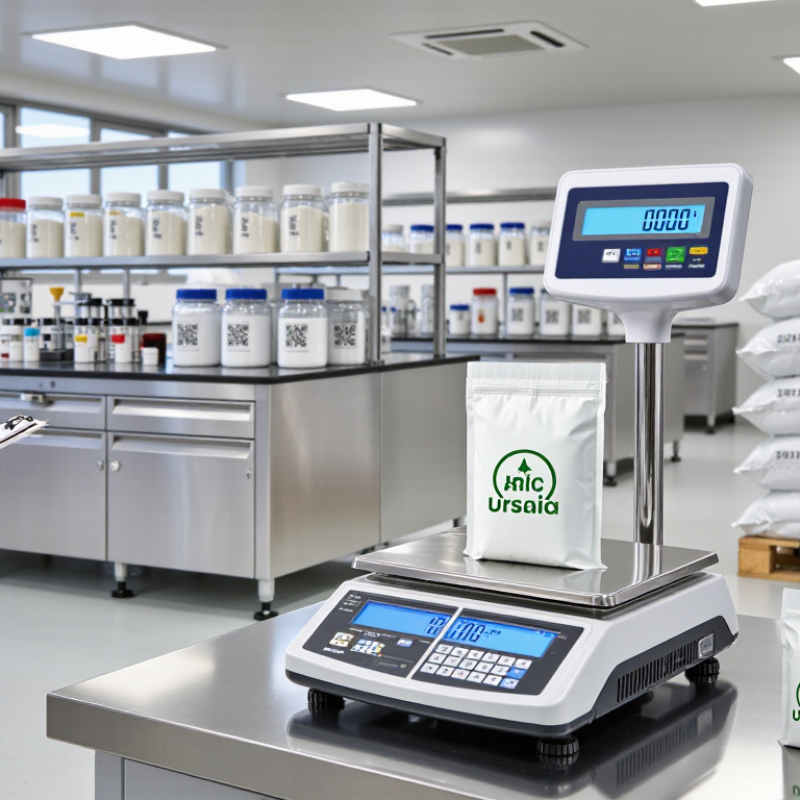
Why Buy Ursolic Acid Powder in Bulk?
Ursolic acid is a naturally occurring C30H48O3 pentacyclic triterpenoid. Its structure contains five interconnected rings, giving the compound a stable, waxy character. It appears in the skins of several plants, including some herbs and fruit peels. However, natural occurrence does not guarantee consistent quality. The formula identifies the molecule, not its purity, origin, or suitability for a specific formulation.
For research and manufacturing, bulk ursolic acid powder may improve supply continuity and reduce repeated purchasing work. Still, larger volume is not automatically better. A practical sourcing review should examine assay results, identity testing, particle size, residual solvents, heavy metals, and microbiological limits. A qualified laboratory can verify these details through methods such as HPLC and spectroscopic analysis. Proper packaging also matters because moisture, heat, and light may affect long-term stability. I would avoid relying on a certificate alone; the testing method and sample date deserve attention.
Tips: Request a current certificate of analysis and a representative sample before ordering. Check the C30H48O3 identity, assay range, storage instructions, and batch traceability. Keep the powder sealed, dry, and protected from direct light. Small checks prevent expensive surprises.
| Dimension | Fact or Consideration | Why It Matters for Bulk Purchasing |
|---|---|---|
| Chemical identity | Ursolic acid is a pentacyclic triterpenoid with the molecular formula C30H48O3. | Confirming the chemical identity helps distinguish the ingredient from other plant-derived triterpenoids. |
| Molecular mass | Its molar mass is approximately 456.70 g/mol. | This reference value can be used when reviewing technical specifications and analytical documentation. |
| CAS Registry Number | 77-52-1 | Including the CAS number in procurement and quality documents helps identify the specified substance. |
| Natural occurrence | Ursolic acid occurs in various plants, including in some fruit skins and leaves. | Because plant source and processing can vary, buyers should check the stated source and manufacturing details for each lot. |
| Water solubility | Ursolic acid is generally described as practically insoluble in water. | Formulation and handling plans should account for its limited water solubility; suitability depends on the intended application. |
| Batch consistency | Bulk orders may involve multiple containers or production lots. | Request lot-specific identity, assay, and impurity results, and agree on acceptance criteria before purchase. |
| Documentation | Relevant records may include a certificate of analysis, safety data sheet, and product specification. | Review current documents for the actual material and intended use rather than relying on a generic description. |
| Packaging and storage | Packaging, storage conditions, and retest or expiry dating should be stated in the supplier’s documentation. | Check that pack sizes and storage requirements suit your handling capacity and expected consumption rate. |
| Bulk purchasing rationale | Larger orders can consolidate purchasing and reduce the frequency of reordering. | Compare total landed cost, minimum order quantity, storage needs, shelf-life information, and quality requirements before committing. |
Specifications and handling requirements can vary by grade, source, and supplier. Verify product-specific information before purchase or use.
Bulk Ursolic Acid Powder can become more economical as order volume rises. Suppliers often spread testing, labor, packaging, and documentation costs across more material. This lowers the effective cost per gram. A 1 kg order may carry higher handling costs than a 10 kg shipment. Orders near 25 kg may offer better tier pricing, but only when storage and quality controls are suitable.
The calculation should include more than the quoted powder price. Compare assay results, moisture data, particle size, packaging, freight, and import charges. A lower price can lose its advantage if testing is repeated or material arrives damaged. Procurement teams should request a current certificate of analysis and confirm batch consistency before increasing volume. The cheapest quote is not always the best value. That deserves careful reflection.
Tips: Compare the landed cost per gram at 1, 5, 10, and 25 kg. Ask whether larger orders use identical specifications and packaging. Check shelf-life data before purchasing beyond immediate production needs. Keep a retained sample from each batch. It helps investigate unexpected color, odor, or flow changes later. Also, avoid assuming every supplier’s scale discount is genuine; calculate it independently.
When comparing 95%, 98%, and 99% HPLC grades, the percentage is only one part of the decision. It describes the measured proportion of Ursolic Acid under a stated analytical method. It does not, by itself, explain every impurity or confirm how the powder will perform in a finished formulation.
A 95% grade may suit work where cost and broad processing tolerance matter. A 98% grade offers a tighter assay target, which can help standardize batches. A 99% grade may appeal to specifications requiring a higher measured concentration, but the extra purity can come with higher cost and stricter handling expectations. Small differences matter. Ask for a recent certificate of analysis, the HPLC method, batch-specific results, and details about residual solvents and storage. Check that the reported percentage uses a clearly stated basis; otherwise, comparisons can be misleading.
Bulk purchasing can make sense when repeat production needs consistent material and enough storage capacity. Still, a large order is not automatically better. Powder exposed to moisture or poor packaging may be harder to use reliably over time. Review sample performance, packaging integrity, and shelf-life data before committing to a full quantity. Even then, one uncertainty remains: a high assay does not replace testing in your own process.
Buying ursolic acid powder in bulk can reduce packaging variation, but larger lots demand stronger verification. A certificate of analysis should identify the batch, test methods, results, and acceptance limits. Check whether identity and assay results come from validated methods, not copied specifications. Ask for chromatograms or other supporting data when results appear unusually precise. Numbers need context.
Microbial checks matter too. USP measures microbial counts, while USP tests for specified organisms; neither method sets one universal limit for every product. Limits should match the intended use and documented risk assessment. ICH Q7 offers a practical benchmark for record control: batch and distribution records for APIs with retest dates should generally be retained for at least three years after complete distribution. Keep supplier approvals, deviations, and change records with the COA. A tidy file is not proof of a sound process.
For bulk ursolic acid, compare the supplier’s lot-specific records with incoming test results, especially identity, assay, moisture, and microbial findings. Review storage conditions and packaging integrity; a sealed drum can still be exposed to heat or humidity. The same discipline applies when reviewing documentation for Docosahexaenoic Acid Powder, though its test panel will differ. If a COA omits methods or limits, pause and ask. It is a small inconvenience, and sometimes a revealing one.
Supply planning starts with a realistic estimate of monthly use, not the largest discount on a quote. Minimum order quantities can vary by supplier, grade, and packaging format. Ask for the MOQ in writing, and check whether a smaller trial order is available before committing to a full production cycle. A large quantity can lower unit costs. It can also tie up cash and storage space.
Shelf life is commonly stated as 12–24 months, but the exact period depends on the product and its storage conditions. Confirm the date of manufacture, retest or expiry date, and recommended temperature and humidity limits. Keep the powder sealed in its original container, away from heat and moisture. A cool, dry storeroom helps. Still, “cool” should be defined by the supplier’s specifications, not guesswork. Request supporting quality documents, such as a certificate of analysis, and check that lot details match the shipment.
Lead times deserve equal attention. Ask how long production, testing, and dispatch usually take, and whether those estimates change during busy periods. Leave room for delays in freight or document review. A simple planning sheet can track expected use, stock on hand, reorder point, and delivery window. It will not predict everything. That is the point: bulk purchasing works best when the plan allows for uncertainty rather than assuming every shipment arrives on schedule.
Bulk purchasing can reduce repeat procurement and help manufacturers maintain consistent production lots. But a lower price per kilogram is not the first checkpoint. For ursolic acid, confirm the intended use, source, manufacturing process, and daily exposure before ordering. FDA’s 21 CFR 190.6 requires a New Dietary Ingredient notification at least 75 days before a product is introduced into interstate commerce, when the notification requirement applies. The FDA’s NDI guidance explains the evidence expected, including safety information relevant to the ingredient’s identity and conditions of use. A supplier specification alone may not establish that an ingredient is covered by an existing notification.
EU screening needs a separate review. Under Regulation (EU) 2015/2283, foods without a history of significant consumption in the EU before 15 May 1997 may fall within the novel food framework. EFSA’s novel food guidance sets out the scientific information needed for safety assessment, including composition, production, proposed uses, and exposure estimates. Its assessment timeline is generally nine months, though additional information can extend the process. Check the EU Novel Food Catalogue, but treat it as a screening aid, not an authorization. Keep batch records, certificates of analysis, and traceability documents aligned with the exact material assessed. Small differences matter. Bulk stock can sit in storage while regulatory questions remain unresolved; that is an expensive detail, and easy to miss.
Bulk purchasing works best when the grade matches the intended application. For supplements, buyers should compare assay, residual solvents, particle size, and batch-to-batch consistency. A fine powder may blend more evenly into capsules, while a coarser grade can behave differently during processing. Ask for a current certificate of analysis and stability data. Small details matter.
For cosmetics, review solubility, color, odor, and compatibility with the planned formula. Ursolic acid’s limited water solubility can complicate formulation, so a sample trial is sensible before committing to larger volumes. R&D teams may prefer smaller, tightly documented lots that support repeatable experiments. Bulk does not mean one grade fits all.
The commercial case is also shaped by demand. Grand View Research estimated the global dietary supplements market at USD 177.5 billion in 2023 and projected a 9.1% compound annual growth rate from 2024 to 2030. This is market context, not evidence of ursolic acid efficacy. Buyers comparing materials such as Lipoic Acid Powder should assess each ingredient’s own specifications, rather than assume equivalent handling or performance. One caveat: supplier documents cannot replace application-specific testing, and a low unit price may hide costly variability.
Ursolic acid is a naturally occurring C30H48O3 pentacyclic triterpenoid. Its molecule contains five connected rings. It often appears as a stable, waxy powder.
It occurs in some plant skins, herbs, and fruit peels. Natural origin does not prove consistent purity. Source details still require verification.
Bulk purchasing may support steadier supply and reduce repeated orders. Larger quantities are not always better. Storage space, demand, and testing costs also matter.
Request identity testing, assay results, particle size, residual solvents, heavy metals, and microbiological limits. HPLC and spectroscopic analysis can help verify identity. A certificate alone is not enough.
Ask for a current certificate of analysis and a representative sample. Check the formula, assay range, storage guidance, sample date, and batch traceability. Small checks prevent expensive surprises.
No. Supplement, cosmetic, and research uses may require different specifications. Fine powder may blend evenly, while coarse powder can process differently.
Review solubility, color, odor, and formula compatibility. Ursolic acid has limited water solubility. A small trial batch is sensible before large purchasing.
Keep the container tightly sealed, dry, and away from direct light. Protect it from heat and moisture. Storage mistakes happen easily. Check the actual storage instructions for each batch.
Ursolic Acid Powder is a pentacyclic triterpenoid with the molecular formula C30H48O3, available in bulk quantities for manufacturers, laboratories, and product developers. Ordering from 1 to 25 kilograms may reduce the cost per gram, but the best option depends on projected use, storage capacity, and the required purity. Comparing 95%, 98%, and 99% HPLC grades helps buyers match specifications to supplement, cosmetic, or research applications without paying for purity they do not need.
Before purchasing, review the certificate of analysis, relevant microbial testing such as USP /, and quality records aligned with ICH Q7 practices. Confirm minimum order quantities, expected lead times, and the stated 12–24-month shelf life under specified storage conditions. Regulatory requirements, including FDA new dietary ingredient and EU novel food considerations, should be assessed for the intended product and market. These checks help ensure that bulk supply plans align with both technical needs and applicable requirements.