Okay, so you’ve probably heard of regular Chitosan before. This is its chemically modified version —Chitosan Quaternary Ammonium Salt. What makes it special? Those ammonium groups are permanently charged, so they make the molecule much more water-friendly and let it bind to negatively charged surfaces. That’s why it shows up in research and in everyday products like antimicrobial coatings, personal-care formulas, and water-treatment materials. Honestly, performance isn’t something you can predict just from the name alone. It really comes down to things like how much it’s been modified, its molecular weight, the concentration, and the specific formulation. So yeah, the label doesn’t tell you what you’re actually going to get.
It’s worth keeping the bigger supply picture in mind here. According to FAO’s 2024 report on the state of world fisheries and aquaculture, total global production from fishing and fish farming hit about 223.2 million tonnes back in 2022. Now, that number isn’t meant to tell us how much chitosan is available or anything like that — it just gives a sense of how large the overall aquatic resource base is, the kind of space where some shell by-products could come from. So we shouldn’t read too much into that connection.
So, M. N. V. Ravi Kumar—who’s done a lot of research on chitosan—wrote this review called “A Review of Chitin and Chitosan Applications,” and in it he basically says chitosan has a ton of potential uses. Now, to be clear, that’s me paraphrasing his review, not directly quoting him about the quaternary salt. And that distinction actually matters. A modified polymer can act pretty differently from the original material, so just because one formulation works in a certain study doesn’t mean it’ll automatically work in another. Honestly, if you're developing a product, the real test comes down to a few practical things: does it dissolve properly, play nice with the other ingredients, hold up over time, and actually perform in the conditions you're targeting. And here's the kicker—tiny tweaks in the formulation can totally shift the results. So there's no one-size-fits-all fix. In the sections coming up, we'll dig into where Chitosan Quaternary Ammonium Salt really shines, which properties make it work in those applications, and where you should pause and run some extra tests before committing.
Chemical Identity and Key Properties of Chitosan Quaternary Ammonium Salt
Chitosan quaternary ammonium salt is a chemically modified form of chitosan, a polysaccharide made from glucosamine and N-acetylglucosamine units. Quaternization attaches positively charged ammonium groups to the polymer. Unlike ordinary chitosan, whose amine charge changes with acidity, these added groups remain charged across a wider pH range. Rinaudo’s 2006 review in Progress in Polymer Science reports a pKa of about 6.5 for chitosan’s amine groups. That value helps explain why unmodified chitosan dissolves poorly in neutral water. Quaternization can improve water compatibility. The result varies.
The material is not one fixed molecule with one universal specification. Its properties depend on molecular weight, degree of deacetylation, and degree of substitution—the proportion of available sites that receive ammonium groups. These factors affect solubility, viscosity, and interaction with negatively charged surfaces. In practical testing, a powder may disperse in water, then form a slightly hazy solution as concentration rises. Small differences in preparation matter. A 2020 review in Carbohydrate Polymers describes quaternized chitosan derivatives as pH-tolerant, water-soluble materials with antimicrobial potential, while noting that performance depends on chemical structure and test conditions. “Water-soluble” is not a guarantee of identical behavior. Reliable comparisons should report substitution level, polymer characteristics, and test method—not just the material name.
How Quaternization Affects Its Solubility and Antimicrobial Activity
Chitosan quaternary ammonium salt is used in coatings, personal-care formulations, water treatment, and some biomedical materials. Its defining change is quaternization: chemical groups add permanent positive charges to the chitosan backbone. Unlike ordinary chitosan, which dissolves best under acidic conditions, the modified polymer can remain more soluble in water across a broader pH range. That can make it easier to blend into aqueous products. The details matter.
The positive charge may also help the polymer interact with negatively charged microbial cell surfaces. This interaction can disrupt cell membranes and limit microbial growth, though results depend on the organism and test conditions. Quaternization does not guarantee strong antimicrobial performance in every formulation. Molecular weight, degree of substitution, concentration, pH, and contact time can all affect the outcome. Lab results may not predict performance on a real surface.
Tips: Check solubility at the pH you plan to use. Compare antimicrobial tests using similar concentrations and contact times. Watch for cloudiness or settling after mixing; a clear sample is not proof of effectiveness. Avoid treating “more quaternization” as automatically better. It may improve water compatibility, but it can also change viscosity, material compatibility, or how the polymer behaves in a finished product. Small formulation trials are useful, and their limits deserve attention.
What Is Chitosan Quaternary Ammonium Salt Used For? — How Quaternization Affects Its Solubility and Antimicrobial Activity
Note: “Chitosan quaternary ammonium salt” describes a family of modified chitosan materials, not one uniform compound. Solubility and antimicrobial results should be checked for the specific derivative and application.
Uses in Water Treatment and Pollutant Removal
Quaternary ammonium chitosan is used as a cationic flocculant and adsorbent in water treatment. Its positively charged groups attract negatively charged dye molecules, fine particles, and some dissolved contaminants. In a treatment jar, this can help small particles clump together for settling or filtration. The WHO/UNICEF Joint Monitoring Programme reported that 2.2 billion people lacked safely managed drinking water in 2022. That scale makes practical treatment options important, but it does not prove this material is suitable for every water source.
Not a magic filter.
In textile wastewater, it may help remove anionic dyes; results depend on dose, pH, contact time, and competing salts. Metal removal also varies with the pollutant and the material’s remaining binding sites. Bench tests should measure turbidity, color, and contaminant levels before and after treatment, then check for residual polymer. A 2023 WHO/UNICEF report describes access gaps, not chitosan performance, so product-specific claims need independent testing. Pyrroloquinoline Quinone Disodium Salt is a separate compound and has no role in this adsorption mechanism. That distinction is easy to miss.
Applications in Wound Care and Biomedical Materials
What Is Chitosan Quaternary Ammonium Salt Used For?
Chitosan quaternary ammonium salt is a modified chitosan with positively charged groups. These groups help it interact with negatively charged surfaces, including some microbes and biological tissues. In wound-care research, it may be used in coatings, films, or gels designed to cover a wound and help manage moisture. A thin, flexible film can sit over an uneven surface. It is not a substitute for clinical evaluation or proven wound treatment.
Biomedical materials researchers also study it in hydrogels, fibers, and composite coatings. Its water compatibility and film-forming properties can help shape how a material handles fluid or contacts tissue. Some formulations are explored for antimicrobial performance, but results depend on concentration, structure, and testing conditions. A promising lab result does not guarantee the same effect in a patient. That distinction matters.
Tips: Check the material’s intended use, test conditions, and safety data before comparing claims. If a formulation includes Phytic Acid Sodium Salt, assess compatibility and performance in the finished material rather than assuming benefits from either ingredient alone. Small details matter. Surface charge, moisture, and processing can change results, and sometimes the evidence remains incomplete.
Uses in Cosmetics, Textiles, and Food Packaging
Chitosan quaternary ammonium salt is a water-compatible, positively charged chitosan derivative. In cosmetics, it can form a light film on hair or skin and help conditioning ingredients stay in place. It may also support moisture retention. The effect depends on concentration, formula acidity, and other ingredients. A smooth feel is possible, but not guaranteed. Patch testing and product-specific safety assessments still matter.
Textile finishers may apply it to fabric surfaces to improve feel or explore odor-control and antimicrobial performance. Results can change after washing, so durability needs testing on the actual material. In food packaging, thin coatings are studied for their film-forming properties and potential to slow microbial growth. That does not make every treated package suitable for food contact; migration, performance, and applicable safety requirements must be assessed. ATP Disodium Salt is a different compound, not another name for this chitosan derivative, and should not be treated as interchangeable. The practical question is often less glamorous: does the coating remain effective without changing texture, taste, or fabric feel? Sometimes, the answer is still unclear.
Factors That Guide Its Selection and Safe Use
Chitosan quaternary ammonium salt is considered for water-treatment trials, surface coatings, and textile finishes when water solubility and positive charge are useful. Selection depends on the application: molecular weight and degree of quaternization affect viscosity, charge density, and performance. Check solubility in the actual formulation, not just a supplier’s water test. Small details matter. Chitosan Hydrochloride can provide a useful comparison, but it is not interchangeable; its behavior depends on acidity and formulation conditions.
Raw-material consistency also deserves attention. FAO’s 2024 State of World Fisheries and Aquaculture report recorded 223.2 million tonnes of global fisheries and aquaculture production in 2022, including aquatic animals and algae. That figure describes the wider resource context, not chitosan availability or quality. Ask for batch-specific specifications, source information, and testing for residual processing reagents. For safe use, match concentration, pH, contact time, and exposure route to the intended application. Natural origin is not proof of safety. Review the safety data sheet, test the finished formulation, and follow applicable product requirements; requirements vary by use and location. A small pilot test may reveal irritation, haze, or unwanted thickening before scale-up. But it cannot replace exposure assessment.
What Is Chitosan Quaternary Ammonium Salt Used For? — Factors That Guide Its Selection and Safe Use
How pH affects charge: quaternary ammonium groups retain their formal positive charge, while ordinary chitosan amines become less protonated as pH rises.
How to read this: The ordinary chitosan curve is an idealized Henderson–Hasselbalch estimate using an approximate amine pKa of 6.4; actual behavior varies with material and conditions. The quaternary curve indicates that those sites retain a formal positive charge across the shown pH range—it does not represent total polymer charge or product performance. This pH behavior can guide selection for water-based antimicrobial, coating, wound-care, or delivery formulations. Check the specific product’s composition, intended application, and safety documentation; there is no universal safe-use dose.
98% Chitosan Hydrochloride Powder (CAS 70694-72-3): Uses, Benefits, and Buying Guide
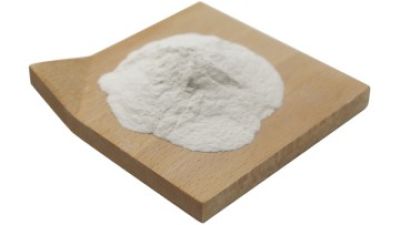
Chitosan hydrochloride (CAS 70694-72-3) is a water-soluble chitosan salt used in research and in the development of ingredient formulations, including selected personal-care and nutrition applications. Its solubility can make it easier to handle than chitosan in some aqueous systems, although performance depends on the formulation and intended use. The FAO’s *State of World Fisheries and Aquaculture 2024* reports 223.2 million tonnes of total aquatic animal and algae production in 2022. This provides context for the scale of aquatic biomass resources, but it is not a measure of chitosan production or availability.
For commercial buyers, this powder is specified at 98% purity, with HPLC listed as the detection method. The supplier indicates that it is in stock, with shipping in 1–3 days, a minimum order quantity of 25 kg, and packaging in 25 kg barrels; sales are not intended for individual customers. HACCP, HALAL, KOSHER, ISO 9001, ISO 22000, and FDA certificates are listed, so buyers should request current documentation and confirm that it applies to the product and intended market. Before purchasing, check the batch-specific test results, handling requirements, and formulation suitability.
FAQS
It is chitosan modified with permanently positive charges. These charges can help it remain soluble in water across a wider pH range. Details still matter.
Ordinary chitosan dissolves best under acidic conditions. Quaternized chitosan may mix more readily in water at different pH levels. Check for cloudiness or settling in your actual formulation.
Its positive charges may interact with negatively charged microbial surfaces and disrupt cell membranes. Results depend on the organism, concentration, pH, and contact time. Not guaranteed.
No. It may improve water compatibility, but it can also change viscosity and material compatibility. More is not automatically better.
It can act as a flocculant or adsorbent, attracting some negatively charged dyes and fine particles. These may clump together for settling or filtration. Not a magic filter.
Compare turbidity, color, and contaminant levels before and after treatment. Also check for residual polymer. Dose, pH, contact time, and competing salts can change results.
Researchers explore it in films, gels, hydrogels, fibers, and coatings. A thin film may cover an uneven surface and help manage moisture. It is not a substitute for clinical evaluation.
Not reliably on their own. Test conditions may differ from real surfaces or finished materials. Small trials help, but their limits deserve attention.
Conclusion
Chitosan Quaternary Ammonium Salt is a chemically modified form of chitosan designed to remain more soluble in water, including under conditions where ordinary chitosan dissolves poorly. Quaternization adds positively charged groups that can strengthen interactions with negatively charged surfaces and microorganisms. These properties make the material of interest for water treatment, where it may help capture certain pollutants or support particle removal, and for antimicrobial applications. Its performance depends on factors such as molecular structure, concentration, pH, and the composition of the surrounding material.
Potential uses also include wound-care materials, biomedical coatings, cosmetics, treated textiles, and food-packaging materials. In these settings, it may contribute to moisture management, surface functionality, or microbial control, but suitability must be assessed for each intended application. Selection should take account of solubility, compatibility, performance needs, and exposure conditions. Safe use requires appropriate testing of the finished product, including its stability and potential effects on people and the environment.