Picking out the best Quercetin supplier isn’t just about comparing prices or checking out shiny product pages. Honestly, quality starts way earlier—things like traceability, rigorous testing, and consistent manufacturing records are key. You know, it’s like, you gotta dig a little deeper.
According to Grand View Research, the global Quercetin market is expected to grow steadily up through 2030. But here’s the thing—market reports can be a bit all over the place since they often use different definitions and categorize products differently. So, use those numbers as a rough guide, not gospel, especially when you come across suppliers pushing products like Quercetin Capsules and Supplements that claim unclear purity. A supplier worth your time will have batch-specific certificates of analysis—things like assay results, heavy metals testing, microbial checks, and residual solvent info. And don’t just glance at a logo; check if they have trusted certifications like cGMP or ISO 22000, plus confirm if independent labs did the testing. Ask who actually performed these tests—this stuff matters.
Then there’s Dr. David C. Nieman, a pretty well-known researcher in the field of Quercetin and exercise. He describes Quercetin as “a flavonoid found in many fruits and vegetables.” Sounds simple, right? But that actually highlights an important point: just because it’s natural doesn’t mean it’s automatically high quality or guaranteed to deliver good results. As someone who's been around the block, I’d say you should also pay attention to where the raw materials come from, how they’re processed, the particle size, stability data, and storage conditions. The powder shouldn’t arrive smelling super chemical-like, with clumps or strange color changes—that’s a red flag. Good suppliers will be upfront and clear about these details.
Of course, no supplier is totally perfect. Testing methods vary, and sometimes certificates don’t tell the full story. That’s when your judgment really kicks in. Compare different documents, ask for recent samples to test yourself, and take a look at their complaint handling history before you decide to go all in. A trustworthy supplier won’t shy away from tough questions—they’ll welcome transparency. Remember, quick and easy answers are usually a warning sign. It’s all about doing your homework and trusting your gut.

How to Choose the Best Quercetin Supplier?
Defining your quercetin product requirements should happen before contacting suppliers. Start with the intended format, such as capsules, tablets, powder, or a liquid blend. Each format may require different particle sizes, flow properties, and dispersibility. Specify the required quercetin content, assay range, and acceptable moisture level. Do not rely on the phrase “high purity” alone. Ask for measurable values.
Your technical sheet should also list identity testing and contaminant limits. Request recent certificates of analysis for representative batches, not only a sample document. Check whether testing uses validated methods, such as HPLC, and confirm the laboratory’s independence. Review heavy metal, microbial, pesticide, and residual solvent results when relevant to your application. Keep the details practical. A clear spreadsheet helps.
Packaging and stability deserve equal attention. Define the package size, liner material, storage temperature, and expected shelf life. Quercetin can be sensitive to light and moisture, depending on the formulation. Ask for stability data under realistic conditions. I have seen attractive specifications fail during production because the powder bridged in the hopper. That detail was missed. Supplier audits should examine batch records, traceability, change control, and complaint handling. A responsive technical team matters, but written evidence matters more. Leave room for revision; your first requirement sheet may be incomplete.
Use these specification benchmarks when screening quercetin suppliers. HPLC assay levels of 95%, 98%, and 99% are commonly used quality tiers for quercetin products. The final requirement should match the intended application, dosage form, regulatory market, and applicable pharmacopeial or food-supplement standards. Always request current certificates of analysis, testing methods, and batch-specific results.
A reliable Quercetin supplier should provide more than a polished product page. Ask for a current certificate of analysis for every production batch. The document should show assay results, test dates, laboratory methods, and lot numbers. I look for identity testing through HPLC or UPLC, not only a basic appearance check. Clear evidence matters.
Quality standards should cover heavy metals, pesticides, residual solvents, and microbial limits. The supplier should explain sampling procedures and name the independent laboratory when possible. GMP-based production, controlled storage, and sealed packaging also reduce avoidable risks. Check the details.
Traceability is equally important. A strong supplier can connect raw material records to the finished Quercetin batch. They should describe the botanical source, extraction process, and stability testing. A practical check is simple: request a sample COA, then compare its lot number with the package. Small mismatches deserve questions.
I once assumed a high assay percentage meant superior quality. That judgment was too narrow. Purity does not explain every issue, such as oxidation, poor handling, or inconsistent particle size. Supplier communication reveals useful evidence too. Do they answer technical questions directly? Do they update documents regularly? Some suppliers may have impressive certificates but weak batch transparency. That remains a concern.
Choosing the best Quercetin Powder supplier requires more than comparing prices or reading polished product pages. Ask for recent testing records tied to the exact batch you may purchase. A credible supplier should provide a certificate of analysis, or COA, from an independent laboratory. Check the test date, batch number, assay result, moisture level, and heavy metal limits. Do not accept a generic document with no traceable lot number. That small detail matters.
Purity claims need careful reading. “High purity” is not a complete answer. Request the analytical method, such as HPLC, and confirm whether the stated percentage refers to quercetin itself or an extract ratio. Testing should also address microbial contamination, residual solvents, pesticides, and common allergens when relevant. Experienced buyers compare results across batches, because one excellent report proves little. A report may look professional but lack laboratory contact details. It is an easy detail to miss.
Tips: Contact the laboratory using independently verified details, not only the supplier’s email. Check whether certification records are current, applicable to the manufacturing site, and supported by audit dates. Look for recognized quality systems, clear storage instructions, and documented handling controls. Ask how deviations are investigated and corrected. If answers remain vague, pause the order. A lower price cannot repair uncertain identity or purity. Keep copies of every COA, specification sheet, and correspondence for later review.
A 2024 Grand View Research report valued the global dietary supplements market at approximately USD 177.5 billion in 2023. This growth increases pressure on quercetin suppliers to prove manufacturing control. Facility evaluation should begin with a current site audit, not a polished sales presentation. Check production zoning, material flow, air handling, water systems, and cleaning records. Small details matter. Dust near open processing areas can signal weak containment.
Compliance should match the product’s destination and intended use. In the United States, dietary supplement facilities must follow FDA 21 CFR Part 111 requirements. These cover specifications, laboratory testing, master manufacturing records, and complaint handling. Ask for recent inspection outcomes, corrective action reports, and certificates from independent laboratories. Verify whether testing covers identity, potency, microbial limits, heavy metals, and residual solvents. A certificate of analysis alone is insufficient.
Strong suppliers also use documented change control and traceable batch records. ISO 9001 certification may support quality management, but it does not replace supplement-specific GMP compliance. Review stability data under relevant temperature and humidity conditions. The data should identify methods, time points, and acceptance limits. Some suppliers provide impressive documents but weak plant evidence. That gap deserves attention. A careful buyer should inspect the facility, question unexplained deviations, and reassess suppliers annually. No audit is perfect. Controls can weaken after approval.
| Evaluation Dimension | Evidence to Request | Recommended Benchmark or Acceptance Criterion | Why It Matters | Priority |
|---|---|---|---|---|
| Manufacturing Site | Current facility address, manufacturing scope, site master file, production-flow diagram, and recent customer or regulatory audit summary. | The facility should be suitable for botanical or active-ingredient production, with documented controls for personnel, materials, equipment, utilities, and environmental conditions. | Confirms that the quoted material is produced in a controlled facility rather than obtained through an unverified trading chain. | Critical |
| GMP Compliance | Valid GMP certificate, inspection history, corrective and preventive action records, and quality-manual index. | For dietary-supplement production, verify applicable food or supplement GMP requirements. For pharmaceutical use, verify compliance with applicable GMP requirements such as 21 CFR Parts 210–211 or EU GMP Part II, depending on the market. | GMP controls help ensure consistent identity, strength, purity, quality, and traceability. | Critical |
| Quality Management System | Quality policy, organization chart, document-control procedure, deviation log, change-control procedure, and internal-audit schedule. | A documented and regularly audited quality system should cover deviations, investigations, CAPA, complaints, recalls, training, and supplier qualification. | Shows whether quality decisions are systematic and independently controlled instead of relying only on final-product testing. | Critical |
| Raw-Material Control | Approved-supplier list, botanical source information, incoming-material specifications, quarantine procedure, and sampling records. | Each incoming lot should remain in quarantine until quality review and release. The supplier should document botanical source, plant part, extraction or purification process, and country of origin where applicable. | Raw-material variability can affect quercetin content, impurity profile, color, solubility, and contaminant risk. | Critical |
| Identity Testing | Representative certificate of analysis, validated analytical method, chromatograms, and reference-standard information. | Identity should be confirmed using a suitable orthogonal approach, such as HPLC retention-time comparison supported by an appropriate spectroscopic or chemical identification method. | Identity testing helps distinguish quercetin from related flavonoids, adulterants, and incorrectly labeled materials. | Critical |
| Assay and Purity | Lot-specific HPLC or equivalent quantitative results, method validation summary, and chromatograms. | The buyer should define a documented assay specification, commonly expressed as a minimum percentage of quercetin on an agreed basis. The specification must state whether results are calculated on an as-is or dry basis. | Assay results are meaningful only when the calculation basis, method, reference standard, and acceptance range are clearly defined. | Critical |
| Contaminant Control | Recent test results for heavy metals, pesticides, residual solvents, microbiological limits, aflatoxins, and other region-specific contaminants. | Results should comply with the destination market's legal limits and the buyer's approved specification. Heavy metals should be tested with a suitable validated technique such as ICP-MS or ICP-OES where appropriate. | Botanical and chemically processed materials may carry contamination risks that are not visible from appearance or assay alone. | Critical |
| Microbiological Quality | Lot-specific total aerobic microbial count, total yeast and mold count, specified pathogens, and test methods. | Acceptance limits must be set according to intended use, dosage form, pharmacopoeial requirements, and destination-market regulations. Absence of specified pathogens should be demonstrated where required. | Microbiological quality affects product safety and shelf life, especially when the ingredient is used in powders, capsules, or liquid formulations. | High |
| Process Validation | Process-validation protocol and report, critical-process-parameter list, cleaning-validation summary, and reprocessing policy. | Critical steps such as extraction, purification, drying, milling, blending, and packaging should have defined parameters, acceptance criteria, and documented validation or qualification evidence. | Validated processes reduce lot-to-lot variation and help prevent cross-contamination or cleaning-related carryover. | High |
| Equipment and Utilities | Equipment qualification status, calibration certificates, preventive-maintenance records, water-quality program, and HVAC or environmental-monitoring summary. | Critical instruments should be calibrated at defined intervals, and production utilities should be qualified and monitored according to their intended use. | Reliable equipment and utilities are essential for accurate testing, controlled processing, and reproducible product quality. | High |
| Traceability | Sample batch record, raw-material lot linkage, packaging record, distribution record, and mock-recall or recall procedure. | The supplier should be able to trace each finished lot backward to critical raw materials and forward to customers, with records retained for the required regulatory period. | Effective traceability enables rapid investigation, targeted withdrawal, and regulatory reporting when a quality issue occurs. | Critical |
| Certificate of Analysis | Lot-specific CoA containing product name, lot number, manufacturing date, retest or expiry date, test methods, results, specifications, and authorized approval. | The CoA should report actual numerical results rather than only “pass,” and should match the agreed specification and the material shipped. | A complete CoA provides evidence that the delivered lot was tested and released under controlled procedures. | Critical |
| Stability Program | Accelerated and long-term stability protocols, storage conditions, packaging configuration, sampling time points, and trend reports. | Stability data should support the proposed retest or shelf-life period under clearly stated temperature, humidity, light, and packaging conditions. | Quercetin quality may be affected by oxidation, light, moisture, temperature, and packaging permeability. | High |
| Packaging and Storage | Packaging specification, container-closure compatibility data, warehouse-monitoring records, and shipping qualification. | Packaging should protect the material from moisture, light, contamination, and physical damage. Storage and transport conditions should be defined and monitored. | Appropriate packaging helps preserve assay, appearance, flow properties, and microbiological quality through delivery. | High |
| Food-Safety Controls | HACCP plan, food-safety risk assessment, allergen-control statement, foreign-material controls, and sanitation records. | For food or supplement applications, the site should operate a documented preventive food-safety system appropriate to the product and production environment. | Food-safety controls address hazards that may not be covered by chemical assay testing alone. | High |
| Regulatory and Market Fit | Product specification, regulatory-status statement, allergen and GMO declarations where relevant, country-of-origin documents, and export documentation. | All documentation should match the intended application and destination market, including permitted ingredients, labeling requirements, contaminant limits, and import rules. | A technically acceptable ingredient may still be unsuitable if it does not meet the regulatory requirements of the target market. | Critical |
| Third-Party Testing | Independent laboratory reports, laboratory accreditation details, chain-of-custody records, and test-sample identification. | Use an appropriately competent laboratory for confirmatory or high-risk testing. Laboratory competence should be verified against the applicable accreditation and method requirements. | Independent testing can identify discrepancies between supplier-reported results and the actual delivered material. | High |
| Supplier Performance | On-time delivery data, lot-acceptance rate, complaint history, response-time records, and CAPA closure performance. | Evaluate documented performance over multiple shipments rather than relying on a single sample or audit. Set written targets for delivery, quality, and complaint response. | Consistent operational performance is important for production planning and long-term supply continuity. | Standard |
| Commercial and Supply Continuity | Lead time, minimum order quantity, capacity statement, business-continuity plan, alternate-site strategy, and notice period for major changes. | The supplier should provide realistic capacity information, defined change-notification procedures, and a documented plan for disruptions affecting materials, utilities, equipment, or logistics. | Supply continuity protects against unexpected production interruptions and unapproved process changes. | High |
| Assessment note: The benchmarks above are purchasing and quality-assurance checkpoints, not universal product specifications. Final acceptance limits should be agreed in writing according to the intended use, applicable pharmacopoeia, destination-market regulations, validated analytical methods, and the buyer's approved product specification. | ||||
Price alone rarely identifies the best quercetin supplier.
Request a detailed quotation covering assay, particle size, packaging, testing, minimum order quantity, and delivery terms. McKinsey’s 2023 Global Supply Chain Leader Survey found that 90% of companies invested in supply-chain resilience. That statistic supports comparing total landed cost, not only the kilogram price. A cheaper offer may hide higher testing, storage, or expedited freight costs. I would also request three recent invoices or cost breakdowns. Few buyers ask.
Supply capacity needs evidence.
Ask for monthly production capacity, current utilization, backup facilities, and validated raw-material sources. Review batch records, certificates of analysis, heavy-metal results, microbiological limits, and stability data. USP quality frameworks emphasize identity, strength, purity, and contamination controls. Those documents reveal more than polished sales language. One weakness remains: capacity figures can be optimistic. Require production records from the previous six to twelve months.
Lead time should be measured from purchase order to released goods, not factory dispatch.
The 2024 UNCTAD Review of Maritime Transport documented continuing disruptions and freight volatility across major shipping routes. Build a buffer for testing, customs, port delays, and document corrections. A practical benchmark is 30 days of safety stock for stable demand, although seasonal launches may need more. Ask suppliers to quote normal, constrained, and emergency lead times. Short promises deserve scrutiny.
Choosing a quercetin supplier requires more than comparing prices. The 2023 Consumer Survey by the Council for Responsible Nutrition reported that 74% of U.S. adults use dietary supplements. That level of demand makes supplier evidence especially important. Ask for a current certificate of analysis, batch-specific test results, and documented identity testing. Generic specifications are not enough. The paper trail matters.
Review the supplier’s support before placing a large order. Reliable teams explain quercetin assay methods, residual solvent limits, heavy-metal controls, and storage conditions. They should also provide traceability from raw material to finished batch. USP quality guidance emphasizes identity, strength, purity, and contaminant control for dietary supplements. Check whether independent laboratories perform these tests. A polished PDF can still hide gaps.
Reputation needs evidence, not enthusiastic claims. Examine audit history, response times, complaint handling, and consistency across several batches. The FDA’s Current Good Manufacturing Practice framework requires documented controls, but certification alone does not guarantee flawless performance. Ask difficult questions. See what happens. One practical test is requesting a redacted deviation report or corrective-action example. Some suppliers may refuse, and that is informative. I would also compare recent customer references, although references can be selective. No supplier is perfect; transparent limitations are often more trustworthy than absolute promises.
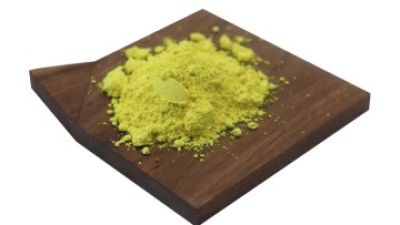
CAS 117-39-5 Quercetin 95% Powder is a high-purity botanical flavonoid designed for research, formulation, and functional ingredient applications. With a 95% assay confirmed by HPLC, it offers consistent quality for laboratories and manufacturers seeking a reliable quercetin source. The product has the molecular formula C₁₅H₁₀O₇ and a molecular weight of 302.24. Quercetin is commonly studied for its antioxidant properties and is used in nutritional, cosmetic, food science, and formulation research. Its potential applications include ingredient development, analytical testing, and experimental studies of plant-derived compounds.
For quality evaluation and purchasing decisions, buyers should review the assay method, chemical identity, physical specifications, packaging, and storage conditions. This material has a melting point of approximately 316.5°C and an estimated boiling point of 363.28°C, supporting identification and process planning. The CAS number, 117-39-5, helps ensure accurate sourcing and documentation. Available inventory is currently in stock, with an estimated shipping speed of 1–3 days, making it suitable for projects requiring timely material availability. As with any research or formulation ingredient, the appropriate grade, testing records, and intended-use requirements should be confirmed before purchase.
Specify capsules, tablets, powder, or liquid blends. Define quercetin content, assay range, particle size, moisture limit, and dispersibility. “High purity” is not measurable enough.
Request batch-specific certificates of analysis and identity-testing results. Review heavy metals, microbes, pesticides, and residual solvents when relevant. Independent testing adds confidence.
Define package size, liner material, storage temperature, and expected shelf life. Light and moisture may affect some formulations. Ask for stability data under realistic warehouse conditions.
A powder may bridge inside a hopper instead of flowing smoothly. This can interrupt filling and create inconsistent batches. Specifications can miss this.
Compare total landed cost, not only the kilogram price. Include testing, packaging, shipping, storage, minimum order quantities, and possible expedited freight. Cheap offers may hide extra costs.
Ask for monthly capacity, current utilization, backup facilities, and raw-material sources. Request production records from the previous six to twelve months. Capacity claims can be optimistic.
Measure from purchase order to released goods, not factory dispatch. Include testing, customs, port delays, and document corrections. Build safety stock for unstable periods.
Check response times, audit history, complaint handling, traceability, and batch consistency. Request a redacted deviation report or corrective-action example. Refusal is informative. No supplier is perfect.
Choosing the best Quercetin supplier requires a structured evaluation rather than focusing on price alone. Begin by defining your product requirements, including the desired form, purity level, dosage specifications, packaging, and intended application. Then compare suppliers according to their quality standards, raw material controls, production procedures, and consistency between batches. Reliable suppliers should provide clear testing records, certificates of analysis, purity data, and relevant certifications that can be independently verified.
It is also important to assess the supplier’s manufacturing facilities, quality management systems, regulatory compliance, production capacity, inventory planning, and lead times. Competitive pricing should be considered alongside supply stability and the ability to meet future demand. Finally, review the supplier’s technical support, product documentation, communication practices, and industry reputation. A dependable Quercetin supplier should offer transparent information, responsive service, and consistent quality, helping buyers reduce procurement risks and establish a stable, long-term supply relationship.