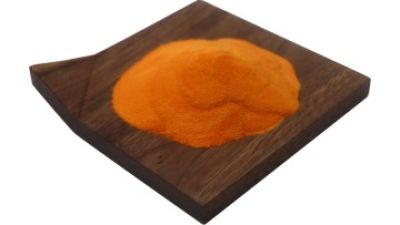
These days, the global demand for Coenzyme Q10 is really picking up across a bunch of different areas—think dietary supplements, sports nutrition, and even medical research. According to Grand View Research, people are mainly after it for supporting heart health, aging gracefully, and boosting energy levels. Meanwhile, Fortune Business Insights points out that the market is expected to keep growing steadily into the early 2030s. But here’s the thing—different reports sometimes don’t quite agree on the numbers. That’s because they use different definitions, focus on different regions, or categorize products in various ways.
If you’re looking into sourcing CoQ10 from China, this guide should give you a solid starting point. It highlights some of the top suppliers around, considering factors like how big their manufacturing setups are, what kinds of products they make, their quality standards, experience in exporting, and how detailed their technical documentation is. Things like GMP certificates, ISO certifications, batch-specific Certificates of Analysis, stability data, and third-party test results can all tell you a lot about a company's reliability.
Companies like Kaneka, Zhejiang Medicine, NHU, and others each have their own strengths. Some emphasize advanced fermentation tech, while others might stand out with larger capacity, better prices, or more comprehensive formulation support. But here’s a little tip—bigger factories don’t always mean better traceability or quality. Similarly, a lower price quote might skip things like testing, packaging, or helping with regulatory stuff.
So, it’s really smart to double-check their certifications directly and ask for recent samples before you commit to anything. Of course, this isn’t a foolproof formula—more like common sense advice. Also, keep in mind that public info can sometimes be a bit out of date or incomplete, so it’s worth doing your own due diligence. Ultimately, your choice should align with your target market, preferred dosage form, certification needs, and risk management considerations. Industry reports can point you in the right direction, but trusting your own research and checks will give you the confidence you need to make a good decision.
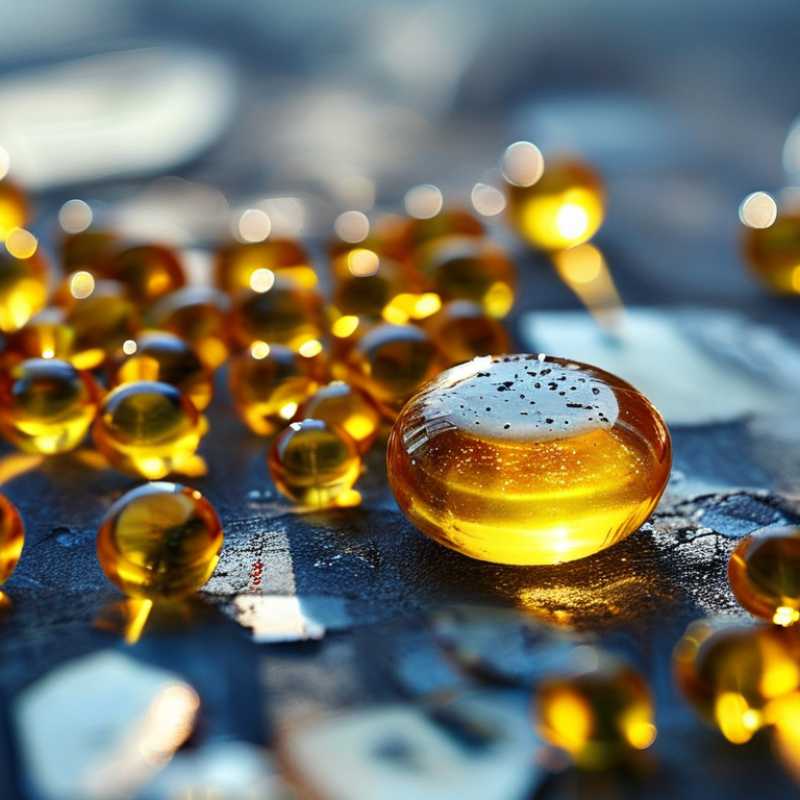
For global buyers comparing China’s top 10 coenzyme Q10 suppliers, product knowledge should guide every shortlist. CoQ10 supports mitochondrial energy production and acts as a lipid-soluble antioxidant. It appears mainly in ubiquinone and ubiquinol forms. Ubiquinol is the reduced form, while ubiquinone is the oxidized form. Absorption can differ between individuals. Food intake and formulation also matter.
Grand View Research estimated the global CoQ10 market at roughly USD 0.8 billion in 2023, with continued growth expected through the decade. Industry demand comes from dietary supplements, functional foods, sports nutrition, and selected cosmetic applications. Buyers often request powders, oil suspensions, softgels, and water-dispersible preparations. A 2023 Nutrients review noted growing interest in bioavailability, but clinical outcomes remain uneven. More research is needed. That point is easy to overlook.
Tips: Ask suppliers for assay results, residual-solvent data, stability studies, and identity testing. Check whether testing covers both ubiquinone and ubiquinol. Review batch consistency, not only the first sample. Light and oxygen can reduce product quality, so opaque packaging and controlled storage deserve attention. Specifications should match the target market’s regulations. A low price may hide weaker dispersion or shorter shelf life.
China Top 10 Coenzyme Q10 Suppliers for Global Buyers?
China’s Coenzyme Q10 supplier market is evaluated through evidence, not catalog claims. Grand View Research estimated the global CoQ10 market at about USD 1 billion in 2023. Its forecast also indicates strong double-digit growth. These figures explain the crowded Chinese supplier field. However, market reports use different product definitions. That is an important weakness. Buyers should compare manufacturing records, not only rankings.
Experienced purchasers usually review GMP compliance, ISO 9001 systems, and independent laboratory results. Each batch should show identity, assay, residual solvents, heavy metals, and microbial limits. For Pqq Coenzyme Q10 products, buyers should confirm whether PQQ is blended, coated, or separately supplied. The specification must state exact percentages. A certificate of analysis is useful, but it is not complete proof. Laboratories should have suitable accreditation, such as ISO/IEC 17025. Export experience also matters. Ask for anonymized shipping records, stability data, and recall procedures.
Tips: Request three recent batch reports. Check whether test dates match production dates. Visit the facility when possible. Review change-control records and complaint handling. A low price can hide weaker testing, unstable raw materials, or inconsistent particle size. Do not accept vague phrases like “pharmaceutical grade.” Ask which standard defines that claim. Some suppliers answer slowly. That may reveal limited technical support, though it is not conclusive.
China’s top 10 coenzyme Q10 suppliers at a glance represent different strengths, production scales, and export capabilities. The shortlist includes manufacturers focused on pharmaceutical-grade ubiquinone, food-grade powder, softgel-ready material, and water-dispersible formulations. Some operate modern facilities near major ports, while others offer more flexible support for smaller orders. Several suppliers provide GMP-based production, ISO systems, batch traceability, and third-party testing. Buyers should request recent certificates, not rely on website claims.
Quality checks should include HPLC assay results, impurity profiles, residual solvent data, heavy metal limits, and microbiological reports. A reliable supplier can explain particle size, stability conditions, packaging barriers, and recommended storage temperatures. Dark, sealed containers matter because coenzyme Q10 can degrade under light and oxygen. Export experience also deserves attention. Documentation may include a certificate of analysis, specification sheet, safety data sheet, and origin records. Small details matter.
The strongest candidates usually support samples, pilot batches, and pre-shipment inspection. Yet “top” is not absolute. A large factory may not handle customized packaging well, while a smaller producer may respond faster but lack broad regulatory experience. That trade-off deserves honest review. Buyers should compare ten suppliers through verified samples, communication speed, complaint procedures, payment terms, and delivery records. One overlooked issue is consistency between sample and bulk production. Ask for retention samples and clear acceptance standards before signing.
China’s leading CoQ10 suppliers usually offer ubiquinone, ubiquinol, powder, softgels, and customized premixes. Their product portfolios serve dietary supplement, nutrition, and private-label applications. Buyers should compare assay levels, particle size, stability data, and packaging options. A clear certificate of analysis matters more than a polished catalog.
Manufacturing strength varies across the ten supplier profiles. Some operate fermentation-based production lines with controlled temperature and traceable batch records. Others focus on encapsulation, blending, or finished softgel production. Strong facilities normally show documented quality systems, validated testing, clean production zones, and reliable raw material controls. Ask for recent audit evidence. Do not rely on old certificates.
Export reach is another practical difference. Established suppliers may ship regularly to North America, Europe, Southeast Asia, Australia, and the Middle East. Their experience often includes customs documents, multilingual labels, pallet planning, and temperature-aware logistics. However, broad export claims need verification through shipment records or customer references. No supplier is perfect. A factory may have excellent powder quality but limited formulation support. Another may respond quickly yet lack flexible minimum order quantities. Buyers should test samples, review stability results, and assess communication before signing a long-term agreement.
When evaluating Chinese coenzyme Q10 suppliers, global buyers should examine more than certificate images. A reliable facility should provide current GMP, ISO 9001, ISO 22000, or HACCP documentation. Each certificate must match the legal manufacturing entity and production site. Dates matter.
For Pure Coenzyme Q10, request a batch-specific certificate of analysis. It should show assay, appearance, moisture, residual solvents, heavy metals, and microbiological results. HPLC testing is especially useful for confirming identity and purity. Independent laboratory verification adds confidence. Still, one test cannot prove long-term consistency.
Production capacity requires practical evidence. Ask for annual output, standard batch size, lead time, and storage conditions. A clean warehouse should show sealed drums, readable labels, and controlled temperature records. Supplier audits can reveal details that brochures omit. I once found capacity claims difficult to compare because some suppliers reported theoretical output, not verified shipments.
Traceability deserves equal attention. Buyers should check whether each batch connects to raw materials, operators, test records, and shipment documents. Strong suppliers normally retain samples for stability review. Their quality teams should answer technical questions without vague promises. Mistakes can happen, even in certified factories. The real question is how quickly and transparently they investigate them.
Global buyers comparing Coq10 Coenzyme Q10 suppliers should examine more than the quoted kilogram price. Ask whether the offer includes packaging, testing, export documents, and shipping preparation. A low price may hide higher costs later. Request recent batch records, specifications, heavy-metal results, and stability data. Confirm the active form, purity range, storage conditions, and production capacity. A supplier should explain these details clearly, not simply send a polished quotation.
Tips
Compare three written quotations. Record price breaks by volume. Check MOQ against your sales forecast. Ask for a pilot order before committing to a large shipment. For customization, define capsule strength, powder format, flavor, color, packaging size, and label language. Also confirm setup fees and revision limits. Small details matter.
Key Consideration
MOQ often changes with packaging and formulation choices. Stock powder may require less volume, while private-label packaging can demand several thousand units.
Buyers should request a complete cost table, including samples, artwork, testing, and delivery terms. Customization sounds simple, but each change can affect lead time and compliance documents. I have found that vague promises create avoidable delays. Even a careful assessment can miss something, so keep written approvals and review every specification before production. Supplier audits, traceable records, and responsive technical support offer stronger evidence than sales claims alone.
China Top 10 Coenzyme Q10 Suppliers for Global Buyers?
Importing Coenzyme Q10 Powder requires more than comparing quotations. A 2024 Grand View Research assessment estimated the global CoQ10 market at over USD 1 billion, with continued growth expected through 2030. This demand attracts capable manufacturers and inexperienced traders. Buyers should verify factory ownership, production capacity, batch records, and export history before signing contracts. Certificates can be outdated. That happens.
Compliance begins with product classification and destination-market rules. UN Comtrade data often groups vitamin-related products under broad HS categories, so customs values may not accurately represent CoQ10 demand. Confirm the correct tariff code with a licensed customs professional. Request specification sheets, allergen statements, heavy-metal results, microbial testing, and stability data. Independent laboratory verification remains valuable, especially when the powder has a strong odor or unusual color.
A serious supplier should support third-party audits and provide traceability from raw material to finished batch. FDA dietary supplement CGMP rules under 21 CFR Part 111 emphasize identity testing, quality control, and documented manufacturing procedures. European buyers should also review applicable food-supplement and novel-food requirements before import. Partnership terms should define minimum order quantities, retesting rights, packaging controls, lead times, and recall responsibilities. Do not rely on a certificate alone. I would also test a pilot shipment before committing to annual volume. That step feels slower, but it can expose weak documentation, inconsistent assay results, or poor moisture protection before the larger shipment arrives.
| Rank | Anonymized Supplier Profile | Typical Product Scope | Common CoQ10 Forms | Key Quality Evidence to Request | Regulatory and Compliance Checks | Import Documentation | Partnership Suitability | Buyer Verification Priority |
|---|---|---|---|---|---|---|---|---|
| 1 | Supplier Profile 01 Established exporter | Bulk nutraceutical ingredient manufacturing with private-label and formulation support. | Ubiquinone CoQ10; oil-dispersible and powder preparations. | Current GMP evidence, ISO 9001 or equivalent quality system, batch-specific Certificate of Analysis, stability data, and contaminant testing. | Confirm facility scope, allergen controls, non-GMO status where required, and suitability for the destination market. | Commercial invoice, packing list, certificate of origin, transport document, HS-code confirmation, and product specification sheet. | Strong fit for recurring B2B orders and multi-market distribution. | Audit and verify before ranking. |
| 2 | Supplier Profile 02 High-volume producer | Large-scale ingredient supply for dietary supplements, functional foods, and premixes. | Standard CoQ10 powder; water-dispersible and emulsified formats. | Assay method, particle-size distribution, microbiological limits, heavy-metal results, residual-solvent data, and lot traceability. | Review food or supplement registration requirements in the importing country and confirm labeling support. | Verify invoice description, country of origin, declared net weight, batch number, and customs classification. | Suitable for buyers prioritizing supply continuity and standardized specifications. | Validate production capacity and lead-time records. |
| 3 | Supplier Profile 03 Specialty-formulation partner | Customized premixes, encapsulation support, and formulation development for finished products. | Ubiquinone and ubiquinol formats; softgel and capsule-ready preparations. | Formulation trials, accelerated-stability results, dissolution or dispersion data, and compatibility information for excipients. | Check whether the finished product is regulated as a food, supplement, medicine, or traditional product in the target market. | Request separate documentation for active ingredient, excipients, packaging components, and finished-product samples. | Well suited to buyers seeking product differentiation and technical collaboration. | Confirm ownership of formulations and change-control procedures. |
| 4 | Supplier Profile 04 Export-oriented ingredient trader | Sourcing and distribution of CoQ10 from qualified manufacturing facilities. | Standard powder and oil-based CoQ10, subject to source availability. | Obtain the original manufacturer’s CoA, manufacturing-site details, traceability documents, and authorization to distribute. | Confirm that the declared manufacturer, exporter, and certificate holder are consistent across all documents. | Commercial invoice, packing list, origin certificate, manufacturer declaration, and lot traceability records. | Useful for small and medium buyers requiring flexible sourcing. | Verify whether the supplier is a manufacturer or an intermediary. |
| 5 | Supplier Profile 05 Pharmaceutical-grade candidate | Higher-control production intended for regulated or quality-sensitive applications. | High-assay ubiquinone; selected micronized or formulated grades. | Validated analytical methods, impurity profile, reference standards, batch records, deviation history, and quality-agreement capability. | Determine whether pharmaceutical, food, or supplement GMP expectations apply to the intended use. | Confirm product classification, import permit requirements, certificates of analysis, and release documentation. | Appropriate for buyers with strict quality systems and formal supplier qualification. | Request a technical and quality audit package. |
| 6 | Supplier Profile 06 Small-batch flexible supplier | Low-to-medium volume production, sampling, and customized packaging options. | CoQ10 powder, oil suspension, capsules, and softgel-ready material. | Sample-to-batch consistency, minimum order quantity, packaging specifications, shelf-life evidence, and retained-sample policy. | Confirm whether the supplier can provide destination-specific labels, declarations, and language requirements. | Check carton dimensions, palletization, moisture protection, and shipping conditions before dispatch. | Suitable for pilot launches, market testing, and smaller purchase programs. | Test a commercial sample rather than relying only on a laboratory sample. |
| 7 | Supplier Profile 07 Private-label specialist | Finished supplements, contract packaging, label development, and export-ready presentation. | CoQ10 capsules, softgels, tablets, and combination formulas. | Finished-product CoA, master formula, packaging-material specifications, stability data, and label-artwork approval process. | Review claims, nutrition panels, permitted ingredients, dosage limits, and notification or registration rules. | Request product-specific invoice wording, packing list, origin documentation, and export declarations. | Good fit for distributors launching a branded product without owning production assets. | Obtain written approval for claims and artwork before production. |
| 8 | Supplier Profile 08 Technical export supplier | Ingredient supply supported by technical files, application guidance, and customer documentation. | Powdered CoQ10, oil-soluble grades, and application-specific dispersions. | Full specification, test methods, allergen statement, irradiation statement, BSE/TSE statement where relevant, and change-notification policy. | Check destination-country requirements for novel foods, supplement ingredients, and permitted health claims. | Verify HS classification with a customs broker and ensure documents use consistent product descriptions. | Suitable for importers that require strong technical communication and documentation. | Compare document consistency across at least two production lots. |
| 9 | Supplier Profile 09 Cost-focused manufacturer | Standardized CoQ10 supply for price-sensitive applications and routine purchasing. | Conventional ubiquinone powder and basic oil-based preparations. | Verify assay, microbiology, heavy metals, residual solvents, shelf life, packaging integrity, and quality-complaint handling. | Do not treat a low quotation as proof of compliance; confirm all mandatory documents before ordering. | Compare total landed cost, including freight, insurance, duties, testing, relabeling, and customs brokerage. | Potentially suitable for established buyers with their own quality-control resources. | Use independent pre-shipment testing for initial orders. |
| 10 | Supplier Profile 10 Emerging partnership candidate | Developing export capability with possible custom formulation or regional-market focus. | CoQ10 powder, capsules, and blended nutraceutical formats, depending on validated scope. | Confirm legal entity, factory address, manufacturing authorization, quality manual, batch records, and customer references. | Assess readiness for destination-market registration, importer-of-record requirements, and post-market complaint support. | Start with samples and a small controlled shipment using clearly defined Incoterms and payment milestones. | Could suit buyers seeking a long-term development relationship after qualification. | Require enhanced due diligence before any deposit or exclusivity agreement. |
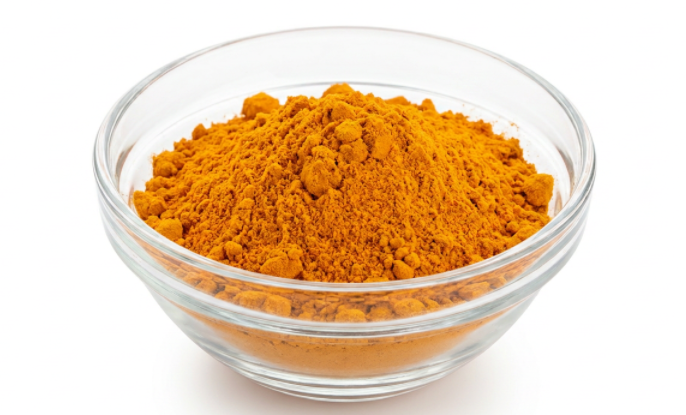
Coenzyme Q10 (CoQ10) powder, CAS 303-98-0, is widely used in dietary supplements, functional foods, cosmetics, and pharmaceutical formulations. According to Grand View Research, the global CoQ10 market was valued at approximately USD 721.6 million in 2023 and is projected to expand at a compound annual growth rate of about 9.9% through 2030. This growth reflects increasing interest in antioxidant ingredients and products supporting cellular energy metabolism. Available grades include 10%, 20% water-soluble, 40%, and 98% CoQ10, enabling manufacturers to select an appropriate concentration for different formulation and bioavailability requirements.
Quality control is supported by HPLC detection, while the powder has a reported melting point of 49–51℃. CoQ10 is generally stable but can be sensitive to light and heat; storage at -20℃ away from light is recommended, and contact with strong oxidants should be avoided. The ingredient is offered in 25 kg drums or 1 kg bags, with typical shipping within 3–5 days. Manufacturing and documentation may be supported by cGMP, ISO22000, ISO9001, Kosher, BRC, and Halal certifications, helping buyers evaluate traceability, hygiene management, and suitability for international supply chains.
: Evaluate evidence, not catalog claims. Review certifications, batch reports, export records, and complaint procedures. Rankings can help, but they are not final proof.
Request a current certificate of analysis, specification sheet, safety data sheet, and origin records. The documents should identify the manufacturing site and legal entity. Check certificate dates carefully.
It should include assay, identity, moisture, residual solvents, heavy metals, and microbial results. HPLC testing can support identity and purity checks. One report is not enough.
Request three recent batch reports. Compare test dates with production dates. Look for stable results across batches. Small differences deserve questions.
Ask for annual output, standard batch size, lead time, and storage conditions. Request evidence from verified shipments, not only theoretical capacity. A large number may look impressive.
Inspect sealed drums, readable labels, controlled temperatures, and clean storage areas. Dark, sealed containers help protect the material from light and oxygen. Visit the facility when practical.
Particle size can affect handling, mixing, and product consistency. Ask whether the material is powder, coated, blended, or separately supplied. Specifications should state exact percentages and storage temperatures.
Larger facilities may offer stronger capacity and export systems. Smaller producers may answer faster or support flexible orders. Neither option is automatically better. That trade-off needs review.
Request samples, pilot batches, retention samples, and pre-shipment inspection. Define acceptance standards before production begins. Confirm payment terms and delivery records. Sample-to-bulk consistency is often overlooked.
Ask for change-control records, investigation procedures, and recall processes. Reliable teams explain problems clearly and respond quickly. Certificates cannot prevent every mistake. Transparency matters more than perfect promises.
This article provides a practical overview of China’s Coenzyme Q10 supplier market for global buyers. It explains the functions, common forms, and major applications of Coenzyme Q10 in nutritional, wellness, cosmetic, and related industries. It also outlines how suppliers can be evaluated through product consistency, manufacturing capabilities, quality management systems, certifications, testing procedures, production capacity, and export experience. A structured comparison of leading supplier types helps buyers understand differences in product specifications, technical support, and international supply capabilities.
The article further examines key purchasing considerations, including pricing, minimum order quantities, private-label or customized solutions, packaging, lead times, and communication efficiency. It also highlights the importance of reviewing import documentation, product compliance, safety data, traceability, and destination-market requirements before placing an order. By combining supplier due diligence with clear technical and commercial expectations, global buyers can reduce procurement risks, select suitable partners, and build reliable long-term supply relationships.