Leave Your Message
- Phone
- E-mail
- Whatsapp
- WeChat
When we talk about China’s top 10 producers of Choline Chloride Powder, it really highlights how quickly the global animal nutrition scene is evolving. This supplement plays a key role in helping animals like poultry, livestock, and those in aquaculture transport fats, build cell membranes, and grow normally. The demand for it is pretty closely tied to feed production, premix recipes, and export markets.
According to Grand View Research's 2024 market report, animal feed is by far the biggest use for choline chloride. Mordor Intelligence also points out that the demand from feed is what’s mainly driving growth in this sector. The EFSA FEEDAP Panel emphasizes that safety is super important, especially when it comes to dosing correctly and ensuring what’s on the label matches the actual product. This means that things like purity, moisture content, particle size, and consistent testing are all pretty critical when choosing a supplier.
Dr. Steven H. Zeisel, a respected researcher on choline, sums it up nicely: “Choline is an essential nutrient for both humans and animals.” That’s a big reason why anyone evaluating manufacturers should look into their production capacity, formulation options, quality control systems, export experience, and documentation. You’ll often see products offered at 50% and 60% liquid solutions, 60% powders, or even higher concentrations. But don’t just take their word for it—certification claims must be checked and verified.
Quality really matters here. Sometimes, the public info out there isn’t complete—manufacturers might boast about huge capacities but forget to share test data or quality reports. That’s a red flag. A trustworthy supplier should be able to provide recent certificates of analysis, details about raw material sources, batch records, and clear packaging info. Think of this as a good starting point, not the final answer. Before placing an order, you’ll want to double-check specifications, delivery times, and whether they meet regulatory standards. And remember, the cheapest option isn’t always the smartest—sometimes you get what you pay for, or even less.
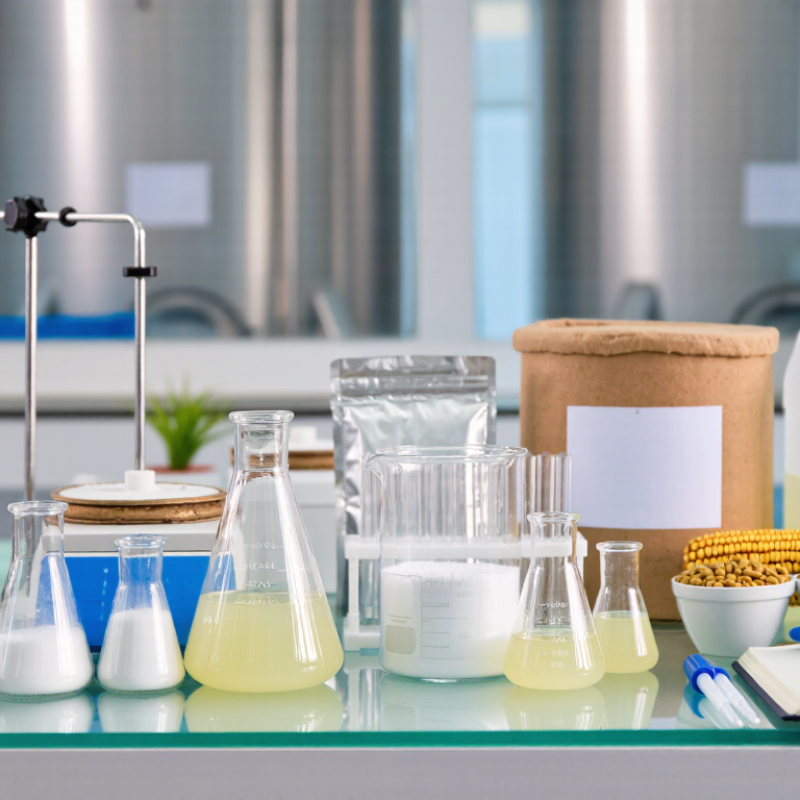
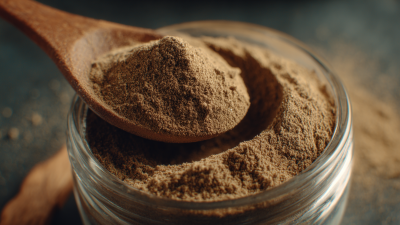
Choline Chloride powder is a concentrated source of choline, an essential nutrient for poultry, pigs, and other livestock. It supports cell membranes, fat transport, and normal nerve function. In feed formulas, it is often blended with grain-based ingredients or premixes. NRC’s Nutrient Requirements of Swine identifies choline as a required nutrient, while poultry nutrition references also recognize its role in growth and metabolism. The need is practical. Poor formulation can affect flock uniformity, liver health, and feed efficiency.
Global demand is significant. Alltech’s 2024 Agri-Food Outlook reported approximately 1.126 billion metric tons of commercial feed production in 2023. Even a small formulation error can scale quickly across large feed mills. Choline Chloride quality therefore matters. Buyers should check assay results, moisture, particle size, carrier composition, and contaminant controls. ISO-based laboratory procedures and traceable batch records add useful confidence. Still, testing alone is not enough. Storage humidity can damage powder flow and create uneven mixing.
Tips: Keep sealed bags off the floor. Use dry, ventilated storage. Ask for a recent certificate of analysis and compare it with independent testing when possible. Dosage should follow the species, age, diet, and local feed regulations. It is not a magic powder. Formulation mistakes remain possible.
| Rank | Anonymous Manufacturer Profile | Typical Production Focus | Common Choline Chloride Content | Carrier Material | Typical Moisture Specification | Primary Applications | Important Quality Controls |
|---|---|---|---|---|---|---|---|
| 1 | Large-scale feed-additive producer | High-volume spray-dried powder | 50%, 60%, 70%, or 75% | Vegetable carrier, commonly rice hulls or silica-based material | Typically controlled below 4% for feed-grade powder | Poultry, swine, aquaculture, and ruminant feed | Assay, moisture, particle size, bulk density, and microbiological limits |
| 2 | Integrated choline producer | Choline chloride synthesis and powder processing | 60% and 70% | Plant-based carrier or mineral carrier | Usually specified according to grade and customer requirements | Compound feed and premix manufacturing | Choline chloride assay, free-flowing behavior, chloride content, and stability |
| 3 | Premix-oriented manufacturer | Consistent low-dust powder for premixes | 50% and 60% | Vegetable meal or treated grain carrier | Commonly below 5% | Vitamin-mineral premixes and complete feeds | Dust control, homogeneity, flowability, assay uniformity, and packaging integrity |
| 4 | Export-focused feed-grade producer | Standardized products for international shipment | 60%, 70%, and 75% | Rice hull powder or other approved plant carrier | Often targeted at 3%–5% | International feed mills and premix plants | Certificate of analysis, heavy metals, dioxins where required, and pathogen testing |
| 5 | Customized formulation manufacturer | Tailored concentration and particle-size grades | 30%–75%, depending on formulation | Selected according to animal species and mixing process | Defined by the agreed product specification | Species-specific feed and specialty premixes | Blend uniformity, particle-size distribution, stability, and compatibility with other additives |
| 6 | High-concentration powder producer | Reduced-carrier products for lower inclusion rates | 70% and 75% | Low proportion of plant or mineral carrier | Typically controlled below 4%–5% | High-density premixes and automated feed systems | Concentration accuracy, caking resistance, bulk density, and dispensing performance |
| 7 | Low-dust granulated powder producer | Granulated or agglomerated feed powder | 50% and 60% | Plant-based carrier with binding support where needed | Generally below 5% | Large feed mills requiring clean handling | Granule strength, fines percentage, flowability, assay, and dust generation |
| 8 | Aquaculture-feed supplier | Feed-grade powder designed for aquatic diets | 50% and 60% | Carrier selected for pellet binding and dispersibility | Typically below 5% | Fish, shrimp, and other aquatic animal feeds | Water dispersibility, pellet compatibility, assay, moisture, and microbial quality |
| 9 | Quality-system-driven manufacturer | Batch-controlled feed additive production | 60% and 70% | Approved carrier selected through incoming-material controls | Product-specific documented limit | Feed manufacturers requiring traceable supply | Batch traceability, supplier qualification, HACCP controls, assay testing, and retention samples |
| 10 | Flexible small- and medium-batch producer | Standard and customer-specific powder batches | 50%–75% | Rice hull, silica, grain-based, or other approved carrier | Usually specified between 3% and 5% | Regional feed mills, distributors, and premix blenders | Identity, assay, moisture, particle size, heavy metals, microbiology, and packaging condition |
Request a current specification sheet and three consecutive batch COAs. Check choline content, moisture, heavy metals, and microbiological indicators. One sample is not enough.
Confirm the exact compound, purity, particle size, and intended application. Different choline compounds may look similar in white powder form. Ask for batch-specific testing.
It should show the batch number, production date, test methods, results, and acceptance limits. Verify unusual results with an independent laboratory. Do not rely on copied documents.
Ask for records covering raw material receipt, processing, testing, packing, and storage. Sealed inner liners and readable batch codes are practical evidence. Paperwork can still miss details.
Check humidity control, cleaning procedures, laboratory equipment, and product segregation. Look for dry storage areas and intact bags. A damp liner is a warning sign.
Request monthly capacity, safety stock details, port options, and written lead times. Compare delivery promises with recent export records. Low prices may hide delays.
A physical visit provides stronger evidence than a video audit. Review production records, complaint handling, and cleaning logs. Still, no audit is perfect.
Test identity, purity, moisture, heavy metals, and microbiological quality when appropriate. Run the powder through your own mixing process. Appearance alone proves little.
Compare packaging, payment terms, replacement policies, lead times, and communication speed. The cheapest offer may use weaker packaging. I would check the details twice.
Choline Chloride Powder is an important nutritional additive widely used in animal feed and other approved applications. It supports healthy growth, metabolism, and overall animal performance when included at appropriate levels. This article explains its functions, common grades, product forms, and the factors that affect its quality and usability. It also introduces practical methods for evaluating manufacturers in China, including raw material control, production technology, testing procedures, packaging, and customization capabilities.
The guide compares the capabilities of China’s top 10 Choline Chloride Powder manufacturers without focusing on brand promotion. It highlights quality standards, relevant certifications, production capacity, batch consistency, delivery reliability, technical support, and export experience. Buyers can use these criteria to select a suitable supplier according to product grade, application, order volume, budget, lead time, and compliance requirements. Careful supplier assessment can help ensure stable quality, dependable supply, and long-term cooperation.