Leave Your Message

Reasons for contact:

Where are you in your project?

Product Type(s) of Interest

0%

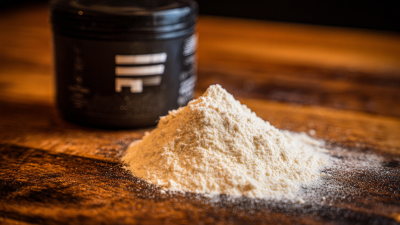
China has really become a major hub for sourcing Creatine Powder. This shift is thanks to their large-scale chemical manufacturing and growing exports of sports nutrition products. But nowadays, buyers aren’t just chasing the lowest prices—they want consistency in quality, documented testing, and reliable delivery. It’s become more about trust than just cost.

According to a report from Grand View Research, the demand for creatine worldwide is booming. The report notes that sports nutrition and dietary supplements are the main uses. That said, numbers from different research firms can vary quite a bit—definitions, regions, and product categories aren’t always aligned, so it’s worth paying attention to those details.

At the end of the day, quality is what really counts.

Jose Antonio, PhD, a respected researcher in sports nutrition and a co-author of the International Society of Sports Nutrition’s guidelines, once said: “Creatine monohydrate is the most effective nutritional supplement available to athletes.” His words give creatine scientific credibility, but they don’t mean you can overlook the importance of good manufacturing practices. Buyers should always check the latest Certificates of Analysis, look at HPLC purity test results, review allergen info, and verify batch traceability. Factory visits can also reveal practical issues—things like dusty packaging or inconsistent weighing can be telltale signs of trouble.

Many top manufacturers in China now offer micronized creatine, private-label options, and proper export documentation. But don’t be fooled by a slick website—that doesn’t automatically mean they have solid technical expertise. It’s wise to compare samples—how they perform, dissolve, moisture control, and how quick they are to respond to inquiries. And if you notice suppliers skipping over some data, that’s a red flag.

This guide aims to help you navigate China’s leading Creatine Powder producers. We focus on their track record, production experience, compliance standards, and how realistically they fit your needs. Sure, price matters. But honestly, reliability is what really matters in the long run.
China Top Creatine Powder Manufacturers for Global Buyers

What Defines a Top Creatine Powder Manufacturer in China

A top Chinese creatine powder manufacturer proves control through records, not polished sales language. Buyers should inspect production experience, technical staff, and export history. The facility should follow recognized quality systems, with clear sanitation procedures and trained operators. GMP-aligned controls matter, but certificates alone are not enough. Ask how often procedures are reviewed.

For Bulk Creatine Powder, reliable manufacturers provide a batch-specific certificate of analysis. It should show identity, assay, moisture, microbiological results, and testing methods. Independent laboratory verification adds useful distance from internal claims. HPLC data can help confirm creatine content when qualified technicians interpret it. Each lot should carry a traceable code, linking raw materials, processing dates, and packaging records. Small details reveal discipline.

Consistency matters in practical use. Powder should disperse predictably, arrive in sealed food-grade packaging, and remain protected from humidity. A serious supplier explains storage limits, shelf-life evidence, and shipment conditions. They should also clarify customs documents and permitted specifications for the buyer’s market. No supplier is flawless. That is worth admitting. A documented deviation, investigation, and corrective action may be more credible than an absolute promise. Factory audits, retained samples, and responsive technical communication help buyers judge reliability before placing a large order.

Key Types and Quality Standards of Creatine Powder

China Top Creatine Powder Manufacturers for Global Buyers
Creatine Monohydrate Powder remains the most studied form for sports nutrition. The International Society of Sports Nutrition’s 2022 position stand reports strong evidence for improved high-intensity performance and lean mass support. It also identifies monohydrate as the preferred reference form. Other types include micronized creatine, creatine hydrochloride, buffered creatine, and creatine ethyl ester. Evidence is not equally strong for every form.
Particle size matters during production. Micronized powder usually disperses faster in water, but it does not automatically prove higher purity. Buyers should request a current certificate of analysis for each batch. Key checks include creatine assay, moisture, particle distribution, heavy metals, microbiological limits, and residual solvents. HPLC testing is widely used for identity and purity verification. Small details matter here.
Food safety controls require more than a clean-looking package.The Codex General Principles of Food Hygiene supports HACCP-based risk maNAGement, while ISO 22000 provides a structured food safety framework. Facilities should also maintain traceability from raw material intake to final shipment. A 2023 industry quality review found that documentation gaps remain common among smaller supplement suppliers. That warning deserves attention. A certificate may look complete, yet sampling methods can still be weak. Global buyers should compare test dates, laboratory qualifications, batch numbers, and storage records before approval.

How Chinese Manufacturers Produce and Test Creatine

China Top Creatine Powder Manufacturers for Global Buyers

How Chinese Manufacturers Produce and Test Creatine

Chinese creatine powder manufacturers typically produce creatine monohydrate through controlled chemical synthesis. Production starts with qualified raw materials, measured water, and documented batch instructions. In stainless-steel reactors, operators control temperature, mixing speed, and reaction time. The resulting crystals are separated, washed, and dried under controlled conditions. Milling and sieving create a consistent powder for blending or direct packing. Small details matter.

Experienced facilities monitor pH, temperature records, and yield during each stage. They also protect product-contact surfaces from dust and contamination. Testing usually includes identity, assay, moisture, particle size, and residual impurities. High-performance liquid chromatography helps confirm creatine content and related substances. Microbiological checks and heavy-metal analysis support buyer safety requirements. Results should connect to a batch number, retained sample, and certificate of analysis.

For global buyers, a factory audit can reveal more than a polished specification sheet. Ask to review calibration records, cleaning logs, supplier approvals, and deviation reports. A clear chain of custody matters from incoming material to sealed export cartons. Testing is not infallible. Sampling can still mislead. Independent verification is sensible for a new supplier or large shipment. Manufacturers may meet the same specification differently, so process transparency deserves careful questions.

China Top Creatine Powder Manufacturers for Global Buyers - How Chinese Manufacturers Produce and Test Creatine

Production or Testing Dimension Typical Industry Practice Common Technical Data or Acceptance Point Typical Verification Method Documents Global Buyers Commonly Request
Product form Creatine monohydrate supplied as a white crystalline powder Molecular formula: C4H9N3O2; molecular weight: approximately 149.15 g/mol Identity testing by infrared spectroscopy, chromatography, or an approved compendial method Product specification, certificate of analysis, and technical data sheet
Raw-material control Incoming raw materials are identified, sampled, and released before use Each lot should have a traceable batch number and documented supplier information Sampling plan, identity test, visual inspection, and review of supplier documentation Raw-material COA, allergen statement, non-GMO statement, and traceability record
Synthesis and reaction control Controlled chemical synthesis followed by separation, purification, and crystallization Reaction temperature, pH, addition rate, and hold time are recorded for each batch Batch manufacturing record, in-process checks, and equipment calibration records Process flow chart, batch record summary, and quality-management certifications
Purification and crystallization Impurities and residual process materials are reduced through filtration, washing, and controlled crystallization Crystal form, particle size, and bulk density should remain within the agreed product specification Microscopy, sieve analysis, particle-size testing, and process inspection Particle-size distribution, mesh-size declaration, and material safety data sheet
Drying and moisture control The crystallized material is dried under controlled conditions before milling or packing A common commercial specification is moisture or loss on drying of not more than 1.0%; the contractual limit may differ Loss-on-drying test or Karl Fischer moisture analysis Finished-product COA, moisture result, and storage-condition statement
Assay and purity Finished creatine powder is tested against the approved specification before release Many commercial specifications set creatine monohydrate assay at not less than 99.9%; buyers should confirm the agreed method and limit Validated HPLC or another documented quantitative method Lot-specific COA showing test method, result, specification, and release status
Identity confirmation Identity is confirmed independently from the quantitative purity result The sample profile must correspond to creatine monohydrate and not merely to a generic nitrogen-containing compound FTIR, HPLC retention-time comparison, or another validated identity procedure Identity-test result, reference standard information, and method validation summary when required
Heavy-metal and elemental impurities Elemental impurities are assessed according to the target market and customer specification Limits are market-specific; lead, arsenic, cadmium, and mercury are commonly included in buyer specifications ICP-MS or ICP-OES after appropriate sample preparation Heavy-metal report, elemental-impurity assessment, and third-party laboratory report when requested
Residual solvents and process impurities Residual substances are controlled according to the manufacturing route and intended application Limits depend on the solvent, applicable regulation, and customer specification; not all products use the same limits Gas chromatography for volatile residual solvents and chromatographic impurity profiling Residual-solvent declaration, impurity profile, and process-risk assessment
Microbiological quality Dry powder is tested for total microbial levels and specified objectionable organisms Acceptance limits vary by destination market and use; common checks include total aerobic count, yeast and mold, and absence of specified pathogens Plate-count methods and validated pathogen-detection procedures Microbiological COA, sanitation records, and environmental-monitoring summary
Particle size and dispersibility Milling, sieving, or agglomeration may be used to meet the buyer's handling and formulation requirements Mesh size, D10/D50/D90 values, flowability, and dispersibility should be agreed before ordering Laser diffraction, sieve analysis, bulk-density testing, and visual dispersion assessment Particle-size report, bulk-density data, and approved sample record
Packaging and storage Moisture-resistant packaging is used to protect the powder during storage and international transport Packaging should be sealed, food-contact suitable where applicable, and labeled with lot number, net weight, and production date Packaging inspection, seal-integrity checks, and warehouse-condition monitoring Packaging specification, label artwork, shelf-life statement, and storage instructions
Batch traceability and release Quality assurance reviews production and laboratory records before releasing a batch for shipment One lot number should link raw materials, processing records, test results, packaging, and shipment documents Document review, deviation assessment, corrective-action records, and final QA approval Lot-specific COA, traceability statement, deviation history, and certificate of conformity

Note: Numerical limits shown above are commonly used commercial reference points, not universal legal requirements. Final specifications should be confirmed against the destination market, intended use, agreed analytical method, and purchase contract.

Certifications and Compliance for Global Buyers

Global demand is rising. Grand View Research estimated the creatine market at USD 566.7 million in 2023, with a projected 17.7% CAGR through 2030. For global buyers, manufacturing certificates matter as much as price. A qualified China-based facility should provide current GMP, HACCP, and ISO 22000 or FSSC 22000 documentation. The certificate must match the actual production site and product category. An impressive PDF is not enough.

Ask for a batch-specific certificate of analysis before shipment. It should show creatine assay, moisture, creatinine, dicyandiamide, heavy metals, and microbiological results. Independent laboratory testing adds useful distance from the factory’s own claims. The International Society of Sports Nutrition identifies creatine monohydrate as the most studied form, but purity still requires verification. Small details matter. Check test methods, laboratory accreditation, sampling dates, and batch numbers. These checks are often skipped under commercial pressure.

Compliance also depends on the destination market. In the United States, dietary supplement manufacturers must follow 21 CFR Part 111, while regulators do not generally preapprove finished supplements. European shipments may require compliance with food safety, labeling, contaminant, and traceability rules. Chinese export documents alone cannot prove market access. I would also review allergen controls, change-management records, recall procedures, and packaging migration tests. No audit is flawless. A supplier with transparent gaps may be more reliable than one offering vague perfection.

Packaging, Private Label, and Custom Formulation Options

Global buyers often need more than a bulk ingredient shipment. They need packaging that survives long-distance transport, changing climates, and warehouse handling. Manufacturers of Pure Creatine Monohydrate Powder can provide sealed tubs, stand-up pouches, or single-serving sachets. Each option requires suitable moisture barriers and accurate filling controls. A small packaging error can affect the customer experience.

Private label projects usually begin with artwork, serving details, and market-specific information. Buyers should request batch numbers, ingredient specifications, certificates of analysis, and stability records. These documents support traceability and help import teams review product quality. Clear communication matters too. A printed label cannot repair unclear specifications.

Custom formulation may include flavor systems, texture adjustments, or different serving sizes. However, every change should be tested for solubility, taste, stability, and manufacturing consistency. A formula that works in a laboratory may behave differently during larger production runs. This is easy to overlook. Experienced teams compare pilot samples with finished batches and record each variation. We still find that some early samples need refinement, especially when packaging materials change. Reliable suppliers explain these limits instead of promising instant perfection. They also confirm minimum order quantities, lead times, inspection procedures, and storage conditions before production begins.

How to Evaluate Suppliers, Pricing, and Export Services

Choosing China-based creatine powder manufacturers requires more than comparing a product quotation. Experienced buyers inspect the Powder Creatine Monohydrate specification, assay result, moisture level, mesh size, and packaging conditions. Request a recent certificate of analysis for the exact batch, not a generic file. Independent laboratory testing can confirm identity and purity before shipment. This small cost may prevent larger losses.

Pricing should be viewed beside minimum order quantity, packaging format, payment terms, and shipping costs. A low factory price can become expensive after relabeling, inland transport, inspection, and customs handling. Reliable suppliers explain their calculation clearly. They should also provide traceable batch numbers, production dates, shelf-life information, and responsive technical communication. Ask how they handle damaged cartons or inconsistent test results. The answer often reveals more than a polished sales presentation.

Tips: Compare at least three written quotations. Check whether testing fees are included. Request photos of sealed cartons and pallet loading. Confirm export documents, commercial invoices, packing lists, certificates of origin, and destination requirements before payment. A supplier with practical export experience should understand container schedules and moisture protection. Still, no supplier is perfect. Delays happen, and documents may need correction. Build inspection time into the schedule instead of trusting promises alone. Start with a manageable trial order when product consistency remains uncertain.

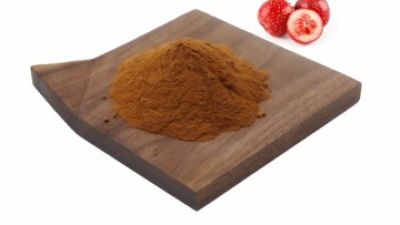
Natural Hawthorn Berry Extract Powder: Benefits, Uses, and Quality Considerations

Natural hawthorn berry extract powder is produced from the fruit of *Crataegus oxyacantha auct.*, a botanical traditionally valued for its polyphenols, flavonoids, and proanthocyanidins. Industry market analyses have reported steady growth in demand for botanical extracts, with the global herbal-extract sector commonly projected to expand at approximately 6% annually through the end of this decade. This trend reflects growing interest in plant-based ingredients for functional foods, beverages, dietary supplements, and wellness formulations. Hawthorn fruit powder is typically used as an ingredient rather than a stand-alone treatment, and its traditional cardiovascular applications should be communicated responsibly and supported by applicable regulatory review.

Quality considerations are essential when selecting a commercial supply. This product is a brown powder made from the fruit, with storage recommended in a cool, dry place to help protect its natural compounds from moisture, heat, and oxidation. Buyers should request botanical identification, contaminant testing, microbiological analysis, and batch-specific documentation before use. Certifications including ISO 9001, ISO 22000, Kosher, Halal, and HACCP provide additional evidence of structured quality and food-safety management. Professional herbal-medicine reviews also emphasize that extraction method, raw-material traceability, and standardized testing can significantly affect consistency between batches.

Available at a minimum order quantity of 25 kg, the powder is packed in 25 kg barrels and can be shipped within 1–3 days, making it suitable for manufacturers developing capsules, instant drink mixes, nutrition blends, and other botanical products.

FAQS

: What type of creatine powder has the strongest research support?

: Creatine monohydrate has the strongest research record. It supports high-intensity exercise and lean mass goals. Other forms exist, but evidence varies.

Does micronized creatine always have higher purity?

No. Smaller particles may disperse faster in water. They do not automatically prove better purity. Check the batch test instead.

Which quality tests should buyers request?

Request creatine assay, moisture, particle size, heavy metals, microbiological limits, and residual solvents. Testing for creatinine and dicyandiamide is also useful.

Why is a batch-specific certificate important?

A batch-specific certificate connects results to one production lot. Check the batch number, test date, laboratory details, and sampling method. A complete file can still hide weak sampling.

Which factory documents deserve close review?

Review current GMP, HACCP, and ISO 22000 or FSSC 22000 documents. Confirm the certificate matches the actual facility and product category.

Can Chinese export documents prove market access everywhere?

No. Destination markets may require different food safety, labeling, contaminant, and traceability controls. Local requirements still matter.

How should buyers compare supplier prices?

Compare price with minimum order quantity, packaging, payment terms, shipping, inspections, and customs handling. A cheap quote may become expensive later.

What export details should buyers confirm before payment?

Confirm invoices, packing lists, certificates of origin, batch records, shelf life, and destination requirements. Request sealed-carton photos and pallet-loading images.

Is independent laboratory testing necessary?

It adds distance from the factory’s own claims. Testing can verify identity and purity before shipment. The extra cost may prevent larger losses.

How can buyers reduce risk with an unfamiliar supplier?

Begin with a manageable trial order. Build inspection time into the schedule. Ask how the supplier handles damaged cartons or inconsistent results. No supplier is perfect.

Conclusion

China has become a major sourcing hub for buyers seeking reliable Creatine Powder, supported by large-scale production, flexible customization, and competitive export capabilities. A top manufacturer typically demonstrates consistent raw material quality, advanced production facilities, strict process control, and strong experience serving international markets. Common creatine products should meet recognized purity and safety standards, with clear specifications, accurate testing data, and stable batch-to-batch performance.

Leading suppliers usually apply controlled manufacturing procedures, including raw material inspection, moisture and purity testing, microbiological analysis, and finished-product verification. Global buyers should review certifications, regulatory compliance documents, traceability systems, and quality management practices before placing an order. Manufacturers may also offer bulk packaging, private-label solutions, customized formulations, and tailored labeling support. When comparing suppliers, buyers should evaluate total pricing, minimum order quantities, production lead times, sample policies, packaging quality, communication efficiency, and export services. A reliable partner should provide transparent quotations, complete documentation, secure logistics coordination, and responsive after-sales support.


Oliver

Oliver

Oliver is a dedicated marketing professional at Shaanxi Yuantai Biological Technology Co., Ltd., where he leverages his expertise in plant extracts, nutritional supplement raw materials, cosmetic raw materials, and organic products. With a deep understanding of the industry, Oliver plays a pivotal......
Previous 2026 Top Anemarrhena Extract Manufacturers for Global Buyers