Leave Your Message

Reasons for contact:

Where are you in your project?

Product Type(s) of Interest

0%

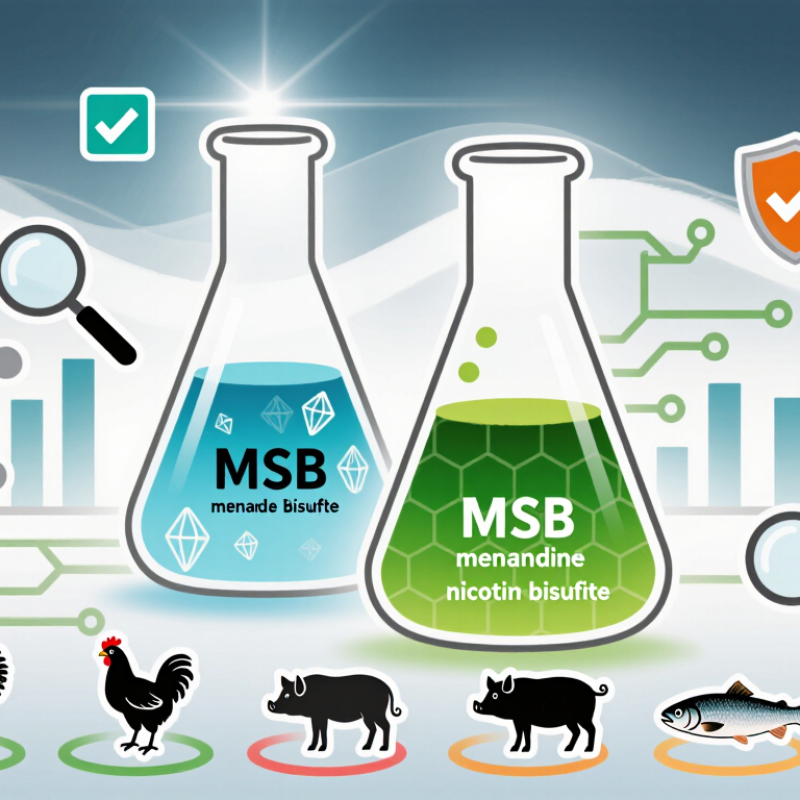
Looking ahead to 2026, international buyers are probably asking themselves a pretty common question: which type of Vitamin K3 actually fits their market, processing methods, and compliance requirements? Usually, when folks talk about Vitamin K3, they’re referring to synthetic derivatives like menadione sodium bisulfite (MSB) or menadione nicotinamide bisulfite (MNB). But just so you know,Vitamin K4 is a different beast altogether. It’s often associated with menadiol diacetate and isn’t a direct substitute for the others.

Honestly, it’s not always a straightforward answer. EFSA’s FEEDAP Panel has looked into different Vitamin K3 sources, considering factors like the animal species they’re used for, purity levels, stability, and safe usage conditions. What it really boils down to is that reviewing specifications is way more important than just chasing the lowest price. The NIH Office of Dietary Supplements, meanwhile, points out that natural forms of vitamin K are quite different from synthetic ones—so you want to be cautious with how you label your products and control their application. And before making an import decision, it’s always smart to double-check regulatory databases, like the EU Feed Additives Register or the US Code of Federal Regulations.

For those involved in feed manufacturing, MSB might be the more familiar choice since it’s widely available and easy to handle. On the other hand, MNB could be attractive for buyers looking to refine their formulations—though, honestly, its value really hinges on having proper documentation like assays, particle size info, moisture levels, and consistent supply. Always ask for a current Certificate of Analysis, and don’t forget to request data on residual solvents, heavy metals, microbiological safety, and stability.

Market reports from sources like Grand View Research and MarketsandMarkets show that the vitamin ingredients and animal nutrition sector is still on the upswing. But here’s the thing—these estimates can vary a lot. So, don’t get lulled into overconfidence. Choosing a lower-cost Vitamin K3 grade might seem appealing, but it could end up costing more due to caking, dosage inconsistencies, or customs issues. In the end, the best pick in 2026 will be one that’s tailored to your specific application, backed by solid evidence, and supplied by a partner with transparent production records. Maybe that’s less flashy than a «universal winner,» but frankly, it’s a lot more dependable.
Which Vitamin K3 Type Is Best for Global Buyers in 2026?

What Vitamin K3 Is and Why Its Forms Matter to Global Buyers

Vitamin K3 is a synthetic form of vitamin K, usually referring to menadione and its water-soluble derivatives. It is not the same as Vitamin K1 or Vitamin K2 Mk7. That distinction matters because each form has different uses, stability, and regulatory expectations. The NIH Office of Dietary Supplements notes that vitamin K supports normal blood clotting and bone metabolism, but vitamin K3 is not commonly used in human dietary supplements because of safety concerns. It is more often evaluated for controlled feed and industrial applications.

For global buyers, the practical question is not simply “Which K3 is cheapest?” Menadione sodium bisulfite offers water dispersibility, while menadione nicotinamide bisulfite may suit specific premix requirements. Buyers should compare assay, moisture, particle size, packaging, and batch consistency. EFSA’s dietary reference work lists 70 micrograms per day as an adequate vitamin K intake for adults, but this figure does not establish a safe human dose for K3. The label alone can mislead. Regulatory acceptance also differs across markets.

Tips: Request a current certificate of analysis, SDS, stability data, and contaminant testing. Confirm the product’s intended use before purchase. Check whether the specification names menadione, sodium bisulfite, or another derivative. I would also verify customs classification with a qualified local adviser. A low price may hide weaker documentation, shorter shelf life, or unsuitable solubility. Mistakes happen here. Oversight still matters.

Which Vitamin K3 Type Is Best for Global Buyers in 2026?

Vitamin K3 is a collective name for synthetic menadione and its water-soluble derivatives. The most relevant forms for international sourcing are menadione, menadione sodium bisulfite (MSB), and menadione nicotinamide bisulfite (MNB). Molecular mass is a verified chemical property, but it does not by itself determine which form is best for a buyer.

How to read the chart: Menadione has the lowest molecular mass, while MSB and MNB are heavier because they contain bisulfite and additional sodium or nicotinamide components. Global buyers should also evaluate intended use, water-dispersibility requirements, regulatory status, documented specifications, stability, and applicable feed or food regulations before selecting a form.

The Main Vitamin K3 Types: Menadione, MSB, and MNB Explained

Which Vitamin K3 Type Is Best for Global Buyers in 2026?

Vitamin K3 usually refers to menadione, a synthetic vitamin K compound. Menadione is the parent form, but it is reactive and requires careful handling. Direct selection should match the approved application, not just the lowest price. Human nutrition requires special caution, since regulatory acceptance differs widely between countries.

MSB MSB means menadione sodium bisulfite. It offers improved water dispersibility and is commonly considered for premixes where moisture control matters.

MNB MNB means menadione nicotinamide bisulfite. Its nicotinamide component can support better formulation behavior in certain feed applications.

Still, performance depends on particle size, assay, storage conditions, and the complete premix design.

Check the details.

Experienced buyers should request a current certificate of analysis, stability data, impurity limits, and clear grade information. Packaging also matters. A humid warehouse can reduce practical quality, even when the original assay looks acceptable. Compare production consistency across several batches, not one attractive sample.

I have seen specifications appear strong while handling performance was less convincing. That is an uncomfortable reminder: technical documents guide a decision, but controlled trials and local regulatory review should confirm it.

How Vitamin K3 Forms Compare in Stability, Purity, and Performance

For global buyers in 2026, Vitamin K3 should be compared by form, stability, purity, and practical performance. Menadione is concentrated but can be sensitive to light, oxygen, and heat. Its handling may require tighter packaging controls. Menadione sodium bisulfite offers better water dispersibility and often performs more consistently in premixes. However, it may absorb moisture during storage. That detail is easy to overlook.

Purity is not proven by assay alone. Buyers should review identity testing, moisture, residual solvents, heavy metals, microbiological results, and batch-to-batch consistency. A reliable supplier should provide traceable certificates and explain its testing methods. Performance also depends on particle size, carrier compatibility, mixing time, and storage temperature. In real production, a technically pure ingredient can still distribute unevenly. I have seen specifications look excellent while handling results remained disappointing. More pilot testing is needed.

Tips: Request stability data under realistic humidity and temperature conditions. Check light-resistant packaging and define an accepted shelf life. Confirm the form matches the intended application and local requirements. Do not confuse Vitamin K3 with Vitamin K2 Mk4; they are different compounds with different functions and specifications. Buyers should also verify regulatory status in each destination market, because permitted uses and labeling expectations can vary. Small differences matter.

Which Vitamin K3 Type Is Best for Global Buyers in 2026? — How Vitamin K3 Forms Compare in Stability, Purity, and Performance
Comparison Dimension Menadione
(Free Form)
Menadione Sodium Bisulfite
(MSB)
Menadione Nicotinamide Bisulfite
(MNB)
Procurement Meaning for Global Buyers
Chemical form Menadione, also called 2-methyl-1,4-naphthoquinone Water-soluble sodium bisulfite addition form of menadione Water-soluble nicotinamide bisulfite addition form of menadione The three materials are related Vitamin K3 forms, but they are not interchangeable on a weight-for-weight basis.
Typical physical appearance Yellow to yellow-orange crystalline powder Usually a yellowish to yellow-green powder or crystalline material Usually a yellow to yellow-brown powder Color alone is not a reliable purity test; buyers should require identification, assay, moisture, and impurity results.
Water behavior Practically insoluble
Dispersions or premixes may be needed.
Water-soluble
Generally suitable for liquid preparation and water-based feed systems.
Water-soluble
Generally suitable for liquid preparation and water-based feed systems.
MSB or MNB is normally easier to dose uniformly when the formulation requires rapid aqueous distribution.
Light sensitivity High
Protect from strong light.
Moderate to high
Light-protective packaging is recommended.
Moderate to high
Light-protective packaging is recommended.
Opaque or light-resistant packaging and controlled warehouse exposure are appropriate for all three forms.
Oxygen and oxidation sensitivity Moderate Moderate Moderate Use tightly closed containers and minimize repeated opening, heat, moisture, and prolonged air exposure.
Moisture sensitivity and handling Low water affinity, but still requires dry storage because degradation and clumping can occur under poor conditions. More sensitive to humidity than free menadione; moisture-barrier packaging is important. More sensitive to humidity than free menadione; moisture-barrier packaging is important. For long-distance shipping, MSB and MNB generally need stronger moisture control than free menadione.
Assay interpretation Assay is commonly reported as menadione content. Assay may be reported as MSB content or converted to menadione-equivalent activity. Assay may be reported as MNB content or converted to menadione-equivalent activity. Always confirm the assay basis before comparing quotations. A higher percentage on one form does not automatically mean higher Vitamin K3 activity.
Common quality-control tests Identification, assay, related substances, moisture or loss on drying, heavy metals, and residual solvents where applicable Identification, assay, moisture, related substances, sodium or sulfite-related controls where applicable, and microbiological quality when required Identification, assay, moisture, related substances, nicotinamide-related controls where applicable, and microbiological quality when required Use a product specification that matches the destination market, feed category, and applicable pharmacopoeial or feed-additive requirements.
Formulation performance Good for dry systems
Requires effective dispersion and blending.
Strong for aqueous systems
Good choice where solubility and uniform dosing are priorities.
Strong for aqueous systems
Often selected where a water-soluble menadione derivative is required.
Performance depends on particle size, carrier system, pH, temperature, storage time, and the complete formulation—not only on chemical form.
Relative formulation complexity Medium to high
Dry blending and dispersion must be carefully validated.
Low to medium
Usually simpler for water-based dosing.
Low to medium
Usually simpler for water-based dosing.
For premixes, feed mills should validate homogeneity, recovery, and stability under actual processing conditions.
Best-fit application profile Dry premixes, research use, and applications where water solubility is not required Water-soluble feed supplements, liquid preparations, and applications requiring rapid aqueous distribution Water-soluble feed supplements and formulations where the MNB specification is accepted by the target market Choose according to the final application and local regulatory acceptance rather than selecting solely by purchase price.
Key purchasing risk Low apparent solubility, poor dispersion, and light-related potency loss Moisture uptake, sulfite-related specification differences, and confusion between product assay and menadione-equivalent activity Moisture uptake, inconsistent assay basis, and differences in regulatory or customer acceptance Request a recent certificate of analysis, method references, batch number, retest or expiry date, packaging details, and transport conditions.
Overall suitability for global sourcing Selective
Best when dry-form economics and dispersion capability are established.
Broad
Strong option when water solubility, established specifications, and supply continuity are required.
Broad but market-dependent
Strong option when customer and regulatory requirements specifically accept MNB.
For most international buyers, MSB or MNB is typically more practical than free menadione for water-based applications; the final decision should be based on validated equivalence and compliance.
Important specification note: Assay limits, impurity limits, moisture limits, packaging requirements, and permitted uses vary by jurisdiction and application. Buyers should verify the current requirements of the destination market and compare all products on a menadione-equivalent basis where applicable. Stability ratings are practical procurement guidance, not a substitute for real-time or accelerated stability testing.

Safety Standards and Regulatory Considerations Across Global Markets

Which Vitamin K3 Type Is Best for Global Buyers in 2026?

For global buyers, the best Vitamin K3 type depends on application, purity, and market authorization. Menadione sodium bisulfite and menadione nicotinamide bisulfite may follow different regulatory paths. A material accepted for animal nutrition may not qualify for human supplements. This distinction is easy to miss.

Check the intended use before comparing prices. Request a current certificate of analysis, identity testing, assay results, impurity limits, heavy metals, residual solvents, and microbiological data. Review stability evidence under heat and humidity. Packaging should protect the powder from moisture and light. Traceability matters.

Keep the ingredients separate.

Vitamin K3 should not be confused with Vitamin K2 Mk4 Powder. They have different chemical structures, safety profiles, and regulatory expectations. Buyers should verify whether local authorities permit the selected form in food, feed, cosmetics, or technical applications. Requirements can differ across the United States, European markets, Asia, and the Middle East. Check official databases and consult qualified regulatory specialists before importation.

A supplier’s specification sheet is not enough. Independent laboratory confirmation can reveal inconsistencies. I would also examine manufacturing controls, change-notification procedures, allergen statements, and contaminant monitoring. Some documents may look professional but remain incomplete. That is where careful review matters. Regulations also change, so a certificate from last year may no longer support a 2026 launch.

Key Supplier, Testing, Packaging, and Documentation Requirements

For global buyers, the best Vitamin K3 type depends on application, solubility, and local acceptance. Menadione sodium bisulfite is often selected where water dispersibility matters. Other K3 forms may suit dry premixes or controlled formulations. Confirm the intended use before comparing price.

Supplier qualification should include production-site experience, batch consistency, and traceability. Request a recent certificate of analysis, specification sheet, safety data sheet, and manufacturing-flow summary. Testing should cover identity, assay, moisture, related substances, heavy metals, residual solvents, and microbiological limits. Ask for independent laboratory results when the risk profile justifies them. Do not confuse Vitamin K3 with Vitamin K2 Mk7 Powder; they are different materials with different specifications.

Packaging needs practical attention. Use sealed, light-resistant inner bags inside labeled fiber drums or suitable cartons. Check net weight, batch number, production date, retest date, and storage conditions before shipment. Moisture exposure can become a costly problem. Documentation should also show country of origin, allergen status, GMO status, transport conditions, and change-control procedures. A pre-shipment sample helps, although it cannot replace an audit. Some suppliers provide polished documents but weak technical answers. That is a warning worth recording. Regulatory acceptance may differ by country, so buyers should verify current import and use requirements with qualified local professionals.

How to Choose the Best Vitamin K3 Type for Different Applications

Choosing the best Vitamin K3 type starts with the application, not the lowest quotation. Menadione sodium bisulfite is commonly considered for animal feed because it disperses well in premixes. Menadione nicotinamide bisulfite may offer better handling in some formulated products. Menadione itself is less convenient for uniform blending. Check stability under heat, moisture, light, and storage time. Small differences matter.

EFSA scientific opinions assess vitamin K compounds by species, dose, purity, and intended use. This matters because feed-grade evidence cannot automatically support human nutrition. The NIH Office of Dietary Supplements also notes that menadione is not used in dietary supplements in the United States, reflecting historical safety concerns. Global buyers should request assay results, impurity profiles, residual solvent data, and batch stability records. Do not rely on a generic certificate alone.

For poultry and swine premixes, compare recovery after mixing and storage. For aquaculture, test water exposure and pellet processing conditions. For research or regulated formulations, confirm pharmacopeial requirements before choosing a grade. Grand View Research’s 2024 vitamin K market analysis shows that market reporting often combines K1, K2, and K3, so headline market figures can mislead procurement decisions. A careful buyer should separate these categories. I would also challenge one common assumption: higher assay does not always mean better performance. Processing losses, particle size, and legal acceptance may matter more.

98% Vitamin C Palmitate Powder: Benefits, Uses, and Quality Considerations

Ascorbyl Palmitate, also known as Vitamin C Palmitate, is a fat-soluble derivative of vitamin C valued for its antioxidant function in food, nutritional, cosmetic, and feed formulations. Unlike water-soluble ascorbic acid, its lipid-compatible structure supports use in oil-based systems, where it can help protect sensitive ingredients from oxidative deterioration. The Codex General Standard for Food Additives identifies ascorbyl palmitate as antioxidant INS 304, while food-additive specifications and pharmacopeial quality practices emphasize identity, assay, purity, and contaminant control. A 98% assay therefore offers a practical balance between potency, formulation performance, and batch consistency.

This product is supplied as a white powder with CAS No. 137-66-6 and EINECS No. 205-305-4. It is suitable for applications requiring a reliable antioxidant ingredient, including fortified foods, dietary supplements, emulsions, and personal-care formulations, subject to applicable local regulations and formulation validation. Standard packaging is 25 kg per drum, with storage in a cool, dry location away from direct light to help preserve quality. Available documentation may include cGMP, ISO 22000, ISO 9001, Kosher, Halal, HACCP, BRC, and EU/NOP organic certification. T/T, VISA, XTransfer, and Alipay are supported payment options, with typical shipping arranged within 3–5 days.

FAQS

What does Vitamin K3 usually mean?

Vitamin K3 usually refers to menadione, a synthetic vitamin K compound. It is reactive and requires careful handling. The correct choice depends on the approved application.

How do MSB and MNB differ?

MSB means menadione sodium bisulfite. It usually offers better water dispersibility in premixes. MNB means menadione nicotinamide bisulfite. Its formulation behavior may suit certain feed applications.

Which Vitamin K3 type is best for global buyers?

There is no universal best type. Application, purity, solubility, and local approval should guide selection. The lowest price is not enough. That shortcut can become expensive.

Can a feed-approved material be used in human nutrition?

Not automatically. Animal nutrition and human nutrition may follow different regulatory requirements. Check official local databases before importing or formulating. Human use requires extra caution.

Which documents should buyers request?

Request a current certificate of analysis and specification sheet. Also request safety data, stability results, and impurity limits. Useful tests include identity, assay, moisture, and heavy metals. Microbiological data may also be necessary.

How should Vitamin K3 be packaged and stored?

Use sealed, light-resistant inner bags. Place them inside labeled drums or suitable cartons. Record the batch number and retest date. Keep the material away from humidity and direct light.

Why should buyers compare several batches?

One attractive sample cannot prove consistent production. Compare assay, moisture, particle behavior, and handling across multiple batches. A polished specification may hide practical weaknesses. I would not trust one sample.

Is supplier documentation enough for approval?

No. Independent laboratory confirmation can reveal inconsistencies. Review traceability, manufacturing controls, and change-notification procedures. A pre-shipment sample helps, but it cannot replace an audit.

What should buyers check before a 2026 launch?

Verify current import and use requirements in every target market. Regulations can change after older certificates are issued. Check origin, allergen status, transport conditions, and contaminant controls. The review may feel slow, but skipping it creates uncertainty.

Conclusion

Vitamin K3 is a group of synthetic vitamin K forms used mainly in animal nutrition, feed manufacturing, and selected industrial applications. The main types—menadione, menadione sodium bisulfite (MSB), and menadione nicotinamide bisulfite (MNB)—differ in solubility, stability, purity, bioavailability, and handling requirements. Menadione may offer a concentrated active form, while MSB and MNB are often preferred when improved water dispersibility, storage performance, or formulation compatibility is needed.

For global buyers, the best Vitamin K3 type depends on the target application, dosage format, climate, and regulatory market. Purchasing decisions should include verified specifications, assay and impurity testing, batch consistency, shelf-life data, suitable packaging, and complete documentation such as certificates of analysis and safety information. Buyers should also confirm that the selected form complies with destination-market requirements and responsible-use standards. Comparing supplier reliability, quality-control systems, logistics capability, and technical support can help ensure a stable, compliant, and cost-effective supply.

Oliver

Oliver

Oliver is a dedicated marketing professional at Shaanxi Yuantai Biological Technology Co., Ltd., where he leverages his expertise in plant extracts, nutritional supplement raw materials, cosmetic raw materials, and organic products. With a deep understanding of the industry, Oliver plays a pivotal......
Previous Which China Conjugated Linoleic Acid Powder Is Best?