Leave Your Message
- Phone
- E-mail
- Whatsapp
- WeChat
Choosing the right Guar Gum Powder supplier in China isn’t just about comparing prices—there’s a lot more to it. Buyers really need to look at things like their processing experience, how consistent their products are, the documentation they provide, and how well they communicate before signing any contracts. A trustworthy supplier will be willing to explain the origin of the guar seeds, their milling processes, mesh size, viscosity, moisture levels, and microbiological controls. These details are super important, especially when the powder’s going into food, animal feed, paper, textiles, or industrial uses. The right partner should be able to give you up-to-date specifications, batch records, test reports, and even some samples to test out yourself.
Sometimes, it’s the little things that tell you how experienced a supplier really is. Can they tell you if the powder disperses evenly? Does the viscosity match what they claim? And how do they respond if your results don’t line up? In real-world buying, these kinds of answers often matter way more than polished website claims. It’s also smart to think about factory audits, their quality systems, how experienced they are with exporting, their packaging standards, and how they handle after-sales support. Sometimes, sending samples to an independent lab for testing can really help verify key data without just trusting what the supplier says.
And let’s be real: the cheapest quote isn’t always the best choice. Sometimes it’s the supplier that communicates honestly about their limitations and deals with issues swiftly that ends up being the better partner. No one’s perfect—especially not suppliers—and even seasoned buyers can sometimes overlook things like seasonal raw material changes, unclear delivery terms, or grades that aren’t quite right. These are things worth paying attention to. This guide is here to help you compare China-based suppliers based on real evidence, technical skills, awareness of compliance, and their ability to deliver reliably in the long run. The goal is practical: to help you pick Guar Gum Powder with more confidence, fewer surprises, and a clearer idea of what you’re partnering with. Just a heads-up—supplier performance can shift over time, so make sure to double-check their latest documents, samples, and production info before making any final decisions.

What Is the Best Guar Gum Powder Supplier in China?
Guar gum powder is commonly identified as E412, a permitted food additive used for thickening and stabilizing. It comes from guar seeds, mainly the endosperm of Cyamopsis tetragonoloba. Chemically, it is a galactomannan, a plant-based polysaccharide built from mannose and galactose units. When mixed with water, it hydrates and creates viscosity, often at surprisingly low concentrations.
Its performance depends on more than a product label. Particle size, moisture, viscosity grade, hydration speed, and microbiological quality can change the final result. Guar gum supports sauces, dairy products, bakery fillings, beverages, and gluten-free formulations. It can improve mouthfeel and reduce separation. In practical trials, cold-water dispersion may be more important than a high laboratory viscosity value. That detail is easy to miss.
A reliable Chinese supplier should provide a current specification sheet, certificate of analysis, batch traceability, and clear testing methods. Ask about heavy metals, microbial limits, pesticide controls, and allergen management. Samples should be tested in the intended recipe, not only in water. A supplier may offer consistent color and packaging, yet still require stronger evidence for application performance. I would also compare several batches before making a long-term decision. That takes time. It prevents confident assumptions from becoming costly formulation problems.
| Data Dimension | Verified Guar Gum Powder Information | Why It Matters When Evaluating a Supplier in China |
|---|---|---|
| Product Identity | Guar gum powder is a plant-derived hydrocolloid obtained from the endosperm of guar beans (Cyamopsis tetragonoloba). | The supplier should clearly identify the botanical source and provide consistent product documentation for each grade. |
| Food Additive Number | E412 is the European food additive number assigned to guar gum. | For food applications, confirm that the offered grade is suitable for the destination market and supported by the required compliance documents. |
| Chemical Structure | Guar gum is mainly a galactomannan polysaccharide consisting of a mannose backbone with galactose side groups. | The galactomannan structure allows the powder to hydrate in water and provide thickening, stabilization, and water-binding performance. |
| CAS Number | Commonly listed CAS number: 9000-30-0. | A matching CAS number helps align technical specifications, safety documentation, and import records. |
| Appearance | Typical commercial material is a free-flowing, cream to off-white powder. Exact color and particle characteristics vary by grade and processing method. | Appearance should be defined in the specification sheet and checked against a retained sample or approved reference sample. |
| Water Hydration | Guar gum hydrates in cold or warm water and generally develops viscosity more rapidly than many other plant gums. | Hydration speed affects processing efficiency, mixing conditions, and the final texture of food, feed, and industrial formulations. |
| Viscosity | Viscosity is grade-dependent and is commonly reported using a defined concentration, solvent, temperature, spindle, and measurement time. There is no single universal viscosity value for all guar gum powders. | A reliable supplier should provide a complete test method rather than quoting viscosity without test conditions. The buyer should compare like-for-like data. |
| Particle Size | Commercial guar gum is available in different mesh or particle-size distributions to meet dispersion and processing requirements. | Finer powders may disperse differently from coarse grades. The selected particle size should match the production equipment and mixing process. |
| Solubility and Dispersion | Guar gum is dispersible and hydrates in water but is not generally described as soluble in organic solvents such as ethanol. | Clear dispersion instructions, including premixing and addition order, help reduce lumping during production. |
| Typical Food Uses | Common uses include thickening and stabilization in sauces, dressings, bakery products, dairy-style products, beverages, fillings, and frozen desserts. | The supplier should offer application-relevant grades and provide recommended dosage ranges only as starting points, because formulation performance varies. |
| Gluten-Free Formulations | Guar gum is frequently used in gluten-free bakery formulations to improve dough structure, moisture retention, and texture. | For gluten-free products, verify allergen controls, cross-contact controls, and the regulatory requirements of the target market. |
| Industrial Uses | Guar gum and its derivatives are used in applications such as paper processing, textile printing, personal care products, mining, and selected oilfield formulations. | Industrial grades may differ substantially from food grades in purity, testing, and intended use. The application must be stated before purchasing. |
| Moisture Control | Moisture content influences powder flow, storage stability, microbial risk, and hydration behavior. The acceptable limit depends on the agreed product specification. | Request batch-specific moisture results and confirm packaging is suitable for protecting the powder from humidity during transport and storage. |
| Microbiological Quality | Food-grade guar gum should be tested for relevant microbiological parameters according to the applicable food regulations and buyer specification. | Batch-level microbiological certificates and a documented quality system are important indicators of supply consistency. |
| Heavy Metals and Contaminants | Limits for heavy metals, pesticide residues, mycotoxins, and other contaminants depend on the intended use and destination-market regulations. | A suitable supplier should provide current certificates of analysis and, where required, third-party testing or regulatory declarations. |
| Food-Grade Documentation | Typical documentation may include a specification sheet, certificate of analysis, safety data sheet, allergen statement, non-GMO statement, and origin information. | Documentation should match the exact product grade, lot number, manufacturing date, and shipment rather than being a generic file. |
| Packaging | Guar gum powder is commonly packed in moisture-resistant inner bags placed inside kraft paper bags, woven bags, or other approved industrial packaging. | Packaging size, palletization, labeling, and barrier properties should be agreed before shipment to reduce damage and moisture absorption. |
| Storage | Store in a cool, dry, well-ventilated place, protected from moisture, direct sunlight, and strong odors. Follow the supplier's stated shelf-life conditions. | Warehouse conditions and transport controls can affect caking, flowability, microbial quality, and viscosity performance. |
| Batch Consistency | Important release parameters commonly include appearance, viscosity under specified conditions, moisture, particle size, pH where applicable, and microbiological results for food grades. | Comparing several batch certificates helps determine whether the supplier can maintain consistent quality at commercial volume. |
| Best-Supplier Selection Criteria | The strongest supplier profile combines clear specifications, traceable batch testing, application support, stable lead times, export experience, suitable packaging, and responsive quality handling. | The “best” supplier is determined by verified performance against the buyer's application, regulatory requirements, target price, order volume, and delivery schedule—not by price alone. |
Note: Technical values such as viscosity, moisture, particle size, microbiological limits, and shelf life must be confirmed in the current specification and certificate of analysis for the exact guar gum grade being purchased.
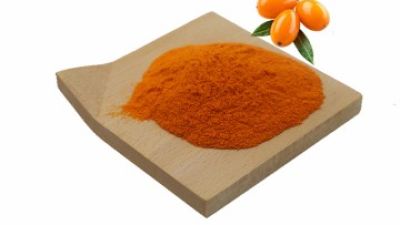
Sea Buckthorn Flavonoids Powder is gaining attention as a standardized botanical ingredient for nutraceutical, functional food, and personal-care formulations. Industry analyses from Grand View Research and IMARC Group indicate continued expansion of the global sea buckthorn market, supported by growing interest in plant-based ingredients, antioxidant-rich botanicals, and traceable natural extracts. These reports also highlight rising demand for reliable ingredient quality, scalable supply, and specification flexibility—key considerations for manufacturers developing products for different markets.
This factory-supplied powder is produced from artificially cultivated sea buckthorn extract using solvent extraction technology. It is available with flavonoid specifications ranging from 5% to 60%, allowing formulators to select a concentration suited to their application and testing requirements. The product is in stock, with shipping generally arranged within 1–3 days, and is supplied in 25 kg barrels. Quality and food-safety documentation includes HACCP, HALAL, KOSHER, ISO 9001, and ISO 22000 certifications, with FDA-related documentation available where applicable. The minimum order quantity is 25 kg, and sales are intended for wholesalers, manufacturers, distributors, and other business customers rather than individual consumers.
Request current HACCP and ISO 22000 certificates. Check the issue date, expiry date, site address, and certification scope. The scope should cover manufacturing, not trading. A certificate alone is not proof.
Ask for an unedited certificate copy. Verify it with the certification body when possible. Check whether the named facility matches the production address. Small mismatches deserve attention.
It should describe viscosity, moisture, purity, and microbiological limits. Ask for heavy metal results when relevant. Request a recent certificate of analysis linked to a lot number. Generic documents are weaker evidence.
Request one sample lot code from a finished bag. Follow it backward to raw materials, processing dates, operator checks, and laboratory results. The records should connect clearly. No gaps, ideally.
Ask the supplier to identify affected lots within a few hours. Request a recent traceability exercise report. Check whether the company records decisions and corrective actions. A slow exercise may reveal weak controls.
Look for labeled storage areas and sealed packaging. Review cleaning records and pest-control logs. Inspect moisture controls, retained samples, and warehouse conditions. Polished documents can still hide practical problems.
HACCP, ISO 22000, or FSSC 22000 can support food safety controls. Halal and Kosher documents may support specific customer requirements. Confirm each certificate covers the exact facility and product category. Unclear scope creates risk.
Do not rely on the phrase “FDA-certified.” Review applicable food regulations, facility registration, specifications, allergen controls, and supporting records. Match testing documents with the product lot number. Wording matters.
Yes, when practical. Compare appearance, viscosity, moisture, packaging, and laboratory results. This takes time. Skipping it may create expensive surprises. I might still overestimate paperwork, so independent testing deserves consideration.
No, not automatically. Suppliers may need time to collect older records. However, unclear answers, missing lot data, or repeated delays require careful reflection. Trust should grow from evidence.
Choosing the best Guar Gum Powder supplier in China requires more than comparing prices. First, understand the product as E412, a galactomannan-based hydrocolloid used for thickening, stabilizing, and improving texture in food and industrial applications. Important technical specifications include fine 80-mesh particle size, viscosity commonly ranging from 3500 to 6000 mPa·s, high purity, controlled moisture, and reliable microbiological results. These details should match the intended application and processing conditions.
A dependable supplier should provide transparent documentation, including a detailed Certificate of Analysis, batch-based traceability, and testing for viscosity, moisture, purity, and microbial limits. Food safety systems such as HACCP, ISO 22000, or FSSC 22000 can indicate structured production controls, while Halal, Kosher, and FDA-related compliance documentation may support market access. Buyers should also evaluate minimum order quantities, lead times, packaging options, production capacity, and verified export experience. Reviewing samples and comparing consistent test data before placing a large order is an effective way to reduce quality and supply risks.