Fish Collagen Powder is really starting to make waves beyond just a niche ingredient — it's becoming a serious go-to choice for companies around the world in nutrition, beauty, and food. According to Grand View Research’s 2024 Marine Collagen Market report, there's huge potential for growth through 2030, especially since folks are so interested in traceable, marine-based ingredients. Plus, there's a clear rising trend in clean-label products and functional nutrition that’s driving this shift.
The market’s momentum is legit.
That said, just because demand is up doesn’t automatically mean every supplier is top-notch. The Food and Agriculture Organization’s report, The State of World Fisheries and Aquaculture 2024, stresses the importance of responsible sourcing, sustainable seafood supply, and better management of the entire value chain. These factors really matter when you're evaluating sources like fish skin, scales, or bones for collagen. A good supplier should be upfront about the species they use, where it’s harvested, how it’s processed, the molecular weight, and whether they can keep consistency from batch to batch.
In this guide, I’ve looked at seven Fish Collagen Powder suppliers for international buyers. I focused on things like documentation, production capacity, quality controls, and experience with exporting. Certifications like HACCP, ISO 22000, GMP, plus third-party lab reports, can really help verify quality. It’s also smart to ask for tests on heavy metals, microbiological safety, allergens, moisture levels, and any banned substances.
But, let’s be honest — paperwork isn’t everything.
A supplier might send over some pretty impressive samples but then struggle with reliable lead times or changing product specs. That’s something you definitely want to watch out for. Plus, the performance of the product can differ depending on whether it’s hydrolyzed peptides, neutral powders, or flavored blends. So, it’s smart to evaluate each supplier not just based on paperwork, but also by testing samples, reviewing current Certificates of Analysis, checking their production records, and clarifying commercial terms upfront. The seven companies I mention aren’t perfect — but they’re solid starting points for sourcing globally with a bit more confidence.
What Is Fish Collagen Powder and Why Is It Used?
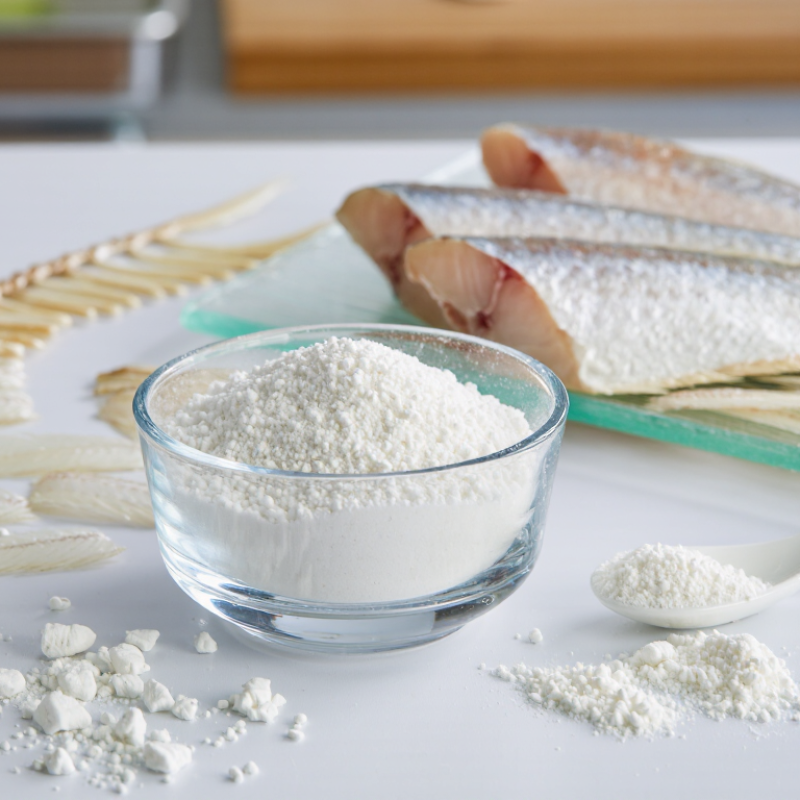
Fish collagen powder is a protein ingredient made from marine skin, scales, and bones. Enzymatic hydrolysis breaks collagen into smaller peptides, creating a powder that dissolves more easily in drinks, capsules, and functional foods. It is usually rich in type I collagen, which is associated with skin, connective tissue, and bone structure.
The FAO’s The State of World Fisheries and Aquaculture 2024 reported 185.4 million tonnes of global fisheries and aquaculture production in 2022. This volume creates a substantial source of marine processing materials. Using these materials may improve resource efficiency, but collection and purification still require careful control. A Fish Collagen Powder Factory should test peptide size, moisture, microbiological safety, heavy metals, and allergen information. Certificates alone are not enough.
Market reports from Grand View Research identify growing demand for marine-derived collagen in beauty and nutrition products. Yet demand should not replace evidence. Fish collagen may support protein intake, but it is not a guaranteed solution for wrinkles or joint discomfort. Results can vary with dosage, diet, age, and product quality. I would also question vague claims such as “100% pure” without batch records. A reliable supplier should provide origin details, processing information, and recent independent laboratory results. The powder should look uniform, smell mild, and dissolve without excessive sediment. Small details matter.
Fish Collagen Powder: Representative Amino Acid Profile
Fish collagen powder is primarily composed of type I collagen. Glycine, proline, hydroxyproline, alanine, glutamic acid, and arginine are commonly reported amino-acid residues in collagen. The values below are representative approximate percentages and may vary by fish species, tissue source, and processing method.
Glycine supports collagen’s characteristic triple-helix structure, while proline and hydroxyproline contribute to structural stability. This composition is one reason fish collagen powder is used in food, beverage, nutraceutical, beauty, and functional nutrition products.
How to Evaluate Fish Collagen Powder Suppliers
Choosing among the 7 best fish collagen powder suppliers requires more than comparing prices.
A reliable supplier should show the fish species, harvesting area, and processing location. Ask for batch-specific certificates of analysis, not generic documents. These records should include protein content, moisture, microbiological results, and heavy metal testing. Independent laboratory verification adds credibility.
Traceability matters in daily purchasing. A professional supplier can explain how one batch moves from raw material to sealed powder. Check whether the facility follows recognized food safety systems, such as HACCP or GMP. Review the collagen’s molecular weight, solubility, odor, and hydroxyproline content.
Request a small sample before signing a large contract. Notice its color in plain water. Notice its smell, too.
Commercial details also reveal supplier quality. Compare minimum order quantities, lead times, packaging options, and storage requirements. Ask how the supplier handles delayed shipments or failed test results. A responsive technical team is valuable, especially when specifications change.
However, polished documents do not prove consistent performance. I have seen attractive samples followed by uneven batches. That possibility deserves attention. Keep retained samples, record test results, and reassess performance after several deliveries. The strongest supplier is not always the cheapest. It is the one that provides clear evidence, stable quality, and honest answers when something goes wrong.
Seven Leading Fish Collagen Powder Suppliers for Global Buyers
Seven Leading Fish Collagen Powder Suppliers for Global Buyers
Global buyers increasingly seek fish collagen powder for nutraceutical, beauty, and functional food applications. Grand View Research valued the global collagen market at approximately USD 9.8 billion in 2022, with continued growth expected through 2030. Marine collagen remains attractive because it is soluble, light in color, and suitable for many formulations. However, supplier quality varies sharply.
The seven leading supplier profiles include enzymatic hydrolysis specialists, cold-water fish processors, vertically integrated producers, GMP-certified nutraceutical manufacturers, cosmetic-grade refiners, private-label exporters, and traceability-focused regional suppliers. Buyers should request peptide molecular-weight data, amino acid profiles, microbiological results, heavy-metal testing, and allergen statements. Clear documentation matters more than polished sales language. It should.
MarketsandMarkets has forecast strong expansion in the collagen ingredients sector, supported by sports nutrition and healthy-aging demand. Yet, the market data does not remove practical risks. Fish species, skin sourcing, odor control, drying temperature, and packaging can affect the final powder. A reliable supplier should provide batch records, country-of-origin details, third-party certificates, and samples from regular production. Buyers should also test solubility in their own formulas. One sample proves little. A cheaper quotation may reflect weaker traceability, inconsistent peptide distribution, or limited technical support. Even experienced purchasers can overlook these differences when comparing only protein content and price.
Product Quality, Purity, and Certification Standards
7 Best Fish Collagen Powder Suppliers for Global Buyers?
Product Quality, Purity, and Certification Standards
For global buyers, Fish Collagen quality begins with traceable raw materials, not attractive packaging. The FAO’s State of World Fisheries and Aquaculture 2024 reported 185 million tonnes of aquatic animal production in 2022. This scale increases the need to verify species, fishing area, and processing records. Suppliers should provide batch-specific certificates of analysis, including protein content, hydroxyproline, moisture, microbial limits, and molecular-weight distribution. A clear origin trail matters.
Purity requires more than a “high protein” claim. Independent laboratories should test lead, mercury, arsenic, cadmium, pesticides, and undeclared allergens. Testing should follow validated methods, with detection limits shown on each report. HACCP controls production hazards, while ISO 22000 or FSSC 22000 can demonstrate a structured food-safety system. GMP evidence is also useful for controlling cleaning, mixing, packaging, and storage. Check the certificate scope and expiry date.
Do not accept a logo alone. Certification may cover another facility. That detail is easy to miss. Experienced buyers should audit the manufacturing site, review complaint records, and compare three consecutive batches. The FAO report also highlights the growing importance of aquatic by-product utilization, yet by-products require strict identity and contamination controls. Fish Collagen can be consistent, but only when documentation matches the powder inside the sealed bag. Even then, one limitation remains: laboratory results describe tested samples, not every future shipment.
Comparing Prices, Minimum Orders, and Production Capacity
7 Best Fish Collagen Powder Suppliers for Global Buyers?
Comparing Prices, Minimum Orders, and Production Capacity
Fish collagen powder pricing usually falls between 8 and 25 USD per kilogram for bulk orders. The range depends on peptide size, purity, flavor, and testing requirements. Smaller trial orders may cost more, often between 15 and 40 USD per kilogram. Request a recent quotation, not an old website figure. Prices can change with fish skin availability, energy costs, and shipping conditions.
Minimum order quantities vary widely. Some suppliers accept 25-kilogram trial batches, while larger factories may require 500 kilograms or more. A lower minimum order helps new buyers test solubility, odor, color, and packaging. However, it can increase the unit price. Ask whether the quoted minimum includes custom labels, inner bags, and export cartons. These details are easy to miss.
Production capacity also needs careful verification. A factory claiming 1,000 tons annually may not reserve that volume for your project. Ask for monthly output, current lead time, and backup production lines. Request batch records, heavy metal results, microbiological tests, and origin documents. A practical comparison table should include price per kilogram, minimum order, monthly capacity, lead time, and payment terms. I would also test one production batch before signing a large contract. A sample can look excellent, yet dissolve poorly in a finished beverage. That uncomfortable gap deserves attention.
Packaging, Private Labeling, and International Shipping Options
When comparing the 7 best fish collagen powder suppliers, packaging deserves close attention. A dependable Fish Collagen Factory should offer moisture-resistant foil bags, sealed drums, or retail-ready sachets. Collagen powder can absorb humidity quickly. That affects texture, weight, and shelf stability.
Private labeling should include more than a printed logo. Ask about minimum order quantities, artwork approval, batch coding, and production samples. Labels may need ingredient details, fish allergen declarations, storage instructions, and country-specific information. A professional supplier should provide certificates of analysis, microbiological results, heavy metal testing, and traceability records. These documents help buyers verify identity, purity, and consistency. Still, paperwork is not proof of perfect performance. Independent testing may reveal differences between batches.
Shipping options can shape the real purchase cost. Sea freight suits larger orders, while air freight supports urgent launches. Request quotations using clear Incoterms, carton dimensions, pallet details, and estimated transit times. Check whether the supplier can manage export documents and temperature-conscious storage. Some suppliers offer neutral packaging for distributors, while others support custom cartons and multilingual labels. Confirm who handles damaged cartons, port delays, and customs queries before payment. Small details matter. A missed label translation once delayed a launch for weeks. That experience made the inspection process stricter, not flawless.
How to Choose the Right Supplier for Your Market
Choosing among fish collagen powder suppliers requires more than comparing price per kilogram. Start with your target market, because requirements vary across regions. Ask whether the supplier provides batch-specific certificates of analysis, allergen statements, heavy metal testing, and microbiological results. Traceability should reach the fishing area, processing site, and production date. Clear records show operational maturity.
Request samples before signing a large contract. Examine solubility in cold water, odor, color, taste, and particle size. Fish Protein Powder may perform differently in gummies, sachets, capsules, or sports beverages. Test it in your real formula, not only in a glass of water. Samples matter. Packaging also deserves attention. Moisture barriers, lot codes, storage guidance, and shelf-life evidence can prevent expensive problems.
Evaluate the supplier’s production capacity, minimum order quantity, lead times, and communication speed. A low quotation may hide inconsistent supply or weak documentation. Independent laboratory verification is valuable, especially when selling in tightly regulated markets. I would also ask how complaints are investigated and how corrective actions are recorded. No supplier is perfect. A delayed reply or vague technical answer should not be ignored. Yet one imperfect sample does not prove poor quality; repeat testing and written evidence create a fairer decision. Choose the partner that can support compliance, stable quality, and practical market growth—not merely the cheapest offer.
FAQS
It is a protein powder made from marine skin, scales, and bones. Enzymatic hydrolysis creates smaller peptides. These peptides dissolve more easily in drinks, capsules, and functional foods.
Fish collagen powder is usually rich in type I collagen. Type I collagen relates to skin, connective tissue, and bone structure. Its effects can vary between individuals.
A supplier should test peptide size, moisture, microbes, heavy metals, and allergens. Batch-specific laboratory results are more useful than certificates alone. Records matter.
Request origin details, processing information, production dates, and batch certificates. Ask for allergen statements and recent independent laboratory results. Vague claims need checking.
Test the powder in cold water and in the intended formula. Check solubility, odor, color, taste, particle size, and sediment. One glass test is not enough.
Look for moisture barriers, lot codes, storage instructions, and shelf-life evidence. Poor moisture protection can affect powder quality. Small details matter.
Compare documentation, capacity, minimum order quantities, lead times, communication, and quality consistency. The lowest price may hide supply problems. Cheap is not always practical.
No, it cannot guarantee those results. Outcomes may vary with dosage, diet, age, and product quality. Strong promises deserve careful review.
Traceability should cover the fishing area, processing site, and production date. Clear records support quality decisions and market compliance. I would not rely on verbal assurances.
Ask for written evidence and repeat testing when necessary. A delayed reply may signal risk, but one imperfect sample proves little. Stay fair, yet remain cautious.
Conclusion
Fish Collagen Powder is a popular ingredient used in dietary supplements, beauty products, functional foods, and beverages because it provides a convenient source of collagen peptides. For global buyers, selecting the right supplier requires careful evaluation of product quality, purity, traceability, testing procedures, and recognized certification standards. Buyers should also review the supplier’s raw material sourcing, manufacturing processes, consistency between batches, and ability to provide complete technical documentation.
This guide compares seven leading types of suppliers from a practical purchasing perspective, focusing on price ranges, minimum order quantities, production capacity, packaging formats, private-label services, and international shipping support. It also explains how to assess communication, lead times, customization options, and regulatory readiness for different markets. The best supplier will depend on the buyer’s target application, required specifications, budget, order volume, branding needs, and distribution region. A balanced decision should prioritize reliable quality and compliance while maintaining competitive costs and flexible supply capabilities.