People are getting more and more curious about collagen, but there's more to choosing a supplier than comparing glossy samples. Grand View Research estimated the global collagen market at $5.9 billion in 2023, and they're projecting a 9.4% compound annual growth rate from 2024 to 2030. That number covers collagen products across the board, not justCollagen Gummies. And honestly, that distinction matters a lot.
Consumer demand helps put things in perspective. So, the Council for Responsible Nutrition's 2024 survey found that 75% of U.S. adults are taking some kind of dietary supplement. That's a lot of people, right? But here's the thing—it doesn't tell us how many are specifically into collagen or gummies, so we can't treat it as a forecast for any particular product. Even so, it does show that supplements are a big, established market. And that means manufacturers need to be reliable.
So you're on the hunt for the best collagen gummies manufacturer in China—where do you even start? Sure, taste and looks matter, but that's really just the tip of the iceberg. You've got to dig into things like ingredient traceability, documented quality controls, production capacity, and stability testing. And don't just take their word for it—ask them how they handle batch records and whether their certifications can actually be independently verified. A sample might taste amazing and look flawless, but honestly? That's not enough.
When you're comparing Chinese manufacturers, there are a few practical things worth checking—like formulation support, how they communicate, and their export experience. But let's be honest: no single checklist is going to guarantee a great partnership. You could be super impressed by a factory tour and still walk away with unanswered questions. So before you move forward, ask for evidence, compare apples to apples, and double-check that their product claims actually match reality.
Collagen gummies are chewable supplements that deliver collagen, usually hydrolyzed peptides, in a flavored gel base. Most use bovine or marine collagen. Think soft citrus cubes, not plain powder.
Grand View Research’s 2023 collagen-market report estimated the global market at USD 9.1 billion in 2022 and projected 6.4% annual growth through 2030. That figure covers collagen products broadly, not gummies alone, so it should not be read as a gummy-market estimate.
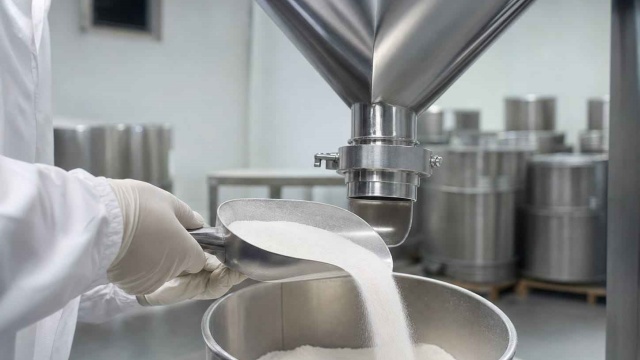
Manufacturing begins with ingredient checks: source documentation, identity, peptide profile, and a certificate of analysis. Water, sweeteners, acids, and a gelling agent are mixed, then collagen is blended into the batch under controlled conditions. The mixture is deposited into molds, cooled or dried, and checked for weight, moisture, microbial quality, and collagen content. It is easy to overlook stability testing. Heat, humidity, and storage can affect texture and shelf life, so finished-product testing matters. When assessing a manufacturer, ask for batch records and stability data—not just a glossy sample. Even then, a pleasant chew does not prove the stated collagen amount.
China’s collagen gummies manufacturing sector combines ingredient sourcing, formulation, cooking, molding, and quality checks. A typical project starts with a target serving size and a collagen peptide specification. The factory then tests how the powder behaves in a gummy base. Heat and moisture matter. Too much heat can affect texture, while excess moisture may shorten shelf life.
Formulators balance collagen with sweeteners, acids, flavors, and gelling agents. Pectin and gelatin behave differently, so the choice affects chew, clarity, and processing conditions. Some buyers request Biotin Collagen Keratin Gummies, but adding more ingredients does not automatically make a better product. Taste and nutrient stability still need testing. Small pilot batches can reveal problems before full production.
Reliable suppliers should provide ingredient specifications, batch records, and test reports for identity and microbiological quality. Buyers can also review production hygiene, traceability, and packaging controls. Gummies need suitable moisture barriers; a jar that looks attractive may not protect them well. Ask how the manufacturer checks stability under realistic storage conditions. Reports help, but they do not replace careful review. Factory capabilities vary, and a polished sample may not match a later production run. A detail worth checking twice.
A typical production workflow, from supplier qualification to finished-product release. Step numbers show sequence only; they do not represent processing time, market share, or a manufacturer ranking. Actual procedures vary by facility and product.
Choosing a collagen gummy manufacturer in China takes more than comparing unit prices. Ask for current quality certificates, their scope, issuing bodies, and recent audit findings; a certificate alone proves little. Can staff trace a finished batch back to its collagen supplier, flavorings, and packaging? Request batch records and a sample certificate of analysis showing identity, microbiological limits, and relevant contaminant tests. Details matter.
For Fish Collagen, verify the documented species and origin, allergen controls, and whether testing fits the ingredient and destination market. Check how the factory confirms the amount per gummy, not just what goes into the mixing tank. Ask for stability data from sealed packs under warm, humid conditions, with clear shelf-life assumptions. Review pilot samples for sticking, sweetness, odor, and texture after storage. Small defects travel. Discuss minimum order quantities, change-control rules, complaint handling, and approval of formula or supplier substitutions. If possible, visit the production floor or arrange an independent audit. A polished brochure can still leave gaps. I would pause over unanswered questions, but not treat them as proof of failure.
A dependable Collagen Gummy begins with traceable ingredients, not a glossy sample. Ask for the collagen’s source, peptide specifications, supplier records, and lot number. Check testing for identity, microbiological quality, and heavy metals where relevant. Review the gummy base, sweeteners, flavors, and allergen controls as well. Small details matter. A sample may look perfect but soften during warm storage, so ask for stability data under realistic conditions.
Quality controls should track each batch from incoming ingredients to sealed packaging. Review batch records, equipment cleaning logs, weight checks, and finished-product test results. Request certificates of analysis for the actual production lot, not just an example document. Independent laboratory testing can strengthen confidence, but it cannot replace clear records or a facility audit. It helps, not magically. I would also ask how deviations are investigated; a polished procedure means little if staff cannot explain what happens when a test fails.
For sales in China or export markets, confirm the factory’s relevant manufacturing qualifications and whether its scope covers the product. Check that labels, ingredient lists, nutrition information, and claims meet the rules of each destination market. Requirements differ, so a qualified regulatory reviewer should assess the final packaging before printing. One certificate alone is not proof of full compliance.
| Evaluation area | What to assess | Evidence to request or verify | Why it matters |
|---|---|---|---|
| Collagen source and identity | Confirm the animal source (for example, bovine, porcine, or fish), the collagen-peptide ingredient, and whether the source matches the label and target market requirements. | Ingredient specification, supplier documentation, source and traceability records, and batch-specific identity or composition test results. | Sources differ in suitability for dietary, religious, allergen, and market-specific requirements. Fish-derived ingredients may be relevant to fish-allergen declarations. |
| Declared collagen amount | Check the amount per serving, serving size, and consistency between the formula, production record, and finished-product label. | Master formula, batch records, finished-product test report using a validated method, and label review. | A label declaration should be supported by the actual formulation and suitable analytical evidence; the appropriate method depends on the product matrix. |
| Gummy base and other ingredients | Review sweeteners, acids, flavors, colors, gelling agents, and optional nutrients such as vitamin C. Confirm whether the gummy uses gelatin or a plant-based gelling agent such as pectin. | Full ingredient list, ingredient specifications, allergen assessment, and confirmation that additives are permitted for the applicable food category and destination market. | The base affects dietary suitability, texture, stability, and labeling. Permitted additives and their conditions of use vary by jurisdiction and food category. |
| Raw-material controls | Assess approval of suppliers, incoming-material identification, specifications, storage conditions, and traceability from receipt through production. | Supplier qualification records, incoming inspection procedures, lot records, and documented handling of non-conforming materials. | Documented controls help link each finished-product lot to its ingredients and support investigation or recall if an issue arises. |
| Manufacturing hygiene and food-safety system | Review hygiene controls, hazard analysis, sanitation, pest management, staff practices, process monitoring, and corrective actions. | Facility audit records and applicable food-safety-system documentation, such as HACCP-based procedures or an ISO 22000 certificate with a verifiable scope and validity. | Certifications can support an assessment but do not replace review of the actual facility, product scope, and operating records. |
| China production authorization and standards | For production in China, verify the food production license and its product-category scope. Check applicable Chinese food-safety requirements for the product and ingredients. | Current production-license details; documented assessment against applicable requirements, which may include GB 14881 for general food-production hygiene, GB 2760 for food-additive use, and GB 2762 for contaminant limits. | Applicability depends on product classification, ingredients, and the current standard. A license or certificate should be checked against the actual manufacturing site and product scope. |
| Finished-product safety testing | Confirm testing is risk-based and appropriate to the product, ingredients, manufacturing process, and sales destination. Relevant checks may include microbiological and contaminant parameters. | Recent batch-specific certificates of analysis, test methods, acceptance criteria, laboratory details, and records of out-of-specification investigations. | Testing requirements and limits are not identical across product categories or countries; request results for the actual product and batch rather than a generic sample report. |
| Stability and packaging | Review shelf-life support, packaging suitability, seal integrity, storage instructions, and controls for moisture or heat exposure where relevant. | Stability protocol and results, packaging specifications, packaging-material compliance documentation, and lot/date coding procedures. | Gummy texture and quality can change during storage. A stated shelf life should be supported by data for the product and packaging configuration. |
| Destination-market compliance | Identify the intended country and product classification before approving labels, ingredients, claims, and import documentation. | Market-specific regulatory review. For example, U.S. dietary supplements are subject to applicable FDA requirements, including 21 CFR Part 111; EU food supplements are subject to applicable EU rules, including Directive 2002/46/EC and rules on nutrition and health claims. | Requirements differ by market. A product made in China is not automatically compliant for sale in another country. |
| Label and claims review | Check ingredient names, quantity declarations, serving information, allergens, required warnings, language, and any nutrition or health claims against destination-market rules. | Final artwork reviewed for the specific market, supporting documentation for claims, and a documented label-approval process. | Claims and label formats are regulated differently across markets. Avoid assuming that a claim permitted in one country is permitted in another. |
| Batch traceability and recall readiness | Confirm that finished lots can be traced to ingredient lots and production records, and that complaint, withdrawal, and recall procedures are documented. | Traceability exercise results, sample batch records, complaint logs, and recall or withdrawal procedures. | Effective traceability helps identify affected product quickly and supports a controlled response to safety or quality concerns. |
Selection note: No single certificate or test result establishes that a manufacturer is “best.” Evaluate the specific facility, product formula, batch records, and destination-market requirements.
When comparing a collagen gummies manufacturer in China, ask for verified monthly output, minimum batch size, and current line availability. Capacity on a brochure is not the same as capacity open for your order. Grand View Research’s 2023 collagen market report estimated the global market at USD 9.1 billion in 2022, with projected annual growth of 9.0% through 2030. That growth makes production planning important, but it does not prove a factory can meet your schedule. Ask for recent production records and a sample batch. Ask for proof.
Customization can affect both cost and timing. Confirm whether the factory can adjust flavor, sweetness, gummy size, and packaging, then request a written sample-approval process. If you also sell a Collagen Tablet, keep its formulation and production requirements separate from the gummy brief. They are not interchangeable. One honest caveat: more customization may mean more testing and revisions, even when a supplier gives an optimistic estimate.
Request a lead-time breakdown, not one broad promise. It should separate formulation, sample approval, packaging procurement, production, and quality checks. Ask how holidays, rejected samples, or delayed packaging change the schedule. I would compare suppliers using the same specification sheet; otherwise, the fastest quote may simply leave out steps. A clear timeline should name each milestone and identify who approves it.
A manufacturer should fit your formula, sales market, and quality requirements—not just offer the lowest quote. Grand View Research estimated the global collagen market at USD 9.07 billion in 2022, with projected growth through 2030. That signals commercial interest, not product quality. The Council for Responsible Nutrition’s 2023 survey found that 74% of U.S. adults used dietary supplements. Use such figures to frame demand, then validate your own customers’ needs. Small details matter.
Ask shortlisted factories for current GMP or food-safety certifications, and verify their scope with the issuing body. Request a sample batch record, ingredient traceability documents, and a certificate of analysis covering identity, microbes, and heavy metals.
For gummies, check texture, flavor consistency, moisture control, and stability under realistic shipping conditions. A glossy sample proves little. Also confirm minimum order quantities, lead times, packaging options, and who owns formula changes.
One common blind spot is market-specific labeling: have qualified reviewers check requirements in each destination market. If answers are vague or records arrive slowly, pause. A cheaper quote may cost more in delays, rejected batches, or reformulation.
It starts with a serving size and collagen specification. The factory tests how the powder behaves in the gummy mixture.
Too much heat can change texture, while excess moisture may shorten shelf life. Small details matter.
They can change chewiness, clarity, and processing needs. The best choice depends on the formula.
Ask for ingredient specifications, batch records, and test reports. Check ingredient identity and microbiological quality.
For fish collagen, check the documented species and origin, allergen controls, and relevant testing. Details matter.
Look for sticking, sweetness, odor, and texture. Check them again after storage. A glossy sample proves little.
Request data from sealed packs stored in warm, humid conditions. Confirm the assumptions behind the stated shelf life.
Check minimum order quantities, lead times, packaging, and rules for formula changes. A low quote may bring delays.
Not by itself. Verify its scope and issuing body, and review recent audit findings where available.
Pause and ask for clear records. I would check twice, though unanswered questions alone do not prove failure.
Choosing the best Collagen Gummies manufacturer in China requires understanding how these products are formulated and produced, from ingredient selection and blending to molding, drying, and packaging. A reliable partner should provide clear information about ingredient sourcing, product specifications, quality-control procedures, and applicable regulatory requirements for the intended market. Evaluating these details helps businesses assess consistency, safety, and product suitability before placing an order.
Manufacturing capacity, customization options, minimum order quantities, and lead times are also important considerations. Some suppliers may offer tailored flavors, shapes, formulations, or packaging, while production schedules can vary depending on complexity and order size. By comparing manufacturers against their business needs, communication standards, documentation, and ability to meet agreed specifications, buyers can make a more informed decision and build a dependable supply relationship.