Looking for the best Zinc Pyrithione supplier in China for global buyers? Well, it’s not just about getting a cheap quote or browsing through a slick website. Buyers really need clear specs, reliable docs, and proof that the manufacturer can keep things consistent. A serious supplier should be ready to share purity data, batch numbers, particle size details, certificates of analysis, safety data sheets, and info about packaging that actually protects the product. Little things matter — for example, a damaged inner liner could mess up the quality during shipping.
Dr. Zoe Diana Draelos, a renowned dermatologist and expert in cosmetic science, once said, “Formulation determines whether an ingredient actually works as it’s supposed to.” That totally applies here. When you’re sourcing Zinc Pyrithione, its performance depends on *how pure* it is, how well it disperses, the right dose, storage conditions, and how it’s used in the end product. Sometimes, a supplier might wow you with a shiny sample, but then the next batch might not perform the same. That’s something to watch out for.
Chinese manufacturers often have the capacity to supply large quantities and offer flexible production options. Still, buyers should do their homework — check the factory’s experience, quality control practices, traceability, and how quickly they communicate. Also, it’s super important to make sure the product is legal for your intended use in your country. Regulations can vary a lot from one place to another. For instance, what’s fine for industrial research might not be approved for consumer use.
This guide is here to help you figure out how to compare Zinc Pyrithione suppliers from China. We’ll look at their technical quality, documentation, manufacturing reliability, export readiness, and compliance with regulations. Honestly, no supplier is perfect — even the most seasoned buyers sometimes miss a test method or stumble over an unclear spec. The key is to be thorough. And remember, the cheapest option isn’t always the best. The right partner is one that can explain their data clearly, really control their process, and honestly tell you when something needs fixing.

Zinc pyrithione is a zinc-based antimicrobial compound used mainly in anti-dandruff shampoos and scalp treatments. It helps control Malassezia-associated flaking and reduces visible scalp scaling. Zinc Pyrithione Powderis usually blended into a liquid or cream base, where dispersion quality affects product uniformity. The U.S. FDA OTC Monograph M032 lists zinc pyrithione at 0.3% to 2.0% for anti-dandruff products. That range is specific to the applicable U.S. drug framework, not a universal formula. Market rules differ.
Manufacturers should check assay, particle size, heavy metals, microbial limits, and storage stability before production. Fine particles can settle quickly, leaving uneven concentration in the bottle. Gentle mixing helps, but it does not replace validation. The EU Scientific Committee on Consumer Safety reviewed zinc pyrithione’s safety evidence, and its use in EU cosmetic products has been prohibited since March 2022 under the Cosmetics Regulation. This matters for global buyers. A material accepted for one market may require reformulation elsewhere. In practice, technical documents should include a certificate of analysis, safety data sheet, specification limits, and batch traceability. One weakness remains: supplier descriptions often focus on purity alone. Purity is important, but dispersion behavior and legal status can decide whether the ingredient performs reliably.
China Best Zinc Pyrithione Supplier for Global Buyers?
China is a major zinc pyrithione supply market because its chemical manufacturing network is broad and well connected. Producers can source key materials, process them, and package finished powder within established industrial regions. This structure often supports competitive pricing and flexible order quantities. It also helps suppliers respond to different technical requirements.
Experienced buyers usually examine more than the quoted price. They request recent certificates of analysis, batch numbers, purity data, particle-size information, and safety documentation. A reliable supplier should explain its testing method clearly. Sample evaluation matters too. A small laboratory trial can reveal dispersion, odor, color, and storage issues before a larger purchase.
The market is not flawless. Quality may vary between factories, even when product names look identical. Some suppliers provide detailed records; others offer vague answers. That is a warning sign. Buyers should verify production capability, traceability, packaging strength, and export experience. They must also check destination-country rules, because permitted applications and regulatory requirements can differ. Zinc pyrithione may face restrictions in certain markets or product categories. Written compliance confirmation is essential. Good communication is useful, but documented evidence is better.
| Evaluation Dimension | Verified or Commonly Accepted Data | Relevance to Global Buyers | Buyer Verification Point |
|---|---|---|---|
| Chemical identity | Zinc pyrithione; CAS No. 13463-41-7 | Provides a clear reference for technical documents, import declarations, and regulatory checks. | Confirm that the CAS number, product name, and specification sheet are consistent. |
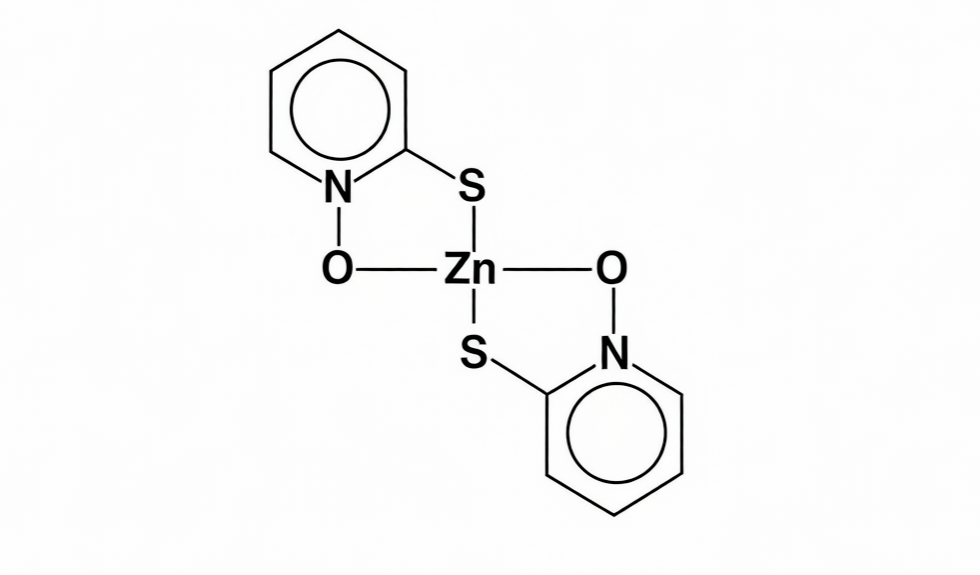
| Molecular formula | C10H8N2O2S2Zn | Useful for identity confirmation and technical evaluation. | Check the formula against the certificate of analysis and safety data sheet. |
| Molecular weight | Approximately 317.70 g/mol | Supports laboratory calculations, formulation work, and analytical testing. | Use the same molecular-weight basis in technical calculations and product documentation. |
| Typical physical form | White to pale-yellow solid or powder; appearance may vary by grade, particle size, and processing conditions. | Powdered material is suitable for controlled incorporation into coatings, polymers, personal-care formulations, and other industrial systems where legally permitted. | Request appearance standards, particle-size data, and a representative batch sample. |
| Water behavior | Generally described as practically insoluble or very sparingly soluble in water. | May require suitable dispersion technology or compatible solvents in formulation development. | Test dispersion stability in the buyer’s actual formulation rather than relying only on a supplier description. |
| Main functional profile | Known for fungicidal and bactericidal activity; it has also been used as an anti-dandruff active and as a preservative or antimicrobial ingredient in selected industrial applications. | Its broad functional profile creates demand across several application segments. | Confirm that the intended use is authorized in the destination market and product category. |
| China’s upstream advantage | China has a large zinc-processing sector and an extensive fine-chemical manufacturing base, supporting access to zinc salts, chemical intermediates, formulation materials, and industrial services. | Integrated upstream and downstream capabilities can support competitive production costs and flexible batch planning. | Assess the actual manufacturing site, raw-material controls, and production continuity instead of relying only on trading information. |
| Manufacturing ecosystem | China has established chemical industrial clusters with testing laboratories, packaging suppliers, contract processing resources, and chemical logistics services. | A broad ecosystem can shorten coordination cycles and support different technical grades or packaging formats. | Verify whether the quoted party is the producer, an authorized distributor, or an export intermediary. |
| Common quality parameters | Typical buyer checks include assay, moisture, particle-size distribution, bulk density, heavy metals, residual solvents, appearance, and batch consistency. | These parameters influence efficacy, dispersion, storage stability, and production yield. | Define acceptance limits before ordering and require batch-specific test results. |
| Documentation package | Commercial shipments commonly require a certificate of analysis, safety data sheet, technical data sheet, specification sheet, packing list, invoice, and transport documentation. | Complete documentation helps with customs clearance, workplace safety, and downstream customer audits. | Check document language, revision dates, hazard classifications, and consistency across all files. |
| Packaging formats | Industrial powder products are commonly packed in moisture-protective inner bags placed in fiber drums, plastic-lined bags, or other agreed export packaging. | Appropriate packaging reduces moisture exposure, contamination risk, and handling losses during international transport. | Confirm net weight, inner-liner material, palletization, labeling, and packaging compatibility with local regulations. |
| Export logistics | China’s extensive port, container, warehousing, and chemical-logistics infrastructure supports regular shipment to overseas markets. | Multiple transport routes can provide flexibility for full-container, consolidated, and scheduled replenishment programs. | Compare total landed cost, including inland transport, documentation, insurance, duties, testing, and port charges. |
| Regulatory status | Authorization differs by country, application, concentration, and product category. A substance permitted for one industrial use may be restricted or prohibited for another use. | Regulatory eligibility is a critical factor when importing zinc pyrithione for cosmetics, personal care, coatings, plastics, or other applications. | Check the destination country’s chemical inventory, biocidal rules, cosmetics rules, occupational-safety requirements, and labeling obligations. |
| Supply-market strength | China combines substantial chemical manufacturing capacity, domestic demand, raw-material access, export infrastructure, and a large pool of technical labor. | These factors help explain why China is a major sourcing market for many specialty and intermediate chemicals, including zinc pyrithione. | Evaluate quality consistency, regulatory compliance, service capability, and delivery reliability together with price. |
| Recommended sourcing approach | Use a staged process: document review, sample testing, pilot production, pre-shipment inspection, and periodic requalification. | This reduces the risk of receiving material that meets a nominal assay but performs differently in the buyer’s formulation. | Include specification limits, change-control obligations, inspection rights, and non-conformance procedures in the purchase agreement. |
China Best Zinc Pyrithione Supplier for Global Buyers?
A reliable Chinese supplier should provide more than a competitive quotation. Check manufacturing experience, production capacity, and documented quality procedures. Request a recent certificate of analysis for each batch. It should show assay, appearance, moisture, particle size, and testing methods. Ask whether an independent laboratory verifies critical results. Small details matter.
Inspect the supplier’s compliance system before placing a large order. ISO-based procedures, batch traceability, controlled storage, and written deviation records can reduce supply risks. Confirm that the material matches your destination market’s current rules and approved applications. Do not rely on generic compliance statements. Request product specifications, safety data, allergen information, and transport documents in clear English.
Technical communication also reveals supplier reliability. A capable team should explain dispersion behavior, packaging options, shelf life, and handling conditions without making unrealistic claims. If your formulation also references Zinc Pyrrolidone Carboxylate Acid, request separate specifications and compatibility data. Never assume similar names indicate identical functions. Samples should be tested under your actual process conditions. That step is often skipped. It should not be.
During supplier evaluation, compare response speed, document accuracy, sample consistency, and corrective-action quality. A factory may look impressive during a visit yet struggle with repeated orders. Ask for customer references where legally and ethically appropriate. Review the contract carefully, including inspection rights, change notification, rejected-batch procedures, and delivery tolerances. No supplier is perfect, but transparent weaknesses are easier to manage than hidden ones.
For global buyers, zinc pyrithione quality starts with traceable evidence, not a low quotation. Request a recent certificate of analysis for every production lot. Check assay, moisture, insoluble matter, heavy metals, and residual solvents. Confirm identity through FTIR or another validated method. The ECHA substance dossier lists zinc pyrithione at 317.7 g/mol, giving laboratories a basic identity reference. A supplier should explain its test methods clearly.
Particle behavior also matters. Ask for D10, D50, D90, particle morphology, bulk density, and sieve residue. A 99% assay can still perform poorly when particles agglomerate. It is an easy detail to miss. For powder handling, compare laser diffraction results with sieve data, preferably using documented procedures such as ISO 13320. Review pH and dispersion stability in the intended formulation, not only in water. That test may not represent real production conditions.
Reliable suppliers maintain lot traceability, retained samples, controlled changes, and calibrated instruments. ISO 9001:2015 certification supports process control, but it does not prove active-material performance. Check the certificate scope and audit date. Compare the supplier’s impurity profile with current regulatory information from ECHA and the U.S. EPA pesticide database. Regulatory acceptance differs by country and application. One practical weakness remains: many buyers review paperwork once, then ignore seasonal variation. Recheck critical specifications before each contract.
The chart shows the theoretical elemental composition of zinc pyrithione based on its molecular formula, C10H8N2O2S2Zn, CAS No. 13463-41-7, with a molecular weight of approximately 317.7 g/mol.
For supplier evaluation, compare the certificate of analysis with the agreed specification. Important checks include assay, identity confirmation by FTIR or equivalent testing, zinc content, moisture, particle-size distribution, appearance, batch consistency, packaging integrity, and compliance with the destination market’s regulatory requirements. The elemental values shown are theoretical reference values rather than a substitute for batch testing.
China Best Zinc Pyrithione Supplier for Global Buyers?
Export compliance, packaging, and shipping often decide whether a zinc pyrithione order arrives smoothly. The UNCTAD Review of Maritime Transport 2024 states that ships carry over 80% of global merchandise trade by volume. This makes port selection and document accuracy commercially important. A qualified supplier should provide a current Safety Data Sheet, Certificate of Analysis, batch number, origin statement, and export classification. Buyers should also verify the HS code with customs professionals. Classification can vary by formulation, concentration, and destination.
Packaging needs practical inspection. Use sealed inner bags, moisture-resistant outer cartons, and clear lot markings. Pallets should remain stable during container handling. Do not assume every shipment has the same dangerous-goods status. Confirm the latest SDS, carrier rules, and destination requirements before booking. The World Bank Logistics Performance Index 2023 highlights customs efficiency and shipment reliability as key logistics factors. Delayed documents can therefore cost more than freight savings. A small weakness remains common: some suppliers provide technical papers, but not destination-specific compliance support.
Tips: Ask for pre-shipment photos, pallet dimensions, net and gross weights, and loading records. Compare these details with the commercial invoice and packing list. Screen the importer, exporter, carrier, and destination restrictions before payment. For sea freight, request moisture protection and container inspection notes. For air freight, obtain written carrier acceptance. Regulations change, so a compliance review before each shipment is safer than relying on an old template.
For global buyers, Zinc Pyrithione pricing depends on purity, production scale, packaging, and documentation.
A reliable quotation should separate the product cost from freight, insurance, duties, and testing fees. Ask for a current COA, SDS, batch traceability, and lead-time confirmation. Also, verify that the intended use meets destination-country requirements. Compliance checks can change the real budget.
Minimum order quantity, or MOQ, often reflects production efficiency. A small trial order may cost more per kilogram. Custom labels, special packaging, or adjusted specifications can increase the MOQ.
A larger order may reduce unit pricing, but storage costs and slow inventory create another risk. Calculate the landed cost, not only the factory price. Zinc PCA is a different ingredient, so any substitution requires separate performance and compliance testing.
Tips: Request two quotes with identical specifications. Compare 500 kg and 1,000 kg scenarios. Check payment terms carefully. A low quote can still become expensive. Recheck assumptions before approval; this step is easy to overlook.
Choosing a China-based zinc pyrithione supplier requires more than a low quotation. Global buyers should verify legal eligibility, manufacturing identity, and intended use before discussing volume. Zinc pyrithione can face different restrictions across markets and applications. Ask for the current SDS, specification, impurity profile, and destination-specific compliance statement. Do not accept a generic “export approved” claim. Confirm the legal entity, factory address, and bank-account ownership through independent records. The World Bank’s 2023 Logistics Performance Index assessed 139 economies across customs, infrastructure, and shipment reliability. These indicators help test delivery promises, not chemical quality.
Request a recent certificate of analysis for every production lot, then compare it with an independently tested retain sample. Check assay, moisture, particle size, heavy metals, microbiological limits where relevant, and packaging integrity. PCA Zinc may appear in a buyer’s internal specification, but the supplier must define the exact material and test method. ISO 9001 evidence is useful, yet it does not prove product conformity. The ISO Survey 2022 reported about 1.26 million ISO 9001 certificates worldwide. Certification alone cannot distinguish a careful producer from a weak one. Review audit scope, expiry dates, exclusions, and corrective-action records.
Use a staged order. Start with a small, documented batch and a pre-shipment inspection. Keep sealed samples, pallet-label photographs, and transit temperature records. A clean certificate file can still hide inconsistent batch discipline. That is the uncomfortable part. Build a contract around change notification, traceability, rejection rights, and recall cooperation. Recheck regulatory status before each market launch, especially when the formulation, label, or destination changes. Supplier verification is never a one-time form.
China has broad chemical manufacturing networks and established industrial regions. Suppliers can process, package, and ship powder efficiently. Pricing and order quantities may be flexible.
Request a recent certificate of analysis, safety data, product specifications, and transport documents. Check assay, moisture, particle size, appearance, and testing methods. Clear records matter.
Start with a small laboratory sample. Test dispersion, odor, color, storage stability, and formulation performance. A sample can reveal problems early.
Review assay, moisture, insoluble matter, residual solvents, heavy metals, and particle-size data. Ask for D10, D50, D90, bulk density, and sieve residue. Powder behavior matters.
No. High assay does not prevent agglomeration or poor dispersion. Test the material under actual production conditions. Water testing alone may mislead.
Compare document accuracy, response speed, sample consistency, and corrective actions. Check batch traceability and retained-sample procedures. A factory visit is useful, but not conclusive.
Confirm the product’s permitted applications and current destination-country requirements. Request written compliance information and clear safety documents. Rules can differ between markets.
Include inspection rights, change notifications, delivery tolerances, and rejected-batch procedures. Define packaging strength and storage conditions. Vague contracts create avoidable disputes.
No. A quality certificate supports process control, but it does not prove every batch performs well. Review certificate scope, audit dates, and current test results.
Do not review paperwork only once. Seasonal variation can affect critical specifications. Some suppliers answer vaguely. That should prompt deeper verification.
Zinc Pyrithione is a widely used functional ingredient valued for its antimicrobial and anti-dandruff properties in personal care and related formulations. China has become an important supply market because of its manufacturing capacity, flexible production options, and established export infrastructure. For global buyers, selecting a reliable supplier requires careful review of production experience, quality management systems, technical documentation, and consistency between samples and bulk batches. Key specifications may include purity, appearance, moisture, particle size, packaging condition, and test methods.
Buyers should also confirm export compliance, suitable packaging, shipping capabilities, lead times, and minimum order requirements before placing an order. Pricing can vary according to raw material costs, order volume, customization, quality grade, and transportation conditions. To reduce risk, importers should verify company information, request certificates and independent test reports, conduct sample evaluations, clarify payment and inspection terms, and maintain clear communication throughout the transaction. A structured supplier assessment helps global buyers achieve stable quality, predictable delivery, and better long-term cooperation.