Leave Your Message

Reasons for contact:

Where are you in your project?

Product Type(s) of Interest

0%

Picking the right China-based supplier for Conjugated Linoleic Acid (CLA) powder isn’t just about comparing prices or looking at fancy-looking purity reports. If you dig into industry reports from Grand View Research and Research and Markets, you'll see that the global CLA supplement scene is still growing strong—thanks to the big demand in sports nutrition, weight maNAGement products, and functional foods. But here’s the thing: the market is pretty fragmented, with lots of different suppliers. That’s exactly why verifying what you’re getting is so crucial.

A trustworthy Chinese supplier should be able to show you a recent certificate of analysis for each batch. Don’t just look at the numbers—they should cover the CLA assay, isomer profile, moisture content, residual solvents, heavy metals, microbial limits, and oxidation indicators. Make sure the manufacturing facility follows GMP standards, has ISO certification, traceability for raw materials, and proper batch records. Honestly, don’t just rely on glossy brochures or shiny websites—look for real, solid proof. Sometimes, a sample might look perfectly fine, but the paperwork behind it could be lacking.

When sourcing practically, ask for a sealed sample and send it off to an independent lab for testing. Compare the actual ratios of c9,t11 and t10,c12 with what’s specified. Also, pay attention to packaging—heat, oxygen, and light during shipping can mess with the powder’s stability. Some suppliers like Nutrifirst Biotechnology, Xi'an Lyphar Biotech, or Xi'an Sost Biotech might pop up in international searches, but just seeing their names doesn’t automatically mean they’re good quality. You’ll need to confirm their capabilities directly.

Remember, there’s no one-size-fits-all answer here. The best choice depends on what you need it for, your required dosage, certification standards, and how reliable their delivery is. Even seasoned buyers can miss something—like a weak document or overlooked detail. So, a careful review or audit is always worth it.

This guide is here to help you compare Chinese CLA powder suppliers based on real evidence, detailed specs, transparency in testing, and practical manufacturing experience. Using these criteria, you’ll be better equipped to make a smart decision, instead of just going for the lowest bid.
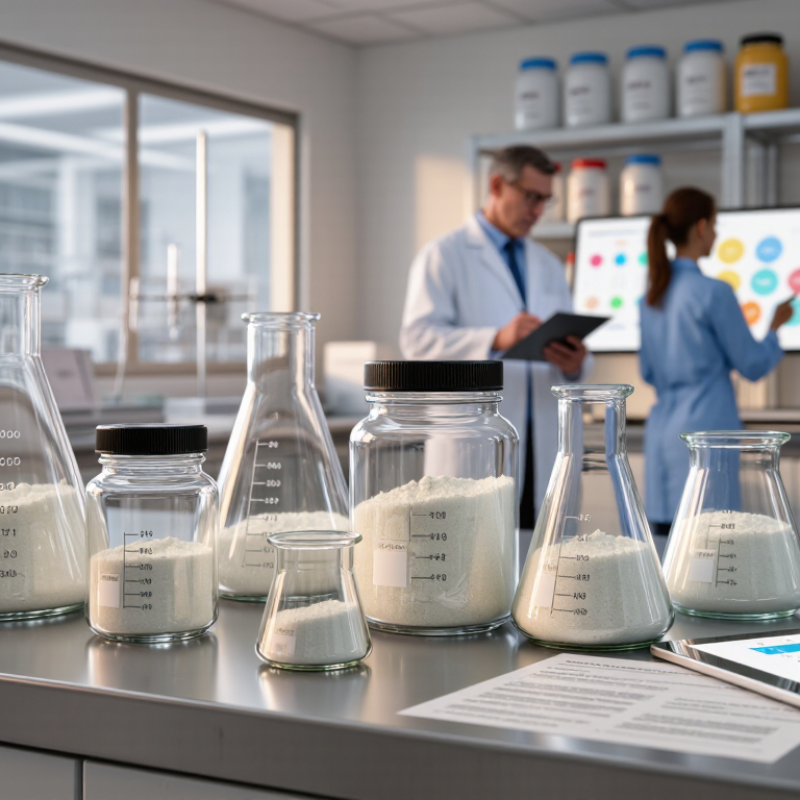
Which China Conjugated Linoleic Acid Powder Is Best?

What Is China Conjugated Linoleic Acid Powder?

China Conjugated Linoleic Acid Powder is a powdered ingredient containing conjugated linoleic acid, a family of linoleic acid isomers. It is not the same as ordinary linoleic acid. Commercial CLA is usually produced from refined vegetable oil through controlled isomerization. The final powder may contain different ratios of cis-9, trans-11 and trans-10, cis-12 isomers. That ratio matters. It can change stability, testing results, and product performance.

A 2023 systematic review in Nutrients found that human evidence for CLA and body-composition benefits remains mixed, with effects generally modest across clinical trials. The U.S. National Institutes of Health also notes inconsistent results and limited long-term safety data. These findings should temper aggressive marketing claims. China-made powder can be suitable when its specifications are transparent, not simply because it comes from a large manufacturing market. A practical quality check includes HPLC assay, isomer distribution, moisture, peroxide value, heavy metals, residual solvents, and microbiological results. Ask for batch-specific documents. Generic certificates are weaker evidence.

The 2024 Grand View Research market analysis identifies sports nutrition and dietary supplements as important CLA application areas, but market figures differ by research method. That difference deserves attention. In my experience, a clean powder with clear traceability is more useful than an impressive headline assay. One imperfect point remains: laboratory purity does not prove human effectiveness. Independent testing and cautious dosage language are still necessary.

How Is Conjugated Linoleic Acid Powder Produced in China?

China’s conjugated Linoleic Acid powder is commonly produced from oils rich in Linoleic Acid, such as safflower or sunflower oil. The oil is first refined to remove water, pigments, and unwanted impurities. Manufacturers then use controlled heat and alkaline catalysts to change selected fatty acid bonds into conjugated forms. This stage requires careful monitoring. Excessive heat can darken the material and damage quality.

After isomerization, the mixture is neutralized and purified. Filtration, vacuum treatment, and molecular separation may reduce soaps, moisture, and residual impurities. The concentrated CLA oil is then converted into powder through spray drying or adsorption onto a suitable carrier. Operators should control inlet temperature, powder moisture, and particle size. Otherwise, the powder may clump inside the package. It happens.

From a quality perspective, I would examine the batch record, not only the sales description. Reliable Chinese facilities should provide testing for total CLA, cis-9, trans-11, trans-10, cis-12, heavy metals, residual solvents, microbial limits, and oxidation indicators. Independent laboratory verification adds useful confidence. A certificate alone can mislead. Production experience also matters, because small changes in catalyst level or drying conditions can affect the final profile. Some manufacturers still need better transparency around source oils and process deviations. That detail deserves attention before comparing any China CLA powder.

Which Quality Standards Should Buyers Compare?

When comparing China conjugated linoleic acid powder, buyers should examine quality standards rather than rely on price or appearance. A reliable specification should identify the CLA isomer profile, total CLA content, moisture, and carrier materials. The product should also have a clear lot number and manufacturing date. Small details matter.

Ask for a recent certificate of analysis from an independent laboratory. It should cover heavy metals, residual solvents, pesticide residues, microbial limits, and oxidation indicators such as peroxide value. Fat-based powders can absorb moisture and develop off-odors during storage. A clean white appearance proves very little. Taste and color are useful observations, but they are not substitutes for testing.

Manufacturing controls deserve equal attention. Review evidence of GMP, HACCP, allergen management, and batch traceability. Confirm whether the facility monitors temperature, humidity, and packaging integrity. I would also compare testing methods, because different methods can produce different assay results. A document with many signatures may still lack meaningful data. Buyers sometimes request the wrong comparison. For example, Docosahexaenoic Acid Powder follows different compositional expectations, so its quality checklist should not be copied for CLA. One point remains easy to miss: supplier performance should be checked across several batches, not one attractive sample. Good records help, but they are not perfect. Verification still matters.

How Do Purity, Isomer Ratio, and Formulation Differ?

Which China Conjugated Linoleic Acid Powder Is Best?

Purity is the first screening point, but it should not stand alone. A reliable specification should state total CLA content, moisture, residual solvents, heavy metals, and microbiological limits. Ask for a batch-specific certificate of analysis, not only a product brochure. Independent laboratory testing can reveal differences between the declared value and the actual powder. This step feels slow, yet it prevents expensive reformulation later.

Isomer ratio also matters. Commercial CLA commonly contains the cis-9, trans-11 and trans-10, cis-12 isomers. Their proportions can vary between manufacturing processes and batches. A powder with high total CLA may still have an unsuitable isomer profile for your formulation. Check whether the ratio is measured by validated gas chromatography. “CLA 80%” is incomplete information.

Formulation determines how the powder behaves on the production line. Some materials use carriers to improve flow, reduce clumping, or support dispersibility. Others may show a stronger fatty odor, especially after poor storage. Review particle size, bulk density, oxidation indicators, and packaging protection. A nitrogen-flushed, light-resistant package may offer better stability, but handling still matters. I would test a pilot batch before approving large volumes. Supplier documents can look convincing. Actual mixing performance may disagree.

Which China Conjugated Linoleic Acid Powder Is Best?

How do purity, isomer ratio, and formulation differ?

The chart compares representative commercial specification profiles for CLA powders rather than company or brand data. High-purity powders generally provide about 85–90% total CLA, while the two principal isomers, 9c,11t and 10t,12c, commonly account for approximately 30–40% each. Microencapsulated and spray-dried formulations can improve handling, dispersibility, and protection from oxidation, but the final choice should also consider carrier content, moisture, particle size, stability, and independent laboratory testing.

Powder profile Typical formulation characteristic
Standard spray-dried powder Cost-effective, commonly carrier-based, suitable for blending into dry products
Microencapsulated powder Improved dispersibility and protection from light, oxygen, and flavor oxidation
High-purity powder Higher active content with less carrier material; verify flowability and stability

Which China CLA Powder Fits Your Intended Application?

Which China Conjugated Linoleic Acid Powder Is Best?

Which China CLA Powder Fits Your Intended Application?

The best China CLA powder depends on how it will be used. A capsule formula may need high assay, low moisture, and stable flow. A powdered drink may require better dispersibility and a carefully selected carrier. Animal nutrition products may prioritize cost, batch consistency, and practical dosing.

Look beyond the headline purity figure. Request the CLA isomer profile, oxidation values, microbiological results, heavy metal data, and residual solvent records. A current certificate of analysis should match the exact production batch. Check whether the powder contains carriers, antioxidants, or flow agents. These details can change texture, taste, and dosage calculations.

For food or supplement production, verify documented quality systems, traceability, storage conditions, and packaging protection against heat and oxygen. Ask for stability data under your expected conditions. Testing matters more than attractive specifications. A supplier may provide an impressive assay, yet the powder may disperse poorly in your formula. Small pilot trials can reveal this quickly.

Do not ignore regulatory review. Requirements differ by destination, product category, and intended claim. Technical documents should support your assessment, not replace it. I have found that buyers sometimes compare only price and purity. That approach feels efficient, but it can create reformulation costs later. Even a strong specification may need adjustment after real production testing.

How Can You Evaluate Suppliers and Product Documentation?

Which China Conjugated Linoleic Acid Powder Is Best?

Choosing China Conjugated Linoleic Acid Powder requires more than comparing prices. A reliable evaluation starts with traceable product documents. Ask for a current specification sheet, certificate of analysis, safety data sheet, and manufacturing details. The specification should state the CLA content, fatty acid profile, moisture, peroxide value, heavy metals, and microbiological limits. Each result should match a specific batch number.

Request recent test reports from an independent laboratory. Check the testing date, laboratory address, methods, and authorized signature. Compare the report with the supplier’s own COA. Small differences may need clarification. A polished PDF is not proof. Ask how samples are collected and sealed before testing. Packaging photos can also reveal useful details, such as inner liners, lot labels, and storage conditions.

Supplier evaluation should include practical communication. During a remote factory review, ask to see the production area, laboratory equipment, and retained-sample room. Verify quality certificates through the issuing organization when possible. If the supplier also offers Lipoic Acid Powder , require separate specifications and batch records. Do not accept one generic document for different materials. I have learned that fast replies can hide weak records. Missing signatures, recycled test dates, or vague answers deserve a second look. A short sample trial may expose handling or dispersion problems that documents cannot show.

FAQS

What is conjugated linoleic acid powder?

It is a powdered ingredient containing several conjugated linoleic acid isomers. It differs from ordinary linoleic acid. Commercial material often comes from refined vegetable oil. Its isomer ratio can affect stability and product performance.

How is conjugated linoleic acid powder produced?

Manufacturers commonly start with safflower or sunflower oil. They refine the oil, then use controlled heat and alkaline catalysts. The mixture is purified after isomerization. Concentrated oil becomes powder through spray drying or carrier adsorption.

Which quality tests should buyers request?

Request total CLA, isomer distribution, moisture, peroxide value, heavy metals, residual solvents, and microbiological results. Ask for batch-specific documents. Generic certificates provide weaker evidence.

Why does the isomer ratio matter?

Common isomers include cis-9, trans-11 and trans-10, cis-12. Their proportions may vary between batches. A high total assay does not guarantee a suitable isomer profile. Check validated chromatographic testing.

Does higher purity always mean better performance?

No. Purity is an important screening point, not the whole decision. Laboratory purity does not prove human effectiveness. That distinction is easy to overlook.

What formulation details should be checked?

Review particle size, bulk density, moisture, flow, dispersibility, and carrier content. Some powders clump during production. Others develop a strong fatty odor after poor storage. A pilot batch can expose these problems.

How should the powder be packaged and stored?

Light-resistant, tightly sealed packaging can reduce exposure to air and moisture. Nitrogen flushing may support stability. Store the material in a cool, dry area. Packaging helps, but it cannot fix poor handling.

Is the ingredient proven to improve body composition?

Human research remains mixed, with generally modest findings. Long-term safety information is also limited. Product descriptions should avoid aggressive promises. Evidence may not match marketing language.

How can buyers compare different suppliers?

Compare traceability, batch records, testing methods, source oils, and process controls. Independent laboratory verification adds useful confidence. Sales brochures can look impressive. Actual production results may disagree.

What is one common mistake during supplier evaluation?

Treating a certificate as complete proof. Certificates may omit method details, isomer data, or current batch information. I would test a small quantity first. That extra step can prevent costly reformulation.

Conclusion

Choosing the best China Conjugated Linoleic Acid Powder requires more than comparing price or advertised purity. Buyers should first understand whether the powder is intended for dietary supplements, functional foods, research, or another application. Production methods, raw material selection, reaction control, purification, drying, and packaging can all influence consistency, stability, color, odor, and shelf life. Clear information about the active CLA content and the ratio of major isomers is especially important because different formulations may suit different technical or commercial needs.

A reliable evaluation should include certificates of analysis, batch testing, specification sheets, traceability records, contaminant controls, and storage recommendations. Buyers should also compare manufacturing experience, quality management systems, communication efficiency, sample consistency, and the supplier’s ability to provide customized particle size or dosage forms when needed. The most suitable product is therefore not simply the one with the highest stated purity, but the powder that offers verified composition, dependable documentation, stable supply, and specifications aligned with the intended application.
Ethan

Ethan

Ethan is a dedicated marketing professional at Shaanxi Yuantai Biological Technology Co., Ltd., where he plays a pivotal role in promoting the company's extensive range of products. With a deep understanding of plant extracts, nutritional supplement raw materials, cosmetic raw materials, organic......
Previous 7 Best Liposomal Vitamin C Suppliers for Global Buyers
Next Which Vitamin K3 Type Is Best for Global Buyers in 2026?