Leave Your Message

Reasons for contact:

Where are you in your project?

Product Type(s) of Interest

0%

Picking a supplier for Chitosan Quaternary Ammonium Salt isn't just about comparing prices. You really need to dig into stuff like product specs, batch-to-batch consistency, the documentation they provide, and how well they communicate. I mean, a powder might look pretty much the same in a photo, but there can be big differences—like molecular weight, degree of substitution, solubility, or moisture content. And those details actually matter quite a bit because they can impact your formulation work or testing process.

So, to help you get started, here’s a list of seven suppliers. Remember, this isn’t an endorsement or certification—things can change, and product descriptions on websites don’t always answer all your technical questions. It's a good idea to ask for the latest specification sheets, safety data, samples, and any relevant quality documents. For anything critical, double-check the test methods and acceptance criteria before ordering a hefty batch—you don’t want surprises later. Little details really do count.

When comparing suppliers, think about more than just price. You should also consider how much they can produce, lead times, packaging options, and how good their tech support is. For example, can they explain how they characterize each batch? Are the sample containers clearly labeled? And when you reach out to the sales team, do they give you specific info or just vague promises? These questions might seem small, but they’re actually pretty important and often overlooked.

Picking the best fit really depends on what you need—your intended use, the grade you require, and how you evaluate each option. No one supplier is perfect for every project. Use the profiles below as a starting point, then get in touch directly to verify all the details. Yeah, it takes a bit of time, but trust me, it’s worth it to avoid costly surprises down the line.

7 Best Chitosan Quaternary Ammonium Salt Suppliers?

What Is Chitosan Quaternary Ammonium Salt?

Chitosan quaternary ammonium salt is a chemically modified form of chitosan, a polymer commonly obtained from chitin in shellfish shells. Adding quaternary ammonium groups gives the material a permanent positive charge. Unlike ordinary chitosan, which generally dissolves in acidic water, some quaternized forms can remain water-soluble across a wider pH range. Rinaudo’s 2006 review in Progress in Polymer Science describes chitosan’s dependence on deacetylation and acidic conditions for solubility. The modification changes that behavior. That distinction is easy to miss.

The positive charge helps the polymer interact with negatively charged surfaces, including some microbial cell envelopes and fibers. Researchers therefore investigate it for coatings, textiles, and water-treatment materials. Performance is not automatic. Molecular weight, degree of substitution, concentration, and formulation can all affect solubility and activity. A useful technical specification should report these values, not just the product name. Younes and Rinaudo’s 2015 review in Marine Drugs discusses how chitosan properties vary with preparation and chemical structure. In practice, a clear solution in a beaker is only one check; buyers should also request batch-specific data and test the material under their intended conditions. One limitation remains: results from laboratory studies may not predict performance in a finished product.

Key Properties and Applications of Chitosan Quaternary Ammonium Salt

Key Properties and Applications of Chitosan Quaternary Ammonium Salt

Chitosan quaternary ammonium salt is a chemically modified chitosan that carries permanent positive charges. Unlike ordinary chitosan, it can remain more soluble in water across a wider pH range. Those charged sites help it interact with negatively charged particles, surfaces, and some microbial cell walls. The practical result is a material considered for flocculation, antimicrobial coatings, and personal-care formulations. Small detail, big effect. Performance still depends on molecular weight, degree of substitution, and formulation; supplier specifications matter more than the name alone.

Water treatment is one area where these properties may be useful. FAO’s The State of World Fisheries and Aquaculture 2024 reports that global aquaculture produced 94.4 million tonnes of aquatic animals in 2022, highlighting the scale of water-management needs in production systems. This figure does not measure demand for chitosan derivatives, but it offers relevant industry context. In bench tests, researchers should check turbidity removal, dosage, pH, and residual material under realistic water conditions. A clear beaker is not proof of field performance. Antimicrobial claims also need careful testing: results can vary with contact time, concentration, and the surface being treated. Some formulations may affect aquatic organisms, so environmental compatibility deserves scrutiny before deployment.

How to Evaluate a Reliable Chitosan Quaternary Ammonium Salt Supplier

A reliable chitosan quaternary ammonium salt supplier should make product evaluation straightforward. Ask for a current technical data sheet, a certificate of analysis for the specific batch, and clear details about the material’s source and processing. Check key specifications, such as appearance, solubility, and stated degree of substitution. These details matter when a formulation needs consistent performance. Small differences can affect how a sample disperses in water.

Request a sample before placing a larger order. Test it under your actual conditions, including your target pH, mixing time, and storage temperature. A supplier should explain recommended handling and provide realistic lead times, packaging details, and storage guidance. Look for responsive technical support, not just quick sales replies. A polished document is useful, but it does not replace a clear answer to a specific process question. Ask how the supplier handles out-of-specification batches and documentation updates. Then keep the response on file.

Be cautious when specifications are vague or change between conversations. Compare suppliers using the same questions and record the answers. This takes time. It may also expose gaps in your own requirements, which is worth admitting early. Do not confuse similarly named materials: Pyrroloquinoline Quinone Disodium Salt is a different substance, not a substitute for chitosan quaternary ammonium salt. Verify the exact product identity before reviewing performance or ordering.

7 Best Chitosan Quaternary Ammonium Salt Suppliers? - How to Evaluate a Reliable Chitosan Quaternary Ammonium Salt Supplier

This comparison presents supplier categories, not named or ranked companies. Product properties vary by grade and manufacturing process; request current technical documents and test data for the specific product before purchasing.

Supplier category Potential advantage What to verify Questions for evaluation Best suited for
1. Chitosan-focused manufacturers May offer direct knowledge of chitosan raw materials, processing, and product grades. Starting-material specifications, degree of deacetylation, molecular-weight range, and batch-specific certificate of analysis (CoA). Can you provide the quaternization method, substitution data, and analytical methods used for the supplied grade? Buyers prioritizing traceability to the chitosan feedstock.
2. Specialty polymer manufacturers May provide multiple functionalized polymer grades and application-oriented technical support. Identity, counterion, degree of substitution or quaternization, solubility conditions, and consistency between lots. Which product characteristics are guaranteed specifications, and which are typical values only? Formulators comparing grades for a defined technical application.
3. Custom synthesis providers May be able to adjust synthesis parameters or produce a material to an agreed specification. Process reproducibility, development and scale-up records, impurity controls, and written acceptance criteria. Can the target specification be demonstrated on a representative pilot batch before commercial scale-up? Projects requiring a tailored specification or development work.
4. Contract manufacturers May offer manufacturing capacity under an agreed process and quality arrangement. Quality-system scope, process controls, change-control procedures, batch records, and supply-continuity plans. Who owns the specification and change approval, and how are deviations and out-of-specification results handled? Purchasers with established product requirements seeking external production capacity.
5. Research-scale and laboratory suppliers May provide small quantities for screening and early-stage laboratory work. Research-use grade designation, available characterization, storage conditions, and whether larger-scale supply is supported. Is the material suitable only for research, or is a separately qualified production grade available? Initial feasibility testing and laboratory evaluation.
6. Application-focused formulation suppliers May supply the polymer in a formulated or application-ready form with relevant handling guidance. Full ingredient or composition disclosure as applicable, concentration, pH, stability data, and compatibility information. Does the quoted specification describe the active polymer itself or the complete formulation? Users who need a ready-to-test formulation rather than a raw polymer.
7. Qualified regional distributors May offer local inventory, consolidated purchasing, and regional logistics support. Original manufacturer traceability, storage and transport conditions, lot documentation, and complaint-handling arrangements. Can you provide the original manufacturer's CoA and confirm that the supplied lot is traceable? Buyers who value local availability and regional service.

Core supplier checks: Confirm material identity and counterion; review lot-specific CoA data and test methods; assess batch consistency, documentation, sample availability, lead time, packaging, storage requirements, and change-control practices. Verify any regulatory, safety, or application-specific claims against the relevant jurisdiction and intended use.

Seven Leading Chitosan Quaternary Ammonium Salt Suppliers

A practical shortlist of seven chitosan quaternary ammonium salt suppliers can include specialty polysaccharide manufacturers, custom synthesis firms, biotechnology ingredient distributors, cosmetic raw-material suppliers, water-treatment chemical producers, laboratory reagent vendors, and regional importers. These supplier types serve different needs. A laboratory vendor may offer small sample quantities, while a manufacturer may support larger, repeat orders.

Ask for the product’s degree of substitution, molecular-weight range, solubility data, and batch-specific certificate of analysis. Details matter.

Compare documentation before comparing prices. Request safety data, storage guidance, recommended handling conditions, and evidence that the material matches your intended application. Check whether the supplier can provide a retained sample and explain how it manages batch variation.

A clear answer is useful; vague claims deserve follow-up. For a first evaluation, test a small quantity in your actual formulation and record its appearance, dissolution time, and performance under defined conditions. Supplier listings can change, and “leading” does not always mean suitable.

One thing is easy to miss: specifications may use different test methods, so confirm that reported results are comparable before making a decision.

Comparing Product Quality, Certifications, and Customization Options

Choosing a chitosan quaternary ammonium salt supplier takes more than comparing prices. Ask for a recent certificate of analysis showing degree of substitution, molecular weight, moisture, ash, and residual protein. These values affect solubility and performance in a finished formulation. Request batch-to-batch data, not just a specification sheet. A neat table can hide variation.

Raw materials matter. FAO’s 2024 State of World Fisheries and Aquaculture report estimated total fisheries and aquaculture production at 223.2 million tonnes in 2022. That scale does not guarantee consistent shell-derived feedstock; species, processing, and season can still affect incoming material.

Check supplier controls for traceability and contaminants, and review the test methods behind each claimed value. Useful evidence includes an ISO 9001 quality-management certificate and, where relevant, ISO 14001 environmental-management certification. Verify the certificate’s scope and validity. A logo alone proves little.

Test customization under real-use conditions

Customization should be tested against your actual use conditions. Share target pH, concentration, viscosity, and application method, then request a small trial sample and written acceptance limits. Ask whether particle size, substitution level, or solution format can be adjusted, and how those changes affect lead time. Include Phytic Acid Sodium Salt in compatibility screening if it may appear in your formulation; interactions depend on concentration and conditions. Do not assume. Record what failed, too. That is useful evidence.

Factors Affecting Pricing, Supply Capacity, and Delivery

Choosing among the 7 best chitosan quaternary ammonium salt suppliers requires more than comparing catalog prices. Quaternization level, molecular weight, degree of deacetylation, moisture, and counter-ion purity can change the quotation sharply. Small batches cost more. Grand View Research estimated the global chitosan market at approximately USD 1.2 billion in 2023, with continued growth expected through 2030. That forecast shows demand, but it does not guarantee capacity for specialized quaternary grades.

Supply capacity depends on feedstock, reactor scale, and quality-control depth. Seafood-processing waste remains a major chitosan source, while seasonal shell availability can affect production planning. Ask for recent batch records, annual output, pilot-scale evidence, and reserve inventory. A supplier claiming unlimited capacity deserves careful questioning. For buyers also sourcing ATP Disodium Salt, keep its certification, storage, and transport requirements separate from chitosan procurement.

Delivery risk deserves equal attention. UNCTAD’s Review of Maritime Transport reports that maritime shipping carries over 80% of global merchandise trade, so port disruption can quickly extend lead times. Request a realistic shipping window, Incoterm, packaging photos, and a contingency route. Freight, hazardous classification, humidity control, and customs documentation may all influence landed cost. A low factory price can become expensive after delays. I would also challenge forecasts based on one successful shipment; that evidence is too thin.

7 Best Chitosan Quaternary Ammonium Salt Suppliers? Key Pricing, Capacity & Delivery Factors

The chart compares typical commercial procurement ranges for anonymous supplier profiles. Lower price and shorter lead time are more favorable, while higher annual capacity indicates stronger supply capability. Actual quotations vary by degree of substitution, purity, packaging, certification, order volume, and destination.

Indicative industry benchmark ranges: USD 20–60/kg for commercial material, 10–1,000 metric tons/year for available capacity, and 2–12 weeks for production and delivery lead time. Confirm current specifications and logistics terms directly with suppliers.

How to Select the Best Supplier for Your Application

Choosing a chitosan quaternary ammonium salt supplier starts with your actual application, not a catalog headline. A coating, water-based formulation, and personal-care product may need different solubility, charge density, or viscosity. Define these needs before requesting samples. Small details matter.

Ask for a current specification sheet and a batch-specific certificate of analysis. Check molecular weight range, degree of substitution, moisture, pH, and test methods. Do not assume two suppliers use identical measurement methods. Compare documents carefully, and ask questions when results look unusually broad. A clear answer is useful evidence; a polished brochure alone is not.

Then test samples under your own process conditions. Record how the material dissolves, handles mixing, and performs after storage. If you already use Chitosan Hydrochloride, compare its behavior with the quaternary form rather than expecting a direct swap. Request sample quantities, lead times, packaging details, and guidance on storage. Speak with the technical team, too. Their response can reveal whether they understand your use case or are simply repeating standard claims. I would not choose on price alone; though, honestly, budgets can make that difficult. Select a supplier that documents consistency and responds clearly when a batch behaves differently.

Oligo-Chitosan Tablets: OEM Opportunities Based on Grand View Research’s Chitosan Market Report

Grand View Research’s chitosan market report describes a fast-expanding global market, estimating its value at USD 11.7 billion in 2023 and projecting a 24.7% compound annual growth rate from 2024 to 2030. This growth outlook makes chitosan-derived formats worth evaluating for supplement portfolios, including chewable tablets designed for convenient daily use. For product developers, an oligo-chitosan formula can offer a differentiated format while allowing customization of ingredients, presentation, and packaging to suit target markets.

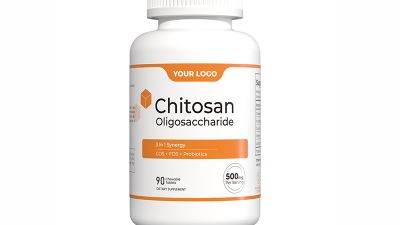
A sample Chitosan Oligosaccharide Tablet provides 500 mg of chitosan oligosaccharides per two-tablet serving, alongside 200 mg of fructooligosaccharides, 50 mg of curcumin, 30 mg of vitamin C, and 2 billion CFU of *Lactobacillus plantarum*. Each container includes 90 chewable tablets, or 45 servings. Full OEM and ODM customization and bulk wholesale are available, enabling buyers to discuss formula and product specifications for their business needs. Payment options include T/T, Visa, Alipay, and XTransfer; shipping can be arranged through DHL, FedEx, or air and sea freight. These options support a flexible sourcing discussion as businesses assess opportunities in the broader chitosan category.

FAQS

What documents should a reliable supplier provide?

Request a current technical data sheet and a batch-specific certificate of analysis. The documents should show degree of substitution, molecular weight, moisture, ash, and residual protein. A polished file is not enough.

Why should I request a sample before ordering?

A sample lets you test real performance before committing to a larger order. Check dissolution time, appearance, and dispersion in water. Small differences matter.

Which conditions should be included in sample testing?

Use your target pH, concentration, mixing time, and storage temperature. Record viscosity and changes during storage. Real conditions reveal problems early.

How can I compare different suppliers fairly?

Ask every supplier the same technical and quality questions. Compare test methods, specifications, packaging, lead times, and storage guidance. Price alone can mislead.

What quality details deserve special attention?

Review batch-to-batch data, not only standard specifications. Check molecular-weight range, solubility, substitution level, moisture, ash, and residual protein. A neat table may hide variation.

How important is raw-material traceability?

Source and processing can affect consistency, even when materials look similar. Ask about species, processing controls, traceability, and contaminant testing. This part is easy to overlook.

Can suppliers customize the material?

Some suppliers may adjust particle size, substitution level, or solution format. Share your target pH, concentration, viscosity, and application method. Customization can increase lead time.

How should certifications be evaluated?

Verify the certificate’s scope, issuing body, and validity date. Quality or environmental certification may support evaluation, but a logo proves little. I should admit that documents still need testing.

What should I ask about failed or inconsistent batches?

Ask how the supplier handles out-of-specification batches and batch variation. Request retained-sample procedures and updated documentation. Keep the answers on file.

How can I avoid choosing the wrong material?

Confirm the exact chemical identity before comparing performance or placing an order. Similar names do not mean equivalent materials. Do not assume substitution is safe.

Conclusion

This guide explains what Chitosan Quaternary Ammonium Salt is and why its cationic structure, film-forming ability, water compatibility, and antimicrobial performance make it valuable in areas such as water treatment, textiles, coatings, cosmetics, agriculture, and biomedical research. It also outlines the key technical factors buyers should review, including molecular weight, degree of substitution, purity, solubility, stability, batch consistency, and application-specific performance.

The article presents seven leading supplier options without focusing on brand promotion and offers a practical framework for comparing product quality, certifications, testing documentation, customization capabilities, production capacity, lead times, packaging, and technical support. It also discusses how raw material costs, specification complexity, order volume, quality requirements, and shipping conditions influence pricing and delivery. By using these criteria, buyers can assess supplier reliability, reduce sourcing risks, and select the most suitable Chitosan Quaternary Ammonium Salt for their intended application.

Oliver

Oliver

Oliver is a dedicated marketing professional at Shaanxi Yuantai Biological Technology Co., Ltd., where he leverages his expertise in plant extracts, nutritional supplement raw materials, cosmetic raw materials, and organic products. With a deep understanding of the industry, Oliver plays a pivotal......
Previous Why Buy Ursolic Acid Powder in Bulk?